The Intertwined Histories of Tech Culture and Art
Introduction to Technological and Cultural Evolution
An Inseparable Dance
Evolution isn't just about biology. Human societies are constantly changing through two other powerful forces: technological evolution and cultural evolution. They aren’t separate processes. Instead, they are locked in a feedback loop, each one pushing and pulling the other forward through history.
technological evolution
noun
The process of change in technology over time, where new inventions and innovations build upon previous ones.
Technological evolution is a cumulative process. Think of it like building with LEGO bricks. Early inventors created the first simple bricks. Later innovators didn’t start from scratch; they used the existing bricks to build more complex structures, and even designed new types of bricks that opened up new possibilities. This is how we got from the first simple tools to the supercomputers in our pockets. Each step was built on the one before it.
cultural evolution
noun
The process of change in a society's shared beliefs, customs, skills, and values over time, transmitted through social learning.
Cultural evolution works in a similar way, but with ideas instead of objects. It’s how behaviors, languages, beliefs, and social norms are passed down and modified from person to person and generation to generation. Unlike biological evolution, which is coded in our genes, cultural evolution is transmitted through learning. We learn from our parents, our peers, and our communities.
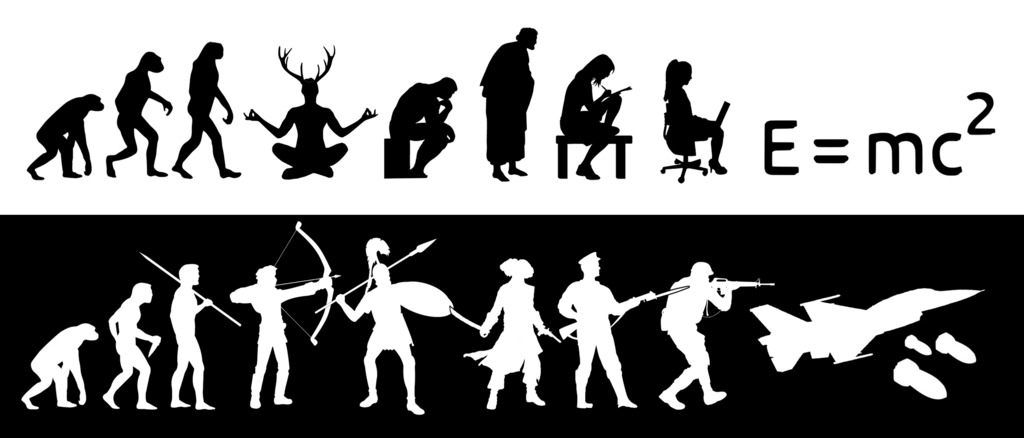
How Technology Shapes Culture
The connection between these two forces becomes clear when you look at history. A new technology can completely reshape a culture.
Consider the development of agriculture. Before farming, most humans were nomadic hunter-gatherers. Their lives and cultures were built around movement, small groups, and a deep knowledge of their immediate environment. The technology of agriculture—learning to plant seeds and domesticate animals—changed everything.
Farming allowed people to stay in one place. This led to the creation of permanent villages, then towns, and eventually cities. Social structures became more complex, new jobs emerged, and the concept of owning land was born. The culture shifted dramatically.
Another powerful example is the printing press. Before its invention in the 15th century, books were rare and expensive, copied by hand. Knowledge was held by a small elite. The printing press made it possible to produce books and pamphlets cheaply and quickly. This flood of information fueled the Renaissance, the Reformation, and the scientific revolution. It changed how people learned, communicated, and viewed their place in the world.
A Two-Way Street
The influence also flows in the other direction: culture shapes technology. The values, needs, and desires of a society determine which technologies are developed and adopted. A culture that values exploration will invest in better shipbuilding and navigation tools. A society concerned with sustainability might prioritize renewable energy technologies.
This creates a continuous feedback loop. New technologies change our lifestyles and values, and those new lifestyles and values then demand different or better technologies.
We suggest that current debates on the co-evolution of society and technology can be enriched by a proper appreciation of the long history of the ideas involved.
Understanding this dynamic is key to understanding human history. It’s not a simple story of one invention leading to another, but a complex interplay between what we can build and who we are.
Let's check your understanding of these core concepts.
What is the primary relationship between technological and cultural evolution?
The text compares technological evolution to building with LEGO bricks. What does this analogy primarily illustrate?
The story of humanity is one of constant change, driven by the tools we create and the ideas we share. By seeing technology and culture as intertwined forces, we can better appreciate how societies evolve.