The Internet of Things Explained
Introduction to IoT
What is the Internet of Things?
The Internet of Things, or IoT, is a giant network of physical objects. These aren't just computers and phones. We're talking about everyday items equipped with sensors, software, and other technologies that allow them to connect to the internet and share data.
Think of it as giving everyday objects a digital voice. A smart thermostat, a connected car, or even a factory machine can report its status and listen for commands.
This constant communication between devices and systems allows for a smarter, more responsive world. Information is gathered, analyzed, and acted upon, often with no human intervention needed. It's the bridge between the physical and digital worlds.
A Quick History
The idea of connected devices has been around for a while. One of the earliest examples was a modified Coca-Cola vending machine at Carnegie Mellon University in the early 1980s. Programmers could check its status over the internet to see if there were cold drinks available before making the trip.
The actual term "Internet of Things" was coined in 1999 by Kevin Ashton. He was working on supply chain optimization and imagined a world where objects could be tagged and tracked using technology like RFID.
For years, the concept remained a niche idea. But in the late 2000s and early 2010s, things changed. Key technologies became cheaper and more widespread, causing the number of connected devices to explode. What started as a simple concept for tracking inventory has grown into a vast ecosystem of interconnected gadgets.
The Building Blocks of IoT
Several key technologies had to mature for the IoT to become a reality. These are the pillars that support the entire system.
Sensors
noun
Devices that detect and respond to some type of input from the physical environment. The specific input could be light, heat, motion, moisture, or any number of other environmental phenomena.
Sensors are the five senses of an IoT device. They gather data from the real world, turning physical properties like temperature, light, or location into digital information.
Next, devices need a way to share this information. This is where connectivity comes in. IoT devices use various wireless technologies like Wi-Fi, Bluetooth, cellular (like 4G or 5G), and other specialized networks to send their data.
Finally, all that data needs to go somewhere to be processed. This is the job of cloud computing. The cloud provides powerful servers and massive storage, acting as the brain of the IoT network. It receives billions of data points from devices, analyzes them, and sends back instructions.
How IoT Systems Work
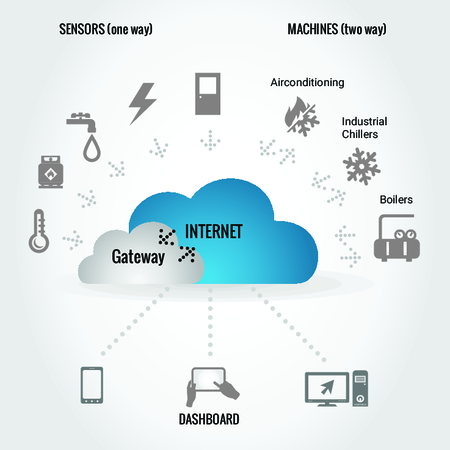
While IoT systems can be complex, their basic architecture follows a consistent pattern. It's helpful to think of it as a few distinct layers working together.
-
Devices and Sensors: This is the foundation. This layer consists of the physical objects that collect data from the environment. A wearable fitness tracker monitoring your heart rate is a perfect example.
-
Edge Gateways: Think of a gateway as a local traffic controller. Instead of every single device connecting directly to the internet, they often send their data to a nearby gateway. This device aggregates the data, sometimes performs initial processing (known as edge computing), and then sends it on to the cloud. Your home Wi-Fi router acts as a simple gateway for your smart devices.
-
Cloud Services: This is the powerful, centralized hub. The data from many gateways arrives here for deep analysis, storage, and decision-making. Software applications in the cloud process the information to identify trends, trigger alerts, or adjust device settings automatically.
This structure allows IoT networks to be efficient and scalable, handling everything from a few smart gadgets in a home to millions of sensors in a major city.
Now, let's test your understanding of these core concepts.
What is the fundamental concept behind the Internet of Things (IoT)?
Who is credited with coining the term "Internet of Things" in 1999?
Understanding these fundamentals—what IoT is, where it came from, and how it's built—is the first step to seeing its impact all around us.