The Inner Workings of LLMs
Introduction to Large Language Models
What Are Large Language Models?
A Large Language Model, or LLM, is a type of artificial intelligence designed to understand and generate human-like text. Think of it as a sophisticated prediction engine. After analyzing enormous amounts of text from books, articles, and websites, it learns the patterns, grammar, and nuances of language. Its primary job is to predict the next word in a sentence, which allows it to do everything from answering questions to writing essays.
Large language models (LLMs) are AI systems that understand and create human language, doing tasks like summarizing articles, answering questions, writing code, and more.
This ability has completely changed what's possible in the field of Natural Language Processing (NLP), which is the branch of AI focused on how computers and humans interact using language. LLMs are the engines behind many modern AI applications, from the chatbot on a customer service website to the tool that translates a menu for you in a foreign country. They represent a major step forward in making technology more accessible and intuitive.
The Road to Modern LLMs
Language models aren't a new idea. For decades, computer scientists used simpler statistical methods. An early approach was the n-gram model, which calculated the probability of a word appearing based on the previous n-1 words. For example, a 2-gram (or bigram) model would look at the word "hot" and predict that "dog" or "day" are likely to follow, based on how often those pairs appeared in its training data.
These models were useful but limited. They couldn't capture long-range context. An n-gram model might not understand that a word mentioned at the start of a paragraph is crucial to understanding a sentence at the end.
The breakthrough came in 2017 with the introduction of the transformer architecture. This new design allowed models to weigh the importance of different words in the input text, no matter how far apart they were. This ability to handle long-range dependencies was a game-changer.
Transformers work using a mechanism called attention, which helps the model focus on the most relevant parts of the input text when producing an output. This innovation paved the way for the massive, powerful LLMs we see today.

Meet the Models
Following the development of the transformer, several influential LLMs emerged, each with unique strengths.
| Model | Full Name | Key Feature | Primary Use |
|---|---|---|---|
| BERT | Bidirectional Encoder Representations from Transformers | Reads text in both directions (left-to-right and right-to-left) to understand context. | Search engines, text classification, sentiment analysis. |
| GPT | Generative Pre-trained Transformer | Excellent at generating creative and coherent human-like text. | Content creation, chatbots, summarization. |
| PaLM | Pathways Language Model | Trained on a massive, multilingual dataset, making it strong in reasoning and cross-language tasks. | Complex reasoning, translation, code generation. |
BERT revolutionized how models understand context. By looking at a sentence from both directions, it gets a much deeper sense of a word's meaning. For example, it can easily distinguish between the "bank" of a river and a financial "bank."
GPT models, on the other hand, are masters of generation. They are trained to predict the next word in a sequence, making them incredibly good at writing everything from emails to poetry. Each new version, like GPT-3 and GPT-4, has grown more capable.
PaLM demonstrated the power of scale. By training on an exceptionally diverse dataset that included not just text but also code, it showed an amazing ability to perform multi-step reasoning and solve logic puzzles.
Ethical Challenges
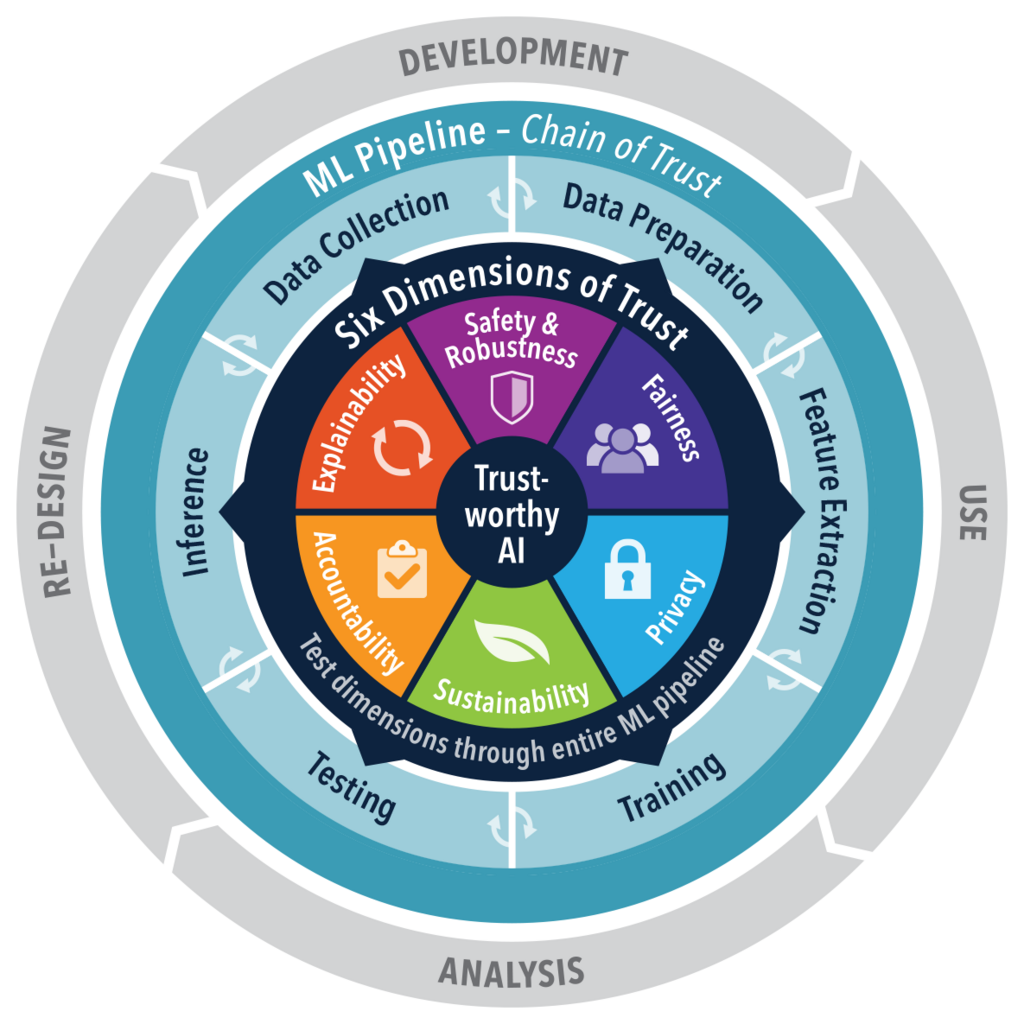
As LLMs become more powerful, their ethical implications grow more significant. These models learn from the internet, which is filled with human biases, misinformation, and toxic content. Without careful oversight, LLMs can reproduce and even amplify these harmful patterns.
One of the biggest challenges is bias. If a model is trained on text where certain professions are predominantly associated with one gender, it may perpetuate those stereotypes in its own output.
Another concern is the potential for misuse. The same technology that can draft a helpful email can also be used to generate convincing fake news or spam on a massive scale. And because these models can sound so authoritative, they can present incorrect information as fact, a phenomenon sometimes called "hallucination."
Developing LLMs responsibly means actively working to identify and mitigate biases, building safeguards against misuse, and being transparent about the models' limitations. It's a crucial, ongoing effort in the AI community to ensure these powerful tools are used for good.
Time to check what you've learned.
What is the primary function of a Large Language Model (LLM)?
What was a major limitation of early language models like n-grams?
LLMs represent a fundamental shift in artificial intelligence, making our interactions with technology more natural and powerful. Understanding their origins and the principles behind them is the first step to appreciating their impact on our world.