The Infinite Machine: A Deep History of Artificial Intelligence
Ancient Dreams and Logic
Ancient Dreams of Artificial Life
The idea of artificial intelligence is not a modern invention. Long before silicon chips and code, the dream of creating artificial life flickered in myths and legends. The ancient Greeks, in particular, were captivated by the concept of automatons, beings crafted by hand but endowed with motion and purpose.
Stories told of Hephaestus, the god of craftsmanship, who forged mechanical servants from gold to assist him in his workshop. His most famous creation was Talos, a colossal bronze giant built to patrol the shores of Crete, hurling boulders at invading ships. Another tale speaks of the mathematician Archytas, who supposedly built a steam-powered mechanical pigeon capable of flight. These weren't theories of computation; they were powerful expressions of a fundamental human desire to replicate life and intelligence through ingenuity.
From Myth to Logic
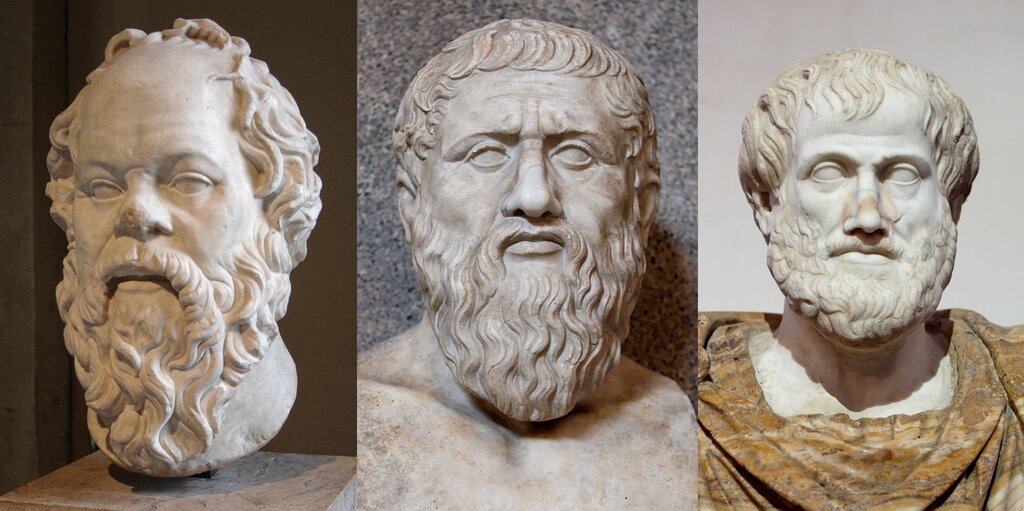
For the dream of AI to move beyond myth, thought itself needed to be understood. If we could map the rules of human reasoning, perhaps we could replicate them. This was the monumental task undertaken by the Greek philosopher Aristotle. He was less interested in bronze giants and more concerned with the mechanics of a sound argument.
Aristotle developed a system of formal logic, a way to analyze and structure arguments to determine their validity regardless of their content. The core of his system was the syllogism, a form of deductive reasoning where a conclusion is drawn from two given propositions. It was the first major attempt to codify the process of human thought into a structured, repeatable system.
- All humans are mortal. (Major premise)
- Socrates is a human. (Minor premise)
- Therefore, Socrates is mortal. (Conclusion)
By breaking reasoning down into a predictable structure like this, Aristotle laid the philosophical groundwork for computation. He showed that some aspects of thinking could be treated as a mechanical process, following clear and explicit rules. This shift from storytelling to systematic logic was a crucial step toward the mechanization of thought.
The Calculating Mind
Centuries later, during the Enlightenment, philosophers and mathematicians revisited the idea of mechanizing reason. The French philosopher René Descartes famously argued for mind-body dualism, the idea that the mind (a non-physical, thinking substance) was entirely separate from the body (a physical, mechanical machine). This raised a provocative question: If the body is just a machine, could a sufficiently complex machine replicate its functions? And could it ever possess a mind?
This line of thinking inspired Gottfried Wilhelm Leibniz, a German polymath who dreamed of creating a universal language of reason he called the (calculus of reasoning). He envisioned a system where arguments could be resolved by calculation, just like a math problem. Leibniz also refined the binary system of 1s and 0s, which would later become the fundamental language of all digital computers.
While philosophers debated, inventors built. Blaise Pascal created one of the first mechanical calculators in the 1640s to help with tax audits. But it was the 19th-century English mathematician who designed the first machines that truly foreshadowed modern computers. His Difference Engine could tabulate polynomial functions, and his more ambitious Analytical Engine was a design for a general-purpose, programmable computer.
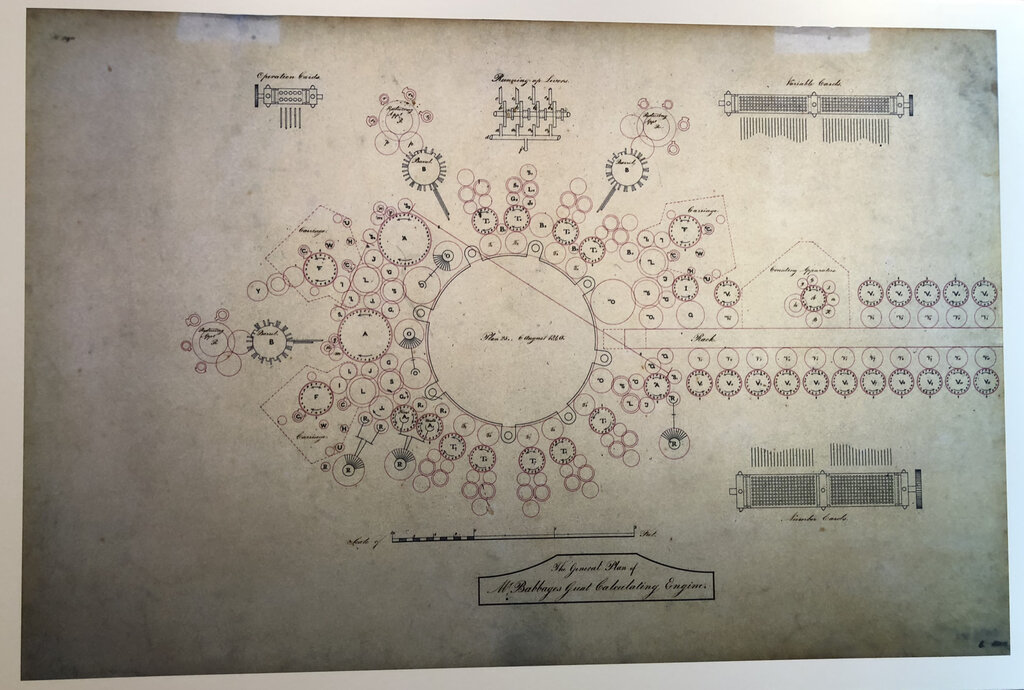
Babbage's mechanical gears and levers were a world away from today's AI, but the core idea was the same: to create a machine that could automate complex intellectual tasks. The journey from mythological automatons to the gears of the Analytical Engine shows that the quest for artificial intelligence is not just a story about technology. It is a long-standing human endeavor to understand the nature of thought itself.