The Industrial Revolution Explained
Preconditions for Industry
Before the Factories
The Industrial Revolution didn't just appear out of nowhere. It wasn't a single invention, but a massive shift built on a foundation laid over centuries. Before the first steam engine hissed to life, a series of quieter revolutions in farming, trade, and finance had to happen first. These changes created the perfect conditions for the world to be remade in iron and steam.
It all started in the fields. For most of human history, the vast majority of people were farmers, and their primary goal was subsistence. They grew just enough to feed their families. But starting in the 17th century, the Agricultural Revolution began to change everything. New techniques like four-field crop rotation broke the old cycle of leaving fields fallow, boosting food production dramatically. The practice of enclosure turned common lands into private property, encouraging investment in more efficient, large-scale farming.
More food meant a growing population that was healthier and more resilient. Critically, it also meant that fewer people were needed to work the land. This created a new, mobile workforce that would soon be seeking jobs in emerging towns and cities.
Capital and Colonies
At the same time, Europe's relationship with the rest of the world was changing. Nations like Great Britain operated under an economic theory called which viewed global wealth as a finite pie. The goal was to grab the biggest slice possible. This was achieved by establishing colonies to secure cheap raw materials—like cotton from India and North America or sugar from the Caribbean—and to create captive markets forced to buy the home country's manufactured goods.
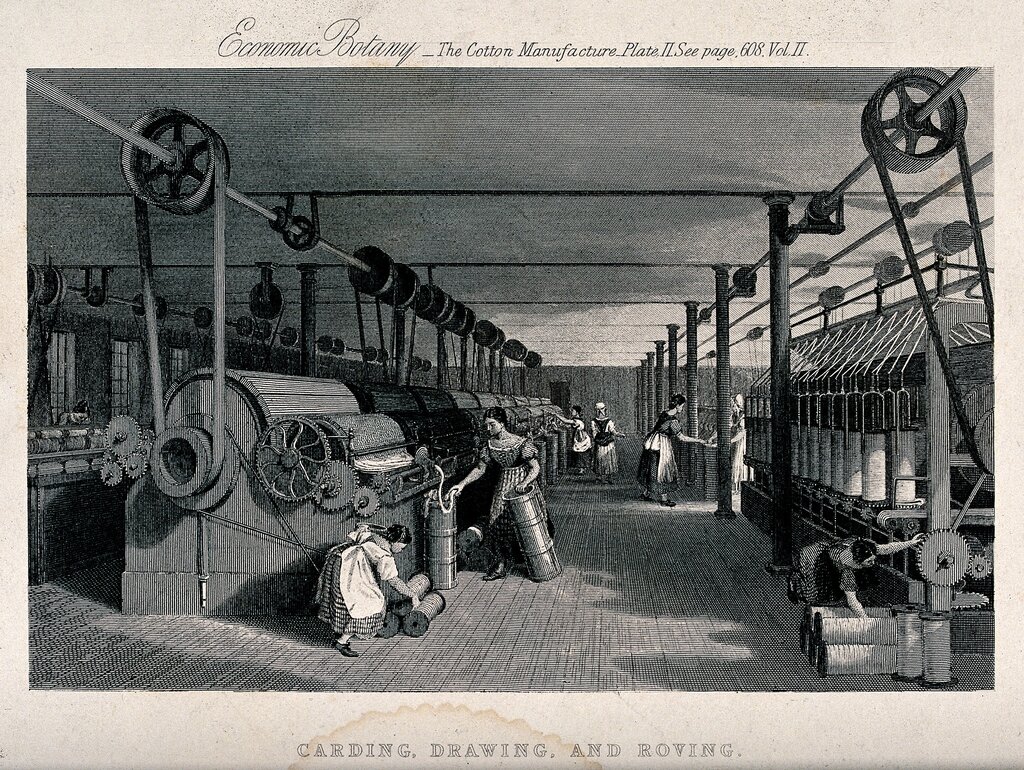
This global trade generated immense profits. The wealth didn't just enrich merchants; it created pools of capital—money available for investment. To manage these ventures, new financial tools were needed. Early banking systems grew more sophisticated, and joint-stock companies allowed investors to pool their money for large, risky ventures like overseas voyages, minimizing individual risk while sharing in the potential profits.
A Stable Foundation
Money and people aren't enough on their own. Progress also requires a stable environment where entrepreneurs feel safe to invest. In places like Britain, a relatively stable political system and a strong tradition of private property rights gave inventors and investors confidence. They knew that their factories, machines, and profits wouldn't be arbitrarily seized by the government. This legal and political security was a crucial, if often overlooked, precondition for industrialization.
This period also saw the rise of proto-industrialization, or the 'putting-out' system. Merchants would provide raw materials, like wool or cotton, to rural families who would spin it into thread and weave it into cloth in their homes. The merchant would then pay for the finished product and arrange for its sale. This system was a bridge between the old guild-based economy and the new factory system. It created a widespread network of skilled artisans and introduced a wage-based, market-oriented mindset into the countryside.
The combination of a larger population, accumulated capital, a system of global trade, and a stable political environment created a unique moment in history. The stage was set for a dramatic transformation that would change how everyone lived and worked.
Ready to check your understanding of these foundational concepts?
What was a primary consequence of the Agricultural Revolution that helped pave the way for industrialization?
According to the economic theory of mercantilism, how did a nation increase its wealth?