The Human Touch AI
Introduction to Artificial Intelligence
What Is Artificial Intelligence?
Artificial intelligence is about creating machines or systems that can think, learn, and solve problems. The goal is to build technology that can perform tasks that typically require human intelligence, like recognizing a face in a photo, understanding spoken words, or planning the best route to a destination.
This introduction to this special issue discusses artificial intelligence (AI), commonly defined as “a system’s ability to interpret external data correctly, to learn from such data, and to use those learnings to achieve specific goals and tasks through flexible adaptation.”
At its heart, AI is a broad field of computer science. It's not one single technology, but a collection of different methods and approaches. Think of it less as a robot that looks and acts like a person, and more as a powerful tool for extending our own capabilities, helping us tackle complex challenges in medicine, finance, and countless other areas.
A Field of Many Fields
The term "AI" is often used interchangeably with others like "machine learning" and "data science," but they aren't the same thing. It's helpful to think of them as related, overlapping disciplines.
Artificial Intelligence is the all-encompassing concept of creating intelligent machines. Machine Learning (ML) is a subset of AI where systems learn from data to find patterns and make decisions without being explicitly programmed. Deep Learning is a further subset of ML that uses complex, multi-layered neural networks.
Data Science is a broader field that uses scientific methods, processes, and algorithms to extract knowledge from data. It overlaps with AI and ML, often using machine learning techniques to analyze data and make predictions, but it also includes other activities like data cleaning and visualization.
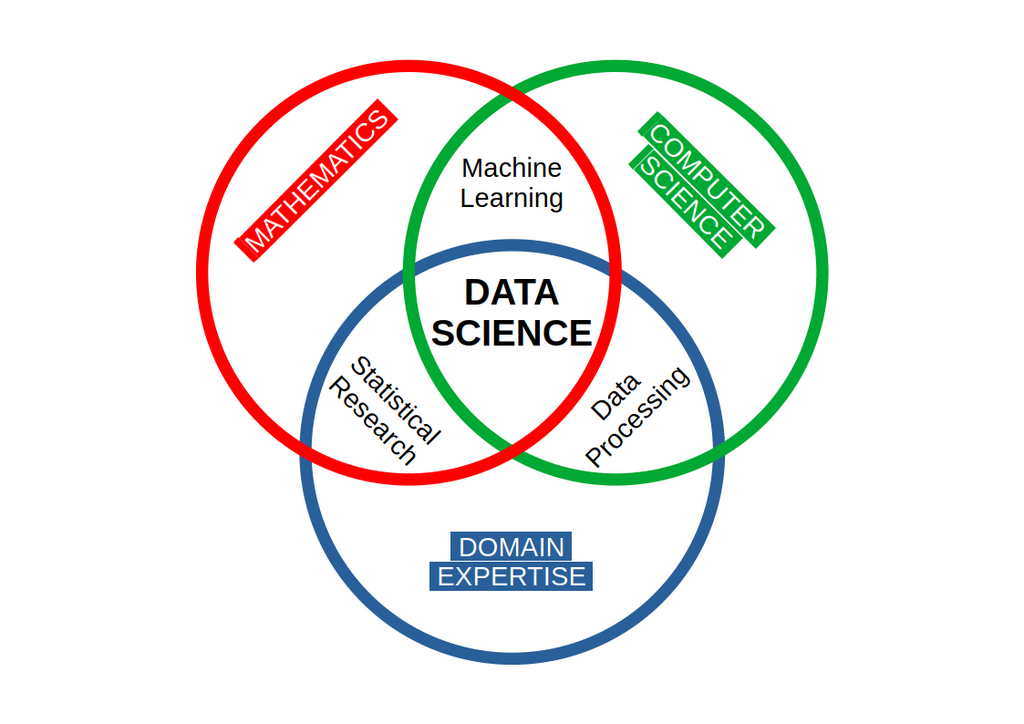
Within the vast domain of AI, there are several specialized subfields, each focused on a different aspect of intelligence:
Natural Language Processing (NLP): This gives machines the ability to understand, interpret, and generate human language. It's the technology behind voice assistants like Siri and Alexa, as well as language translation apps.
Computer Vision: This field enables computers to see and interpret the visual world. It's used in everything from facial recognition on your phone to self-driving cars navigating roads.
Robotics: This area focuses on designing and building robots. While not all robots use AI, advanced robots use it to perceive their environment and make intelligent decisions.
Expert Systems: These are AI programs designed to solve complex problems in a specific domain, acting as a human expert would. A medical diagnosis system is a classic example.
The Goals of AI
So, what is AI trying to accomplish? The objectives are ambitious and varied. Some researchers aim to create systems that can reason, solve problems, and think abstractly, much like a human. This is often called Artificial General Intelligence (AGI).
However, most of the AI we interact with today is more specialized. This is known as Artificial Narrow Intelligence (ANI). Its goals are more focused and practical.
| Goal Area | Description | Real-World Example |
|---|---|---|
| Problem Solving | Finding solutions to specific puzzles or challenges. | A GPS app calculating the fastest route through traffic. |
| Knowledge | Representing information about the world and using it to reason. | A search engine understanding your query to provide relevant results. |
| Learning | Improving performance on a task based on data and experience. | An email filter getting better at spotting spam over time. |
| Perception | Interpreting data from the world via sensors. | A smartphone recognizing a fingerprint to unlock the device. |
| Planning | Setting goals and determining a sequence of actions to achieve them. | An autonomous warehouse robot planning its path to retrieve items. |
Ultimately, the goal of AI is to create tools that can augment human intelligence. By automating tedious tasks and analyzing vast amounts of data, AI can help us make better decisions, discover new scientific principles, and create more efficient systems.
Ready to check your understanding? Let's see what you've learned.
What is the primary goal of Artificial Intelligence?
Which statement best describes the relationship between Artificial Intelligence (AI) and Machine Learning (ML)?
This foundational knowledge of what AI is, its goals, and its relationship to other fields sets the stage for exploring its powerful applications and components.