The Human Face Unveiled
Facial Bones
The Face's Framework
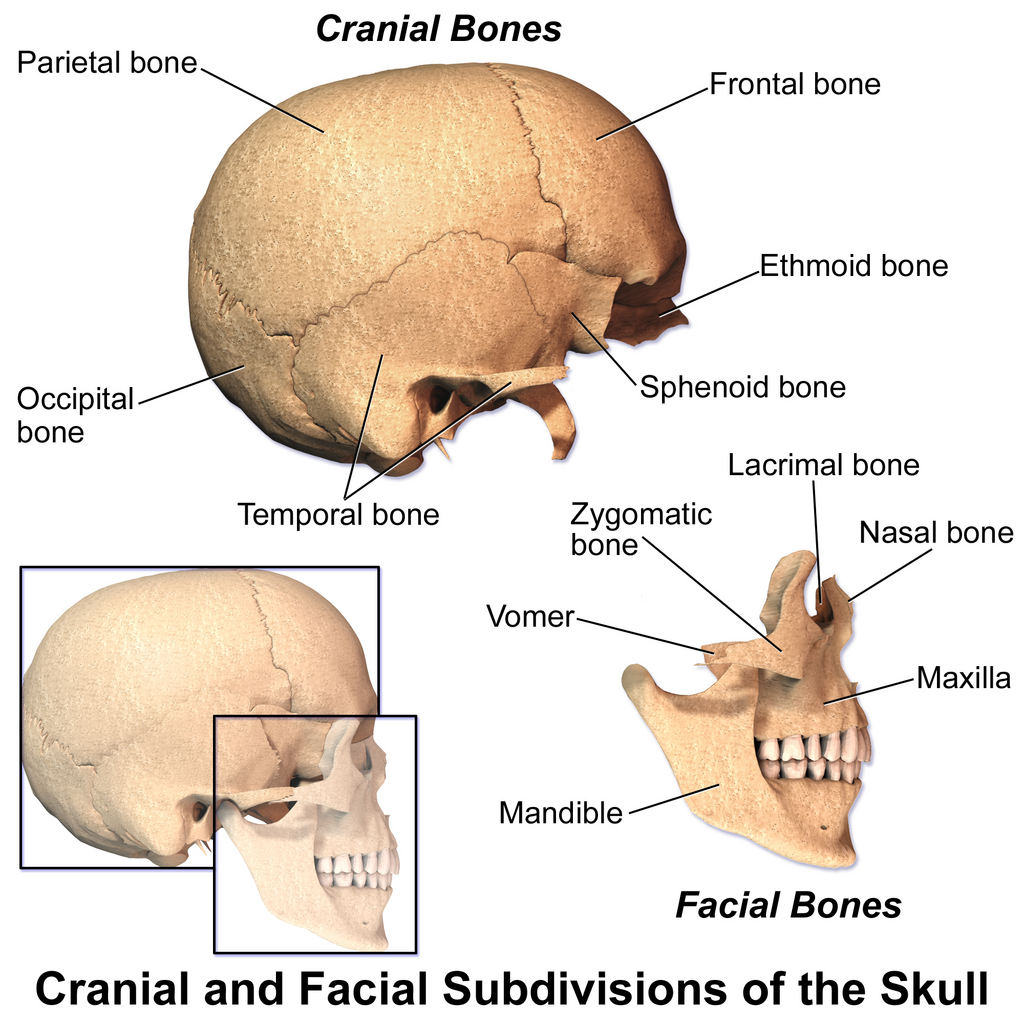
Your face is more than just skin and muscle; it's built upon a complex scaffold of 14 individual bones. These facial bones create the structure of your forehead, cheeks, nose, and jaw. They protect delicate organs like your eyes and provide attachment points for the muscles that let you smile, frown, and chew.
Unlike the bones of the cranium which encase the brain, the facial bones form the front of your skull. Let's explore them one by one, starting with the largest and most prominent.
The Major Players
The largest and strongest bone in the face is the mandible, or lower jaw. It's the only bone in the entire skull that can move, a feature essential for talking and chewing. The mandible holds your lower teeth and connects to the skull at the temporomandibular joint (TMJ), just in front of your ears.
The mandible is the only movable bone of the skull. All other skull bones are fused together at joints called sutures.
Above the mandible are the two maxillae (singular: maxilla), which fuse together to form the upper jaw. The maxillae hold the upper teeth and form part of the roof of your mouth, the floor of your eye sockets, and the base of your nose.
Next are the zygomatic bones, which you know as your cheekbones. You have one on each side of your face. They are crucial for defining the contours of your face and also form part of the eye sockets, providing protection for your eyes.
Finally, the two small, rectangular nasal bones sit side-by-side to form the bridge of your nose. The rest of your nose's structure is made of cartilage, not bone, which is why the nose itself is flexible.
The Hidden Bones
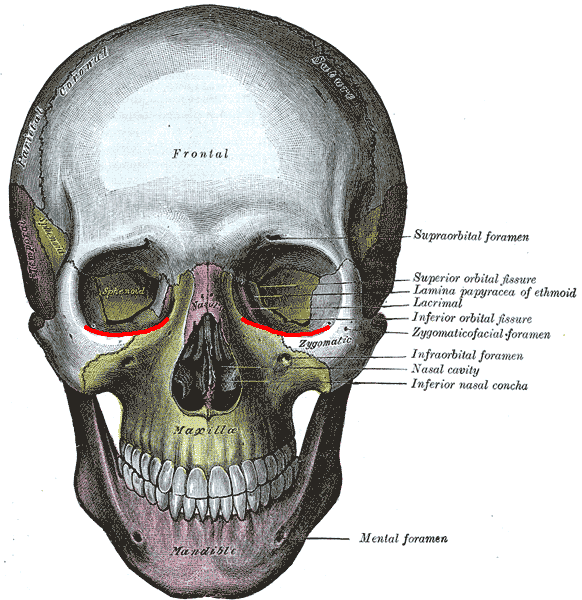
Beyond the bones you can easily see or feel, several smaller, more intricate bones lie deeper within the facial structure. They play vital roles in shaping our nasal cavity and eye sockets.
Let's take a closer look at their locations.
The lacrimal bones are the smallest and most fragile of the facial bones. You have two, one in each eye socket. They are situated at the inner corner of each eye and have a groove that helps form the lacrimal sac, which is part of the system that drains tears.
The two palatine bones are L-shaped and sit behind the maxillae. They form the back part of the roof of your mouth (the hard palate) and a portion of the nasal cavity floor.
Inside the nasal cavity, the two inferior nasal conchae are thin, curved bones that project from the side walls. Their job is to warm and filter the air you breathe before it reaches your lungs. They are their own distinct bones, separate from the superior and middle conchae which are part of the ethmoid bone (a cranial bone).
Finally, the vomer is a single, thin bone that runs vertically inside the nasal cavity, forming the lower part of the nasal septum, the wall that divides your nose into left and right nostrils.
Putting It All Together
These 14 bones fit together like a complex puzzle. Some are single, while most come in pairs. Here is a quick summary:
| Bone Name | Number | Key Function |
|---|---|---|
| Mandible | 1 | Lower jaw, chewing, speech |
| Maxilla (pl. maxillae) | 2 | Upper jaw, holds upper teeth |
| Zygomatic | 2 | Cheekbones |
| Nasal | 2 | Bridge of the nose |
| Lacrimal | 2 | Part of eye socket, involved in tear drainage |
| Palatine | 2 | Back of the roof of the mouth |
| Inferior nasal concha | 2 | Warms and filters inhaled air |
| Vomer | 1 | Lower part of the nasal septum |
Together, these bones give your face its unique shape and perform functions that are critical to everyday life, from breathing and eating to expressing emotion.
Now, let's test your knowledge of the facial skeleton.
Which of the following is the only movable bone in the entire skull?
The zygomatic bones are more commonly known as what?
Understanding the facial skeleton is a foundational piece of anatomy. These 14 bones provide the essential structure for many of the things we do without a second thought.