The Human Cerebrum Unveiled
Cerebrum Overview
The Brain's Command Center
The cerebrum is the largest and most developed part of the human brain. Think of it as the brain's main headquarters, responsible for all the things we associate with being human: thinking, feeling, remembering, and making decisions. When you solve a math problem, appreciate a piece of art, or decide to kick a ball, you're using your cerebrum.
Cerebrum: is the largest part of the brain and forms 80% of the brain. Cerebrum is responsible for higher cognitive functions.
This impressive structure sits at the top of your head, filling most of your skull. It's the hub for processing information from your senses and the source of all your voluntary actions.
Two Halves of a Whole
The cerebrum isn't one solid mass. It's split down the middle into two distinct halves, known as the left and right cerebral hemispheres. While they look like mirror images of each other, they handle slightly different tasks and communicate constantly to give you a unified sense of reality.
But how do they talk to each other? They're connected by a thick bundle of nerve fibers called the corpus callosum. This structure acts like a super-fast data bridge, allowing the two hemispheres to share information and coordinate their activities seamlessly. It ensures that both sides of your brain are always on the same page.
This division of labor and constant communication is fundamental to how we function.
Gray and White Matter
If you were to look at a slice of the cerebrum, you'd notice two different kinds of tissue. The outer layer is a thin, folded sheet of tissue called the cerebral cortex. This is the 'gray matter,' and it's where the cell bodies of neurons are densely packed. The cortex is the star of the show, handling the bulk of the brain's information processing.
Beneath this gray matter lies the 'white matter.' This tissue is made up of long, insulated nerve fibers called axons. These axons act like the brain's wiring, connecting neurons in different regions of the cortex to each other and to other parts of the brain. The white color comes from myelin, a fatty substance that insulates the axons and helps signals travel quickly and efficiently.
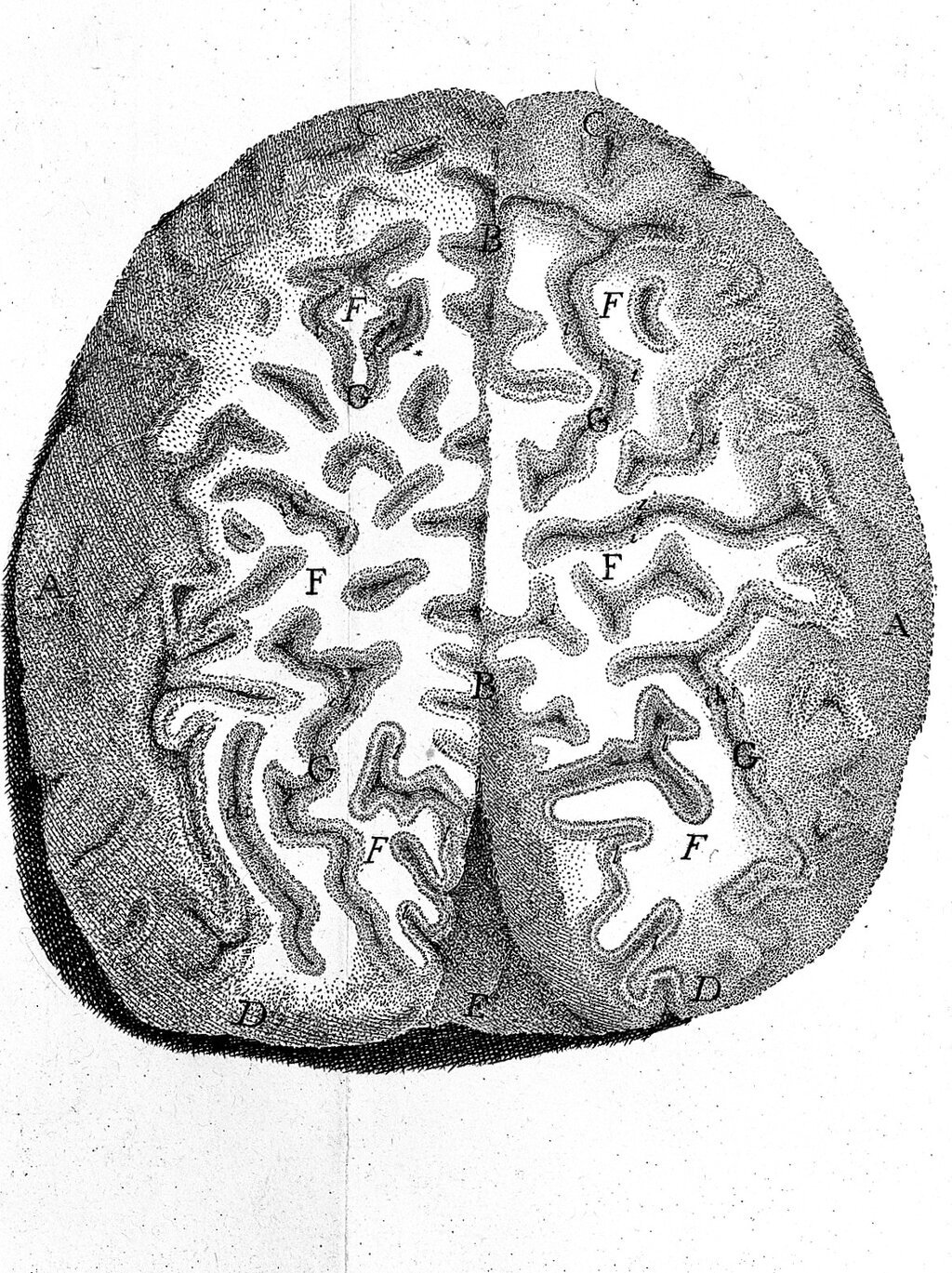
So, you can think of the gray matter as the brain's computers, and the white matter as the high-speed network that connects them.
Folds for Thought
One of the most striking features of the human brain is its wrinkly surface. These wrinkles aren't random; they serve a critical purpose. The ridges are called gyri (singular: gyrus), and the grooves are called sulci (singular: sulcus).
This folding dramatically increases the total surface area of the cerebral cortex. If you were to flatten out an adult human's cerebral cortex, it would cover the area of a large pizza! This clever packing strategy allows a huge amount of processing power to fit inside the compact space of the skull. More surface area means more room for neurons, which in turn allows for the complex cognitive abilities that define us.
gyrus
noun
A ridge or fold on the convoluted surface of the cerebral cortex.
sulcus
noun
A groove or furrow on the surface of the brain.
The pattern of these gyri and sulci is remarkably consistent among humans, allowing neuroscientists to create a map of the brain and identify specific functional areas.
What is the primary role of the cerebrum?
The left and right cerebral hemispheres communicate with each other through a massive bundle of nerve fibers called the ____.
The cerebrum's intricate structure of hemispheres, matter types, and folds forms the biological foundation for our most complex thoughts and actions.