The Hudson River School
Introduction to the Hudson River School
A New American Landscape
In the mid-19th century, a group of New York City-based artists looked at the American wilderness and saw something profound. They weren't part of a formal institution, but they shared a powerful vision. Today, we call them the Hudson River School.
This was America's first true artistic movement. The nation was young, expanding, and brimming with a sense of destiny. These painters ventured out from their studios into the Hudson River Valley, the Catskill Mountains, and beyond. They wanted to capture the raw, untamed beauty of the continent on their canvases.
Their goal wasn't just to paint a picture of a mountain or a river. They aimed to convey the feeling of being in these wild places—the awe, the grandeur, and a sense of the divine in nature.
The Founding Painters
Three artists stand at the heart of the Hudson River School. Their work defined the movement and inspired a generation of painters.
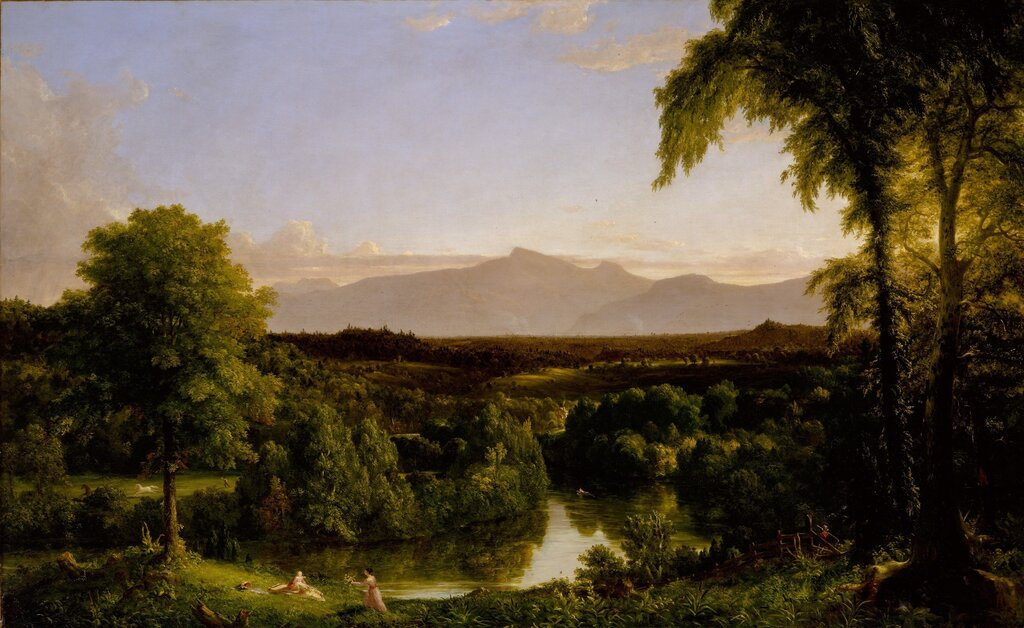
Thomas Cole is considered the founder. An English immigrant, he was captivated by the American landscape. His paintings are often dramatic and allegorical, using nature to tell stories about humanity and the passage of time.
Asher B. Durand, a friend of Cole's, took over as the movement's leader after Cole's death. Durand urged artists to paint directly from nature. His work is known for its incredible detail and realistic depiction of trees, rocks, and light.
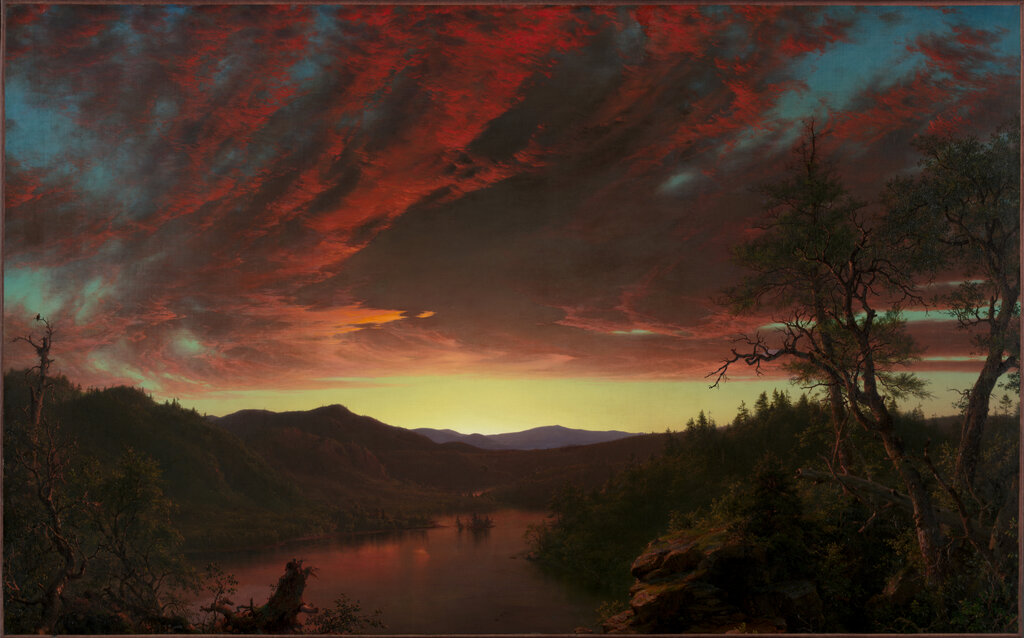
Frederic Edwin Church, a student of Thomas Cole, took the school's ideals to a global scale. He painted monumental, breathtaking scenes not just of America, but also of South America and the Arctic. His canvases are often enormous, filled with scientific detail and a sense of epic adventure.
Nature and Emotion
The artists of the Hudson River School were deeply influenced by Romanticism, a European movement that prioritized emotion and the power of the individual. For these painters, nature wasn't just scenery; it was a source of spiritual renewal and a reflection of God's power. This idea is a cornerstone of their work.
Romanticism fueled a view of nature as a sublime, untamable force, capable of inspiring both terror and awe. Hudson River School painters translated this feeling onto the canvas.
Their paintings often contrast the vast, wild landscape with tiny human figures, emphasizing nature's immense scale. They also used dramatic light—stormy skies, brilliant sunsets, and misty dawns—to create a powerful emotional atmosphere. The landscape was the main character in their stories.
From Rise to Fall
The Hudson River School flourished from about 1825 to 1870. The first generation, led by Cole, focused on the pastoral and sublime landscapes of the Northeast. The second generation, including artists like Church and Albert Bierstadt, expanded their scope, painting the majestic Rocky Mountains, the American West, and other exotic locales.
By the late 19th century, the movement's popularity faded. The Civil War had changed the national mood, and a desire for untamed wilderness was replaced by a focus on industrial progress. New artistic styles from Europe, like Impressionism, also captured the art world's attention.
Though the movement itself ended, the Hudson River School left a lasting legacy. It helped shape America's view of its own landscape and created a powerful, distinctly American style of art that continues to inspire.
Ready to check your understanding? Let's see what you've learned.
Who is considered the founder of the Hudson River School?
The Hudson River School's philosophy, which emphasized emotion and the spiritual power of nature, was deeply influenced by which major European movement?
The Hudson River School was more than just pretty pictures; it was a philosophical and artistic declaration about America and its relationship with the natural world.