The Horse's Epic Journey Through Time
Introduction to Equine Evolution
The First Horses
The story of the horse begins about 55 million years ago, not on open plains, but deep within the forests of the Eocene epoch. The earliest known ancestor, Hyracotherium, was a small, shy creature, no bigger than a fox. It didn't look much like the horses we know today.
Hyracotherium had an arched back, a short neck, and a long tail. Instead of hooves, it had padded feet with four toes on its front feet and three on its back, much like a modern tapir. These feet were perfect for navigating the soft, uneven floor of the forest.
Its diet consisted of soft leaves and fruit, which it nipped with small, simple teeth. This forest-dwelling browser was well-suited to its environment. But the world was changing, and the horse's ancestors would have to change with it.
Out of the Woods
Over millions of years, the climate became cooler and drier. Dense forests began to shrink, replaced by vast, open grasslands. This shift in habitat presented new challenges and opportunities for the evolving horse.
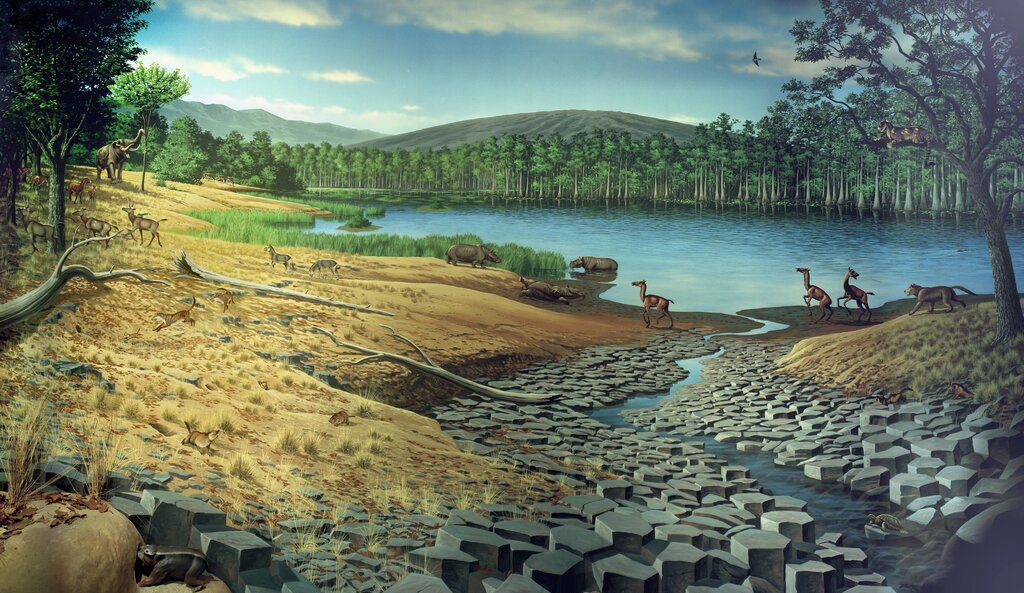
Creatures that could thrive on the new vegetation—tough, gritty grasses—had an advantage. Around 17 million years ago, a key transitional species called Merychippus appeared. It was a game-changer. Merychippus was larger, about the size of a pony, and had developed the crucial adaptations for a life on the plains.
First, its teeth changed dramatically. They became longer and high-crowned, with complex ridges of hard enamel for grinding down abrasive grasses. This protected the teeth from wearing out quickly. Second, its legs grew longer and the bone structure of its feet was transformed. The central toe grew larger and stronger, bearing most of the animal's weight, while the side toes shrank, lifting off the ground. This was the first step towards the modern single hoof, an adaptation built for speed and endurance in open country.
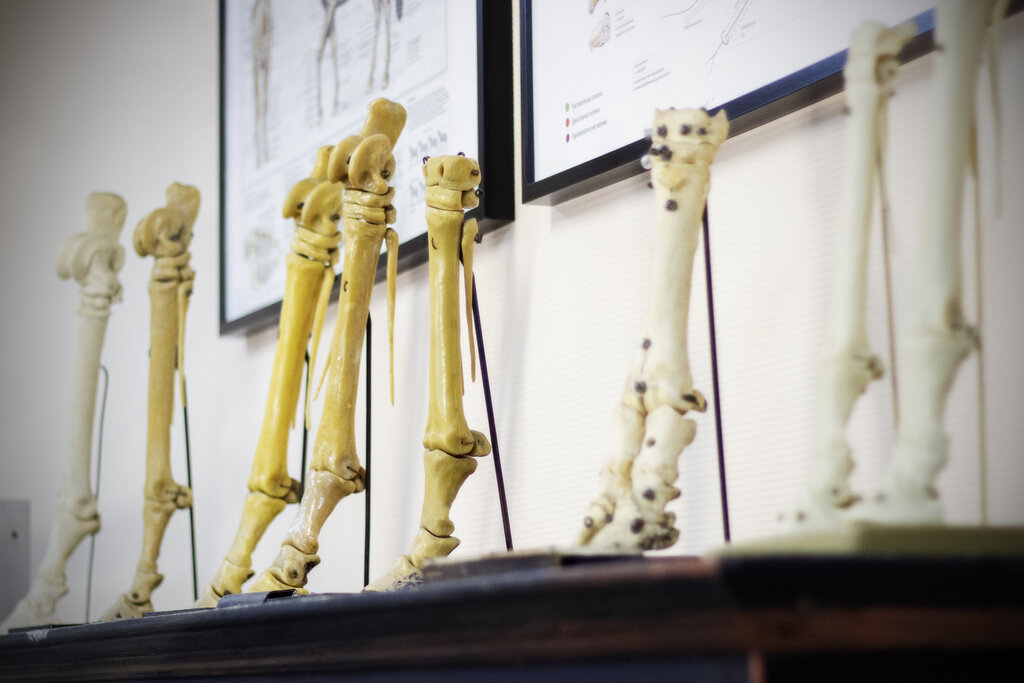
These changes weren't random. A longer stride meant faster running speed to escape predators on the open plains. Hardier teeth meant a reliable food source was now available. The horse was being shaped by its new world.
The Modern Model
The trend toward a single, large toe continued. About 12 million years ago, Pliohippus emerged. This species is often considered the first true one-toed horse, with its side toes reduced to small, non-functional splint bones on either side of the cannon bone, just like in modern horses. Pliohippus roamed the grasslands of North America and was a powerful runner.
The single hoof is a masterpiece of evolutionary engineering. It acts as a spring, absorbing shock and storing energy with each stride, making horses incredibly efficient long-distance runners.
Finally, about 4 million years ago, the genus Equus—which includes all modern horses, donkeys, and zebras—made its appearance. These animals had perfected the adaptations of their ancestors: they were larger, faster, and had the durable, high-crowned teeth needed for a lifetime of grazing. This successful design allowed them to spread from North America across the globe, occupying grasslands on nearly every continent.
| Species | Time Period | Key Features |
|---|---|---|
| Hyracotherium | ~55 mya | Small, multi-toed, forest-dweller, ate soft leaves. |
| Merychippus | ~17 mya | Pony-sized, three toes (center one dominant), ate grasses. |
| Pliohippus | ~12 mya | First one-toed horse, grassland grazer. |
| Equus | ~4 mya to Present | Modern horses, donkeys, and zebras. Single hoof, durable teeth. |
From a small forest creature to a magnificent plains runner, the horse's evolutionary journey is a clear story of adaptation. Each change in size, teeth, and foot structure was a response to a changing world, leading to the powerful and graceful animal we know today.
What was the primary environmental change that drove the evolution of the horse from a small, forest-dwelling creature to a large, plains-dwelling grazer?
The earliest known ancestor of the horse, Hyracotherium, was a large, one-toed animal that roamed the ancient plains of North America.