The Horizon of Artificial Intelligence
AI Evolution
The Generations of AI
Artificial intelligence isn't a single invention. It's an evolving field that has progressed through distinct stages, each building on the last. Think of them as generations, much like in a family tree, where each new version inherits traits from its predecessors while developing its own unique abilities.
The first generation, AI 1.0, is often called Information AI. Its main job is to find patterns in vast amounts of data. This is the AI that powers recommendation engines on streaming services or identifies spam in your email. It uses machine learning and deep learning to analyze information that already exists. It’s incredibly good at recognizing faces in photos, translating languages, and classifying data, but it’s fundamentally reactive. It processes what it's given but doesn't take independent action in the world.
AI 1.0 can tell you if a picture contains a cat, but it can't decide to go find a cat on its own.
The next leap brings us to AI 2.0, or Agentic AI. The key word here is "agentic," which means having the capacity to act. This generation moves beyond simply processing information to making decisions and taking actions to achieve specific goals. An agentic AI can interact with digital systems, plan steps, and execute tasks. Virtual assistants that schedule meetings or AI systems that manage stock trades are early examples. They have a degree of autonomy within a defined digital environment.
From Digital to Physical
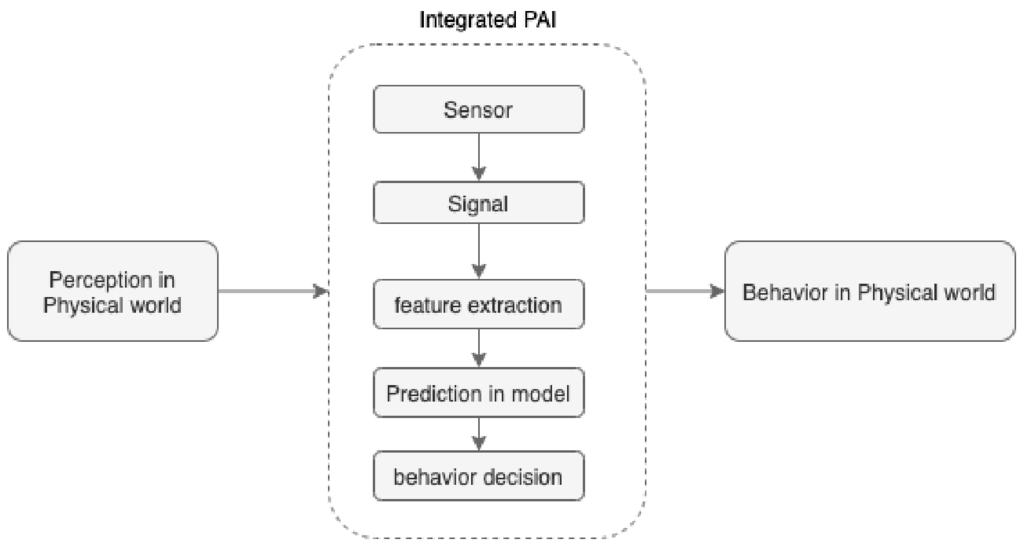
The evolution continues with AI 3.0, Physical AI. This is where artificial intelligence moves out of computers and into the real world. Think of self-driving cars, sophisticated robotics in factories, or delivery drones. This generation integrates the pattern recognition of AI 1.0 (to see and understand the world) and the decision-making of AI 2.0 (to navigate and act) into a physical body. Interacting with the unpredictable physical world is a massive step up in complexity from operating in a structured digital one.
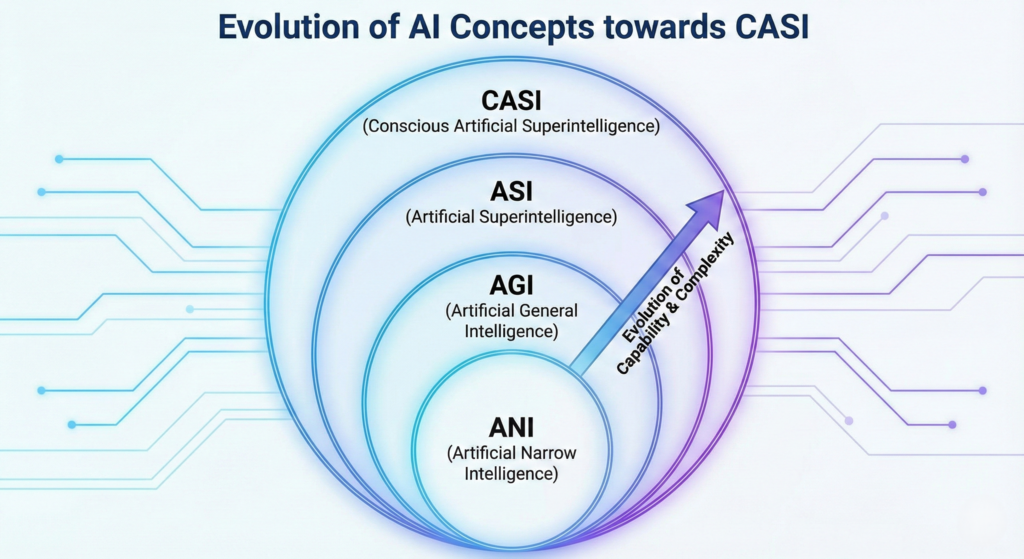
Finally, we have the speculative and still distant AI 4.0, which some call Conscious AI. This is the stage where AI might develop self-awareness, genuine understanding, and the ability to define its own goals, independent of human instruction. It’s a transition from an AI that does what it’s told to an AI that decides what to do. While the previous generations are tools, however advanced, AI 4.0 represents a potential partner or even an independent entity. This remains firmly in the realm of theory and science fiction for now.
What Drives the Leaps?
What causes these generational shifts? It isn't one single thing, but a powerful combination of three key technological drivers.
| Driver | Role in AI Evolution |
|---|---|
| Algorithms | These are the recipes. New and improved algorithms for machine learning, neural networks, and reasoning allow AI to learn more efficiently and solve more complex problems. |
| Computing Power | This is the engine. The development of specialized hardware, like GPUs, provides the raw processing power needed to run complex algorithms on massive datasets. More power enables bigger, more capable AI models. |
| Data | This is the fuel. The explosion of digital information from the internet, sensors, and countless other sources provides the vast training material that modern AI needs to learn and improve. |
Each of these drivers feeds the others. Better algorithms demand more computing power, which in turn can process even larger datasets, leading to new insights that inspire even better algorithms. This self-reinforcing cycle is what pushes AI from one generation to the next.
Now, let's test your understanding of these AI generations.
A system that analyzes your viewing history on a streaming service to suggest new movies is an example of which AI generation?
What is the key capability that distinguishes Agentic AI (AI 2.0) from Information AI (AI 1.0)?