The History of Football
Origins of Football
From Ancient Fields to Village Squares
Kicking a ball around is a timeless pastime. Long before the roar of a stadium crowd, ancient cultures played games that shared a simple, common thread with modern football. In China, a game called Cuju involved kicking a leather ball through an opening in a silk cloth. The ancient Greeks played Episkyros, and the Romans adapted it into Harpastum, a small-sided, intense game played on a rectangular field.
These weren't football as we know it. They were distinct games with their own rules and purposes, often serving as military training exercises. But they planted a seed: the idea of a team sport centered on moving a ball with your feet.
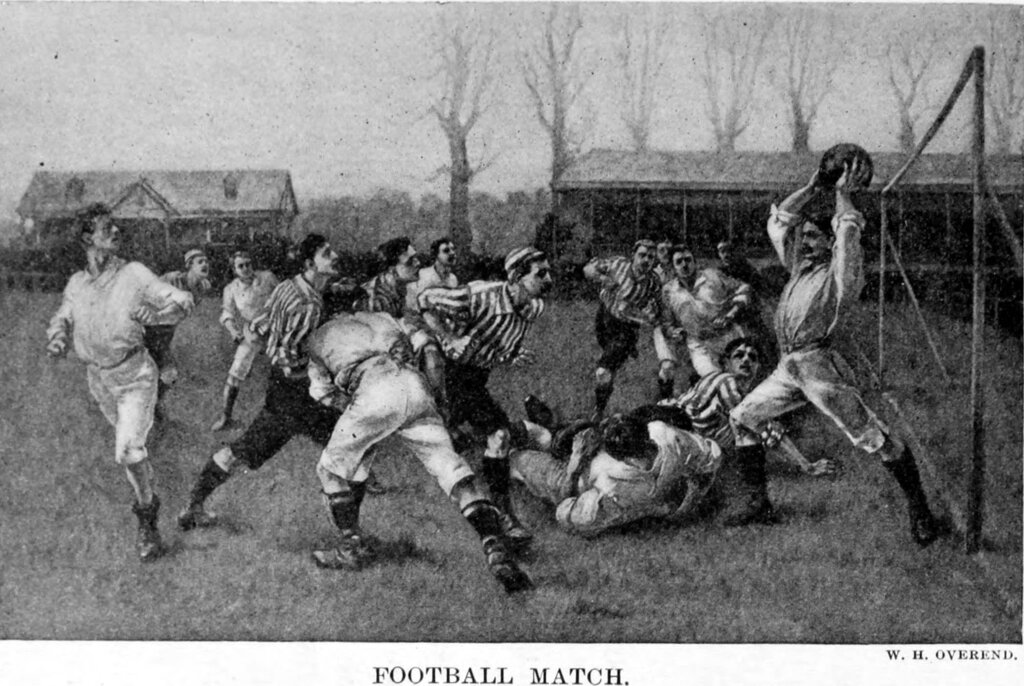
Centuries later, in medieval Europe, these seeds grew into something wilder. Folk football, or 'mob football,' was a chaotic and often violent affair. Entire villages would compete, using an inflated pig's bladder as a ball. The 'goals' could be miles apart, and the rules were few. The objective was simply to get the ball to a designated spot in the opposing village, by any means necessary. These games were so unruly that authorities frequently tried to ban them.
A Game in Need of Rules
The transition from a lawless village brawl to an organized sport happened in the public schools of 19th-century England. As boys from different schools began to play against each other, a problem became obvious: everyone had their own rules. Some schools, like Rugby, allowed players to pick up the ball and run with it. Others, like Eton, strictly forbade it.
This inconsistency made inter-school matches nearly impossible. A common set of laws was needed to create a fair and standardized game.
The moment of change came in 1863. Representatives from several football clubs and schools met at the Freemasons' Tavern in London. Their goal was to settle the debates and establish a single, unified code.
It wasn't until 1863, with the formation of the Football Association (FA) in England, that a standardized set of rules was established, laying the foundation for modern football.
This meeting marked the birth of The Football Association (FA). It also created a fundamental split. The clubs that favored carrying the ball eventually broke away to form the Rugby Football Union. The ones who prioritized kicking and dribbling moved forward under the FA's new rules, creating the game of association football, or soccer.
The First Laws of the Game
The first rulebook, drafted by a man named Ebenezer Cobb Morley, contained 13 laws. They were remarkably simple compared to today's complex regulations. They defined basics like the size of the pitch, the nature of a goal, and what constituted a foul.
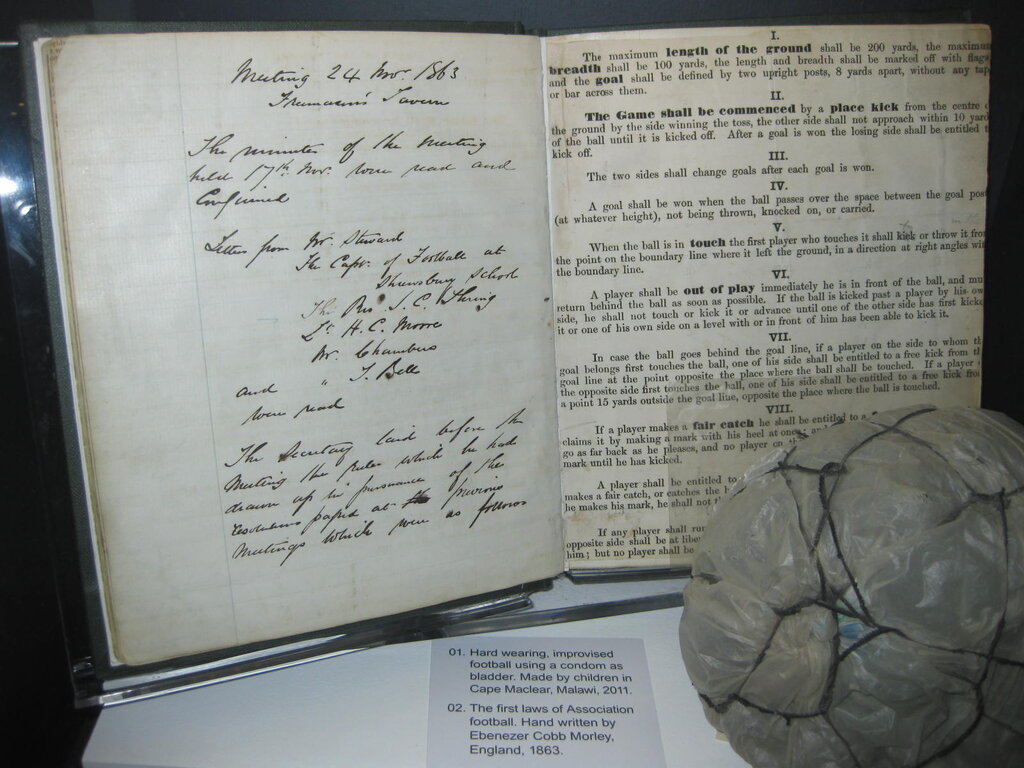
One key rule banned 'hacking,' or kicking an opponent in the shins, which had been a common and accepted part of many school games. This decision was crucial in shifting football away from brute force and towards skill. The laws also established the offside rule, though in a very different form than the one used today.
| Key Rule in 1863 | What It Did |
|---|---|
| No Hacking | Banned kicking opponents on the leg. |
| Fair Catch | Allowed a player to catch the ball (if untouched) for a free kick. |
| No Running with Ball | Prohibited carrying the ball in hand. |
| Throw-in | Awarded to the first player to touch the ball after it went out of bounds. |
These foundational rules were the blueprint for modern football. They created a game that was organized, less violent, and focused on teamwork and ability. From here, the sport would spread across the globe, evolving into the world's most popular game.