The Hidden Logic of Negative Emotions
Social Pain Architecture
The Anatomy of a Broken Heart
Being excluded, whether from a group chat or a major life event, hurts. It’s not just a figure of speech; the sting of social rejection is a real sensation processed by our brains. Neuroscientists have discovered that the pathways that light up when you stub your toe are remarkably similar to the ones activated when you're left out.
This phenomenon is known as the 'shared representation' theory of pain. It suggests that social pain co-opts the brain's existing physical pain system. Evolutionarily, this makes sense. For early humans, being cast out from the group was a direct threat to survival, as dangerous as a physical injury. The brain needed a powerful way to signal this danger, and it repurposed the system it already had for sounding the alarm.
When a person is ostracized for even a brief period of time, the anterior cingulate cortex, the part of the brain that detects pain, is activated.
Two key brain regions are central to this experience: the Dorsal Anterior Cingulate Cortex (dACC) and the Anterior Insula (AI). Together, they form the core of our social pain network.
The Social Alarm System
Think of the Dorsal Anterior Cingulate Cortex (dACC) as the brain's distress signal. Its primary job is to monitor for conflict and flag things that are emotionally significant and unpleasant. When you experience rejection, the dACC fires up, creating the affective, distressing quality of the pain. It’s the part of the experience that makes you feel genuinely upset and signals that something is wrong.
It doesn't process the sensory details of pain, like where an injury is located. Instead, it handles the emotional reaction to it. The dACC is what makes both a physical burn and a social snub feel unpleasant and worthy of your immediate attention. It’s the brain's way of shouting, "Pay attention! This is a threat!"
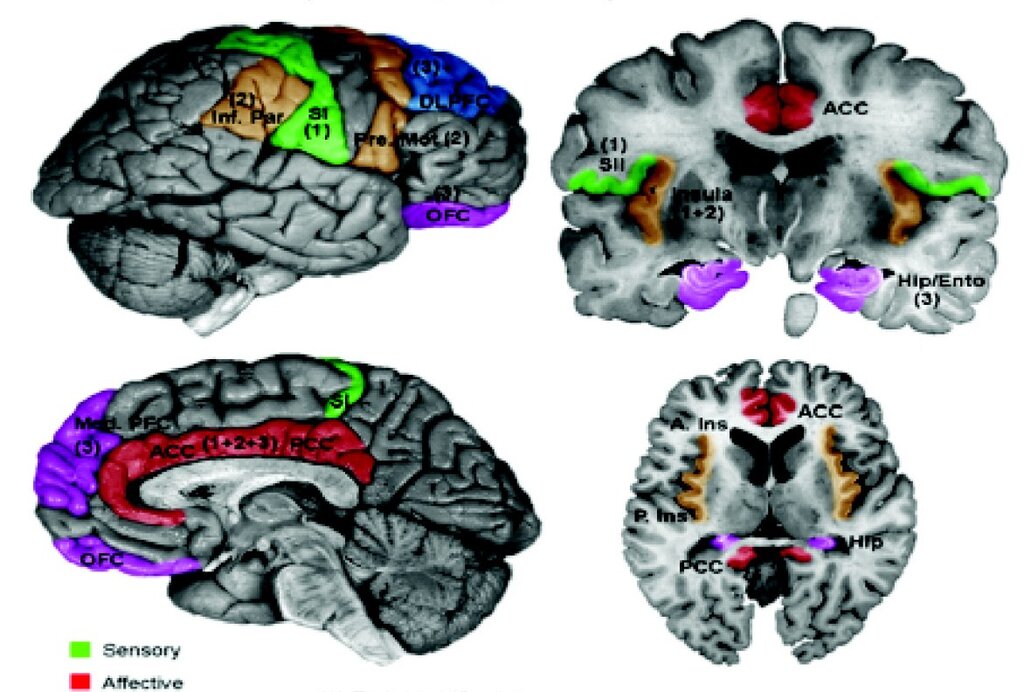
While the dACC provides the emotional alarm, the Anterior Insula (AI) gives social pain its visceral, bodily feeling. The AI is responsible for interoceptive awareness, which is the sense of your internal physical state. It translates emotional distress into physical sensations.
This is why a betrayal can feel like a 'punch to the gut' or why profound loss creates a literal heartache. The AI integrates the dACC's alarm signal with information from your body, generating the physical sensations we associate with emotional suffering. It’s the reason a broken heart doesn't just feel sad; it feels physically painful.
Why Social Connection is a Survival Need
This intricate brain system didn't evolve by accident. For our ancestors, belonging to a group was a matter of life and death. A lone individual was vulnerable to predators and starvation, with little chance of passing on their genes. Social bonds ensured access to resources, protection, and mates.
Therefore, the brain evolved to treat threats to social connection with the same urgency as threats of physical harm. The pain of rejection is a powerful adaptive mechanism, a biological warning light that pushes us to repair social ties and maintain our standing within the group. It's a fundamental part of our wiring that underscores just how deeply we need each other to survive.
Now, let's test your understanding of how the brain processes social pain.
What is the name of the theory that suggests the brain's systems for physical and social pain overlap?
Which brain region is primarily responsible for the affective, distressing quality of social pain, essentially acting as the brain's 'distress signal'?
Understanding this shared architecture between physical and social pain reveals why our relationships are not just emotionally important, but biologically essential.