The Hidden Logic of Layered Emotions
Emotional Architecture
The Emotional Foundation
At the very base of our emotional experience are ancient, raw, and instinctual systems that we share with all mammals. Neuroscientist Jaak Panksepp called these 'primary-process affects.' They aren't the complex feelings we describe with words, but rather the hardwired, subcortical survival programs that drive behavior. Think of them as the engine room of the mind, operating deep below conscious awareness.
These primary affects are the ancestral inheritance of our nervous system, guiding us toward what helps us survive and away from what harms us.
Panksepp identified seven core emotional systems, each with its own dedicated neural circuitry. These systems generate instinctual emotional actions, not thoughts.
| System | Function | Feeling State |
|---|---|---|
| SEEKING | Exploration, interest, desire | Enthusiastic, curious |
| RAGE | Response to frustration or restraint | Anger, irritation |
| FEAR | Response to threat or danger | Anxious, scared |
| LUST | Procreation, sexuality | Aroused, horny |
| CARE | Nurturing, parental instincts | Tender, loving |
| PANIC/GRIEF | Response to separation or loss | Sad, lonely, distressed |
| PLAY | Social joy, rough-and-tumble interaction | Giddy, joyful |
Building on the Foundation
These raw, primary affects don't operate in a vacuum. They are shaped and molded by experience through learning. This is the realm of 'secondary processes.' Through basic conditioning, the brain learns to associate specific triggers in the environment with the activation of these primary systems.
A neutral stimulus, like the sound of a specific person's footsteps, can become associated with the CARE system if that person is a loved one. Or, it could become linked to the FEAR system if that person is a threat. This is where the raw, bottom-up signals from the subcortex begin to get context from the world. Your personal history starts to write the rules for what triggers your core emotions.
This learned layer allows for much more nuanced and flexible behavior than the purely instinctual responses of the primary systems.
The Brain's Emotional Switchboard
So how does the brain transform these subcortical alarms and learned associations into the conscious experience we call a 'feeling'? This is where large-scale brain networks come into play, coordinating information flow between lower and higher brain regions.
The Salience Network (SN), with its key hubs in the insula and anterior cingulate cortex, acts as a rapid relevance detector. It constantly scans incoming sensory information and internal body states, looking for anything that stands out as important, threatening, or potentially rewarding. When the SN detects something salient, it triggers a switch.
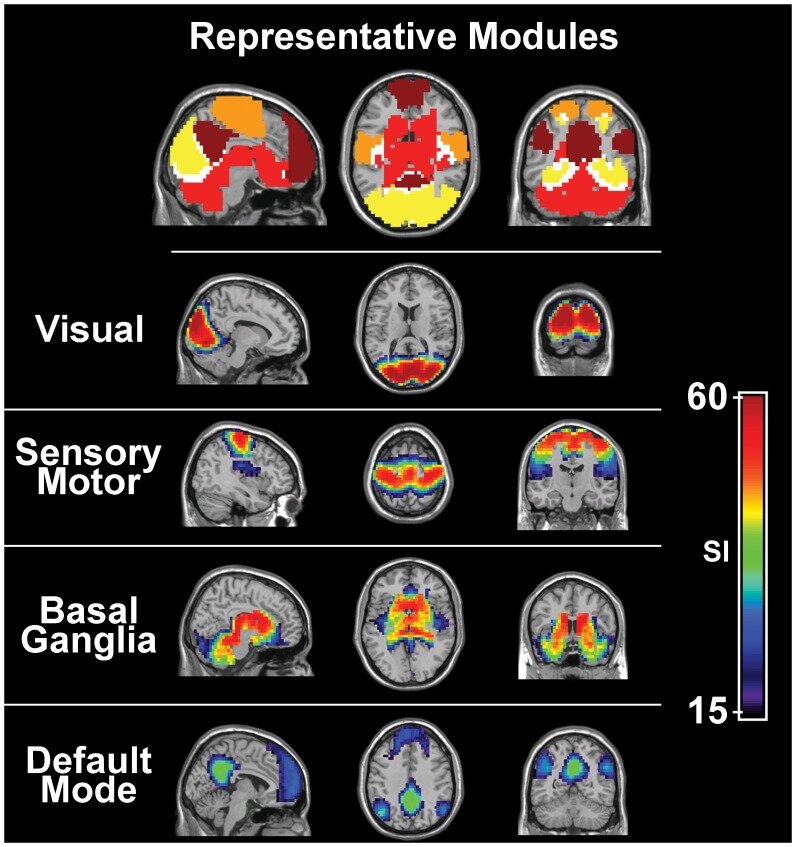
This switch directs your attention. It dampens the activity of the inward-focused Default Mode Network (DMN) and boots up the outward-focused Central Executive Network (CEN). The CEN is your brain's 'thinking' cap, responsible for working memory, planning, and decision-making. The SN essentially tells the CEN, 'Hey, pay attention to this!'
This interplay is the crucial link between affect and cognition. The raw, bottom-up signal from the primary and secondary systems is the affect. The conscious interpretation, labeling, and planning that follows—'I feel angry because I was disrespected, and I should walk away'—is the cognitive component managed by the CEN. This top-down processing transforms a raw emotional impulse into a coherent feeling that can guide complex behavior.
Let's test your understanding of how these emotional layers work together.
According to Jaak Panksepp, what are 'primary-process affects'?
A person develops a fear of dentists after a painful procedure. This learned association is an example of a...
Understanding this architecture—from raw affects, through learned associations, to cognitive interpretation—provides a framework for deconstructing any emotional experience.