The Habitable Goldilocks Zone
Introduction to Exoplanets
Worlds Beyond Our Sun
For nearly all of human history, the planets we knew were the ones right here in our cosmic neighborhood: Mercury, Venus, Mars, and the rest. They were our only examples of what a planet could be. But our sun is just one of hundreds of billions of stars in the Milky Way galaxy. It seemed unlikely that it would be the only one with planets.
exoplanet
noun
A planet that orbits a star outside our solar system.
Scientists long suspected that other stars had planets, but finding them was another matter entirely. An exoplanet is incredibly small and dim compared to its star. Spotting one directly is like trying to see a moth flying around a searchlight from miles away. For decades, they remained theoretical.
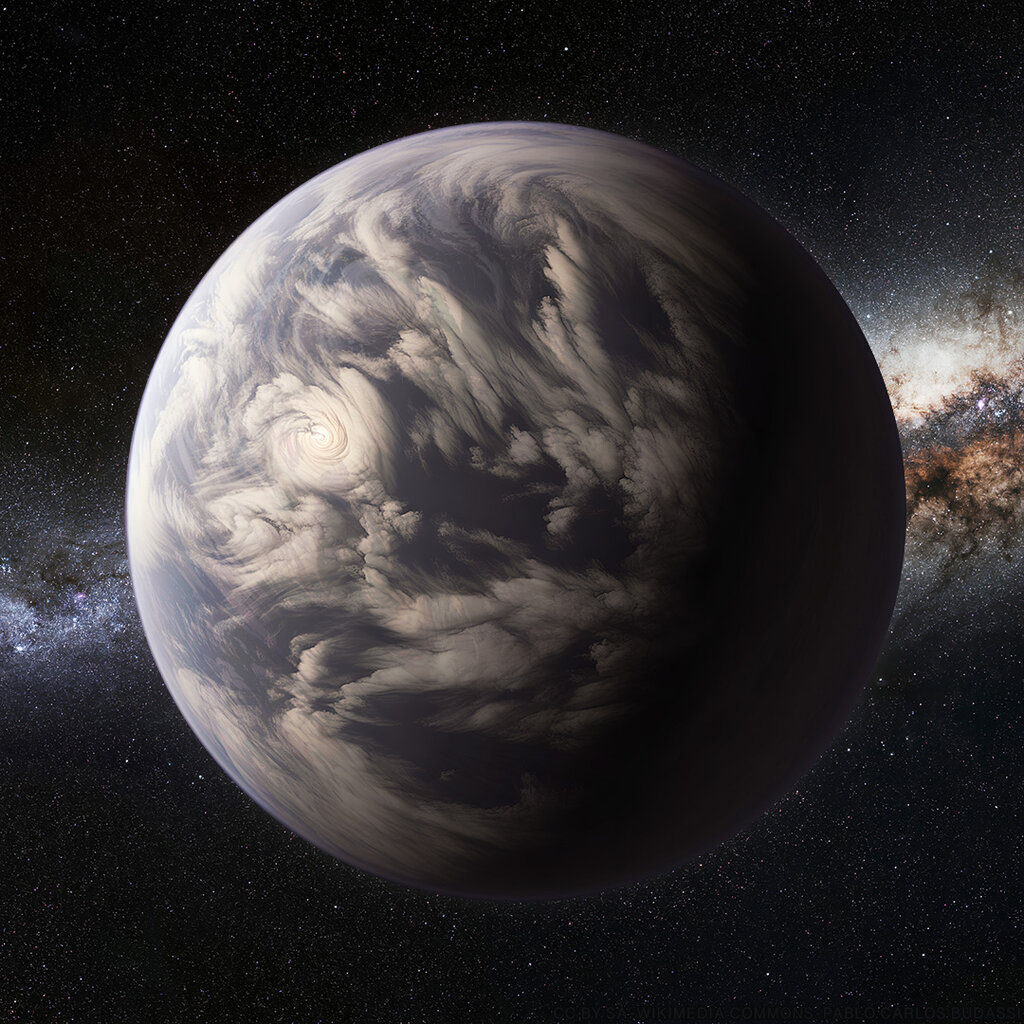
That changed in the 1990s. The first confirmed discovery of an exoplanet orbiting a sun-like star came in 1995. It was a giant planet called 51 Pegasi b, and its discovery opened the floodgates. Today, we know of thousands of confirmed exoplanets, with thousands more candidates waiting to be verified. The universe, it turns out, is full of worlds.
How to Find a Hidden Planet
Since looking for an exoplanet directly is so difficult, astronomers developed clever indirect methods. Instead of trying to see the planet itself, they look for the effect the planet has on its parent star.
Two of the most successful techniques are the transit method and the radial velocity method.
The transit method watches for a star's light to dim. If a planet's orbit is aligned just right, it will pass in front of its star from our point of view. When this happens, it blocks a tiny fraction of the starlight, causing a slight, temporary dip in the star's observed brightness. This event is called a transit.
By measuring how much the light dims and how long the dimming lasts, astronomers can calculate the planet's size and the length of its orbit. The Kepler Space Telescope used this method to discover thousands of exoplanets.
The radial velocity method looks for a star's wobble. A planet doesn't just orbit its star; the star and planet both orbit their common center of mass. Because the star is so much more massive, its orbit is just a tiny wobble. But this wobble is detectable.
As the star wobbles toward Earth, its light waves get compressed, shifting toward the blue end of the spectrum (a blueshift). As it wobbles away, the light waves are stretched, shifting toward the red end (a redshift). By detecting these tiny, rhythmic shifts in the star's light, scientists can infer the presence of an orbiting planet and even estimate its mass.
Why We Search
Studying exoplanets does more than just add to a catalog of distant worlds. Each new discovery helps us understand how planetary systems form and evolve. We've found 'Hot Jupiters' orbiting scorching-hot, close to their stars, and 'Super-Earths' that are larger than our planet but smaller than Neptune. These are types of planets that don't even exist in our own solar system.
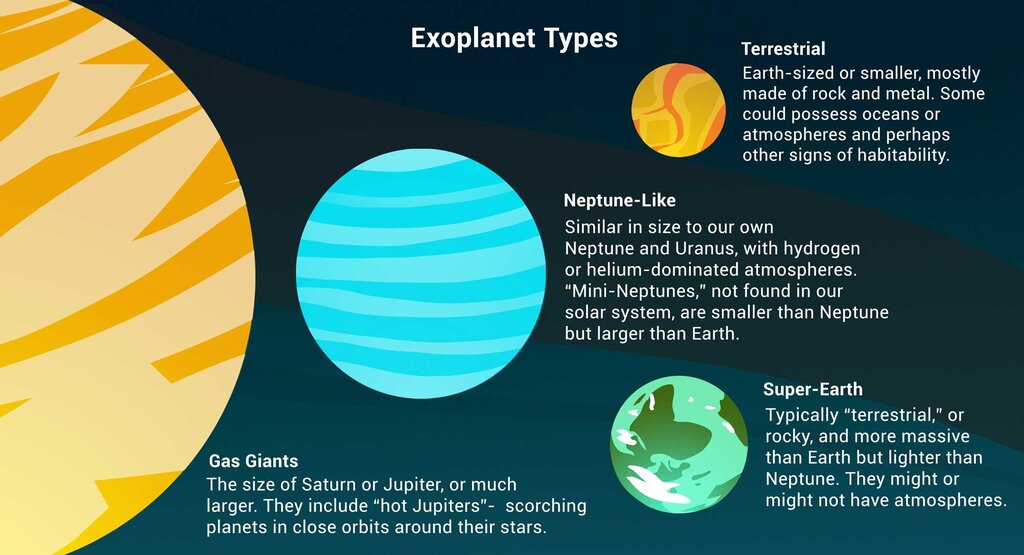
By comparing these diverse systems, we can piece together the story of how planets, including our own, came to be. It helps us place our solar system in a galactic context. Is our planetary arrangement common or rare?
Finding life on exoplanets from telescopic observations is an ultimate goal of exoplanet science.
And of course, there is the search for life. Finding planets beyond our solar system is the first step in answering one of humanity's oldest questions: Are we alone? Every new world we find is another place to look.
Ready to check your understanding?
Why is it so difficult to directly detect an exoplanet?
An astronomer observes a distant star and notices that its light periodically dims for a few hours before returning to normal. Which exoplanet detection method is being used?
The discovery of exoplanets has transformed astronomy, turning points of light in the night sky into solar systems waiting to be explored.