The Great War Explained
Origins of World War I
The Powder Keg of Europe
At the dawn of the 20th century, Europe was a continent of empires, industry, and new ideas. On the surface, an intricate network of trade, royal family ties, and diplomacy seemed to hold everything together. But beneath this fragile peace, tensions were mounting. A complex web of rivalries and ambitions was turning Europe into a powder keg, waiting for a single spark to set it off.
The seeds of the devastating conflict had been planted long before the assassination of Archduke Franz Ferdinand.
A Tangled Web of Alliances
Imagine a schoolyard where every kid has promised to back up their friends in a fight. A small disagreement between two people could quickly escalate into a massive brawl. This was the situation in Europe before 1914. The great powers had organized themselves into two competing teams, bound by treaties of mutual defense.
First was the Triple Alliance, formed by Germany, Austria-Hungary, and Italy. Germany, a new and powerful nation, feared being surrounded by enemies. It allied with the sprawling, multi-ethnic Austro-Hungarian Empire to its south. Italy joined later, seeking its own allies on the European stage.
Opposing them was the Triple Entente. This was an understanding between France, Russia, and Great Britain. France and Russia were united by their shared suspicion of Germany's growing power. Great Britain, traditionally staying out of continental disputes, grew worried by Germany's naval ambitions and eventually joined the fold, completing the circle of alliances around Germany.
These alliances created a dangerous domino effect. A conflict that might have been contained between two nations could now drag the entire continent into war. Austria-Hungary might have an issue with Serbia, but because Russia was Serbia's ally, and Germany was Austria-Hungary's ally, and France was Russia's ally, a small fire could quickly become an inferno.
Nationalism and Imperialism
At the same time, a powerful force was reshaping identities across Europe: nationalism. This was more than just patriotism; it was the belief that one's own nation was superior and that its interests should come first. It was also the desire of ethnic groups to have their own independent countries.
Nationalism
noun
Identification with one's own nation and support for its interests, especially to the exclusion or detriment of the interests of other nations. Also, advocacy for or the assertion of the political independence of a particular nation.
This idea was explosive in places like the Balkans, known as the "powder keg of Europe." Here, various ethnic groups like Serbs, Croats, and Bosnians dreamed of breaking away from the old Austro-Hungarian and Ottoman Empires to form their own nations. Russia, seeing itself as the protector of all Slavic peoples, encouraged these movements, which put it in direct conflict with Austria-Hungary.
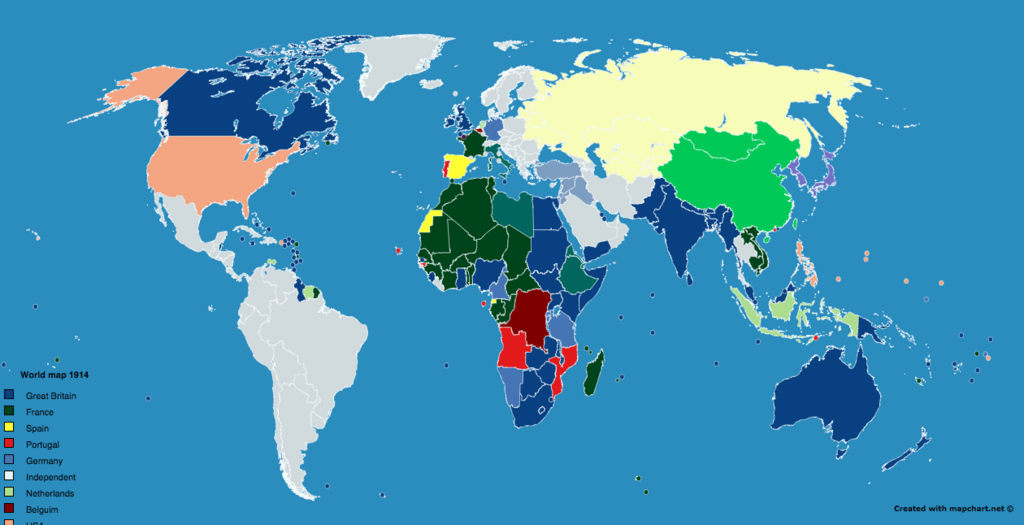
This national pride also fueled imperial rivalries. The great powers were in a global competition for colonies, resources, and influence. Great Britain had a vast empire, and France had significant holdings in Africa and Asia. Germany, a latecomer to the game, felt it deserved its own "place in the sun" and aggressively sought to expand its colonial possessions. This scramble for territory created friction and mistrust among the empires.
The Arms Race
With so much suspicion in the air, the great powers began to build up their militaries at an alarming rate. This policy of militarism was fueled by the belief that a strong military was essential for national glory and security. Armies grew larger, and new, more deadly weapons were developed.
The most famous part of this arms race was the naval competition between Great Britain and Germany. Britain, as an island nation, depended on its navy for protection and to control its global empire. When Germany began building a large, modern fleet of warships, Britain saw it as a direct threat. This naval race poisoned relations between the two countries and pushed Britain closer to France and Russia.
This widespread buildup of military power created an atmosphere where war was not just seen as possible, but as an inevitable solution to political disputes.
The Spark in Sarajevo
Alliances, nationalism, imperialism, and militarism had set the stage. All that was needed was a single event to ignite the conflict. That event came on June 28, 1914, in the city of Sarajevo, Bosnia.
Archduke Franz Ferdinand, the heir to the Austro-Hungarian throne, was visiting the city with his wife, Sophie. As their car drove through the streets, a young Serbian nationalist named Gavrilo Princip stepped out of the crowd and shot them both dead. Princip was a member of a group that wanted to free Slavic people from Austro-Hungarian rule and unite them with Serbia.
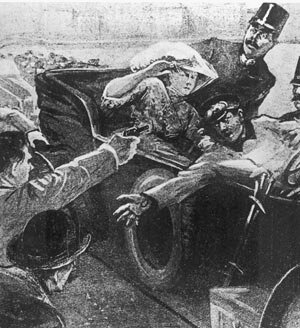
The assassination was the spark. Austria-Hungary, outraged, issued a harsh ultimatum to Serbia, blaming it for the attack. When Serbia failed to meet all the demands, Austria-Hungary declared war. The dominoes began to fall. Russia mobilized its army to support Serbia. Germany declared war on Russia to support Austria-Hungary. France declared war on Germany to support Russia. When Germany invaded neutral Belgium to attack France, Great Britain declared war on Germany.
Within weeks, the great powers of Europe were locked in a massive conflict. The powder keg had finally exploded.
Let's review the main causes that led to this global conflict.
Which of the following groups of countries formed the Triple Entente?
The naval arms race that significantly increased tensions between two major powers before 1914 was primarily between which two countries?