The Glory of Ancient Greece
Geography and Early Settlements
A Land of Mountains and Sea
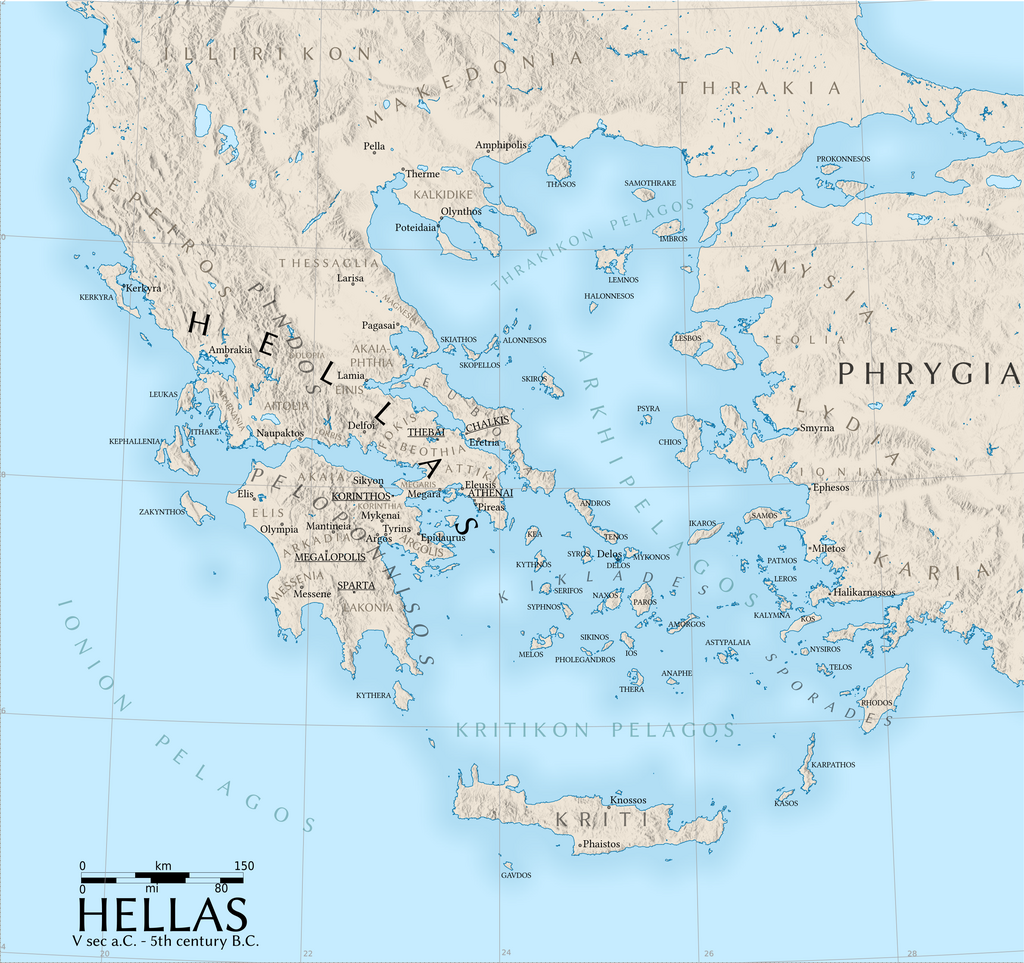
The story of ancient Greece is inseparable from its landscape. Unlike the vast, unified river valleys of Egypt or Mesopotamia, Greece is a rugged land of mountains, peninsulas, and countless islands scattered across the Aegean and Ionian seas. About 80% of the Greek mainland is mountainous, with tall peaks carving the country into small, isolated pockets of land.
The Mediterranean and Aegean seas were as central to the development of Greek civilization as the Nile was to the Egyptians.
This geography had a profound effect on the people who lived there. The mountains acted as natural walls, separating communities from one another. Travel by land was difficult and slow. The sea, however, was a connector. With its long, indented coastline and numerous harbors, it was often easier for people in one coastal valley to reach a community across the water than to travel to their neighbors just over the mountains. The sea became their highway, a source of food, and a gateway to the wider world.
Farming and Trade
The rocky, mountainous terrain was not ideal for large-scale farming. Only about 20% of the land was arable, or suitable for growing crops. These fertile areas were mostly small plains and valleys scattered between the mountains. The Greeks couldn't produce massive surpluses of grain like the Egyptians. Instead, they focused on crops that thrived in the Mediterranean climate: olives, grapes, and barley. Olive oil and wine became their most valuable agricultural products.
The scarcity of fertile land and vital resources like timber and metal pushed the Greeks to look outwards. They became skilled sailors and merchants, using the sea to trade with other civilizations. They exchanged their olive oil, wine, pottery, and metalwork for goods they lacked, especially grain from regions around the Black Sea and Egypt.
| Geographical Feature | Impact on Economy |
|---|---|
| Mountainous Terrain | Limited farming, focused on olives and grapes. |
| Long Coastline | Encouraged seafaring and maritime trade. |
| Many Islands | Served as stepping stones for trade routes. |
| Scarcity of Resources | Drove the need to import goods like grain and timber. |
The Rise of City-States
The same mountains that made farming a challenge also shaped Greek politics. Because communities were so isolated from one another, a single, unified kingdom like Egypt was unlikely to form. Instead, Greece developed into a collection of small, independent communities. Each of these communities, centered around a town or city, developed its own government, laws, and identity.
polis
noun
The ancient Greek term for a city-state, which was the fundamental political unit of ancient Greece. A polis consisted of an urban center and its surrounding countryside.
These city-states, or poleis, were fiercely independent and often competed with one another, sometimes leading to conflict. Despite their rivalries, the Greeks shared a common language, religion, and culture that distinguished them from non-Greeks, whom they called barbarians. This unique political structure, a direct result of the geography, fostered innovation and a strong sense of civic identity among its citizens.
Now, let's test your understanding of how Greece's unique geography shaped its early history.
How did the mountainous terrain of Greece most significantly influence its political development?
True or False: The abundance of fertile land allowed ancient Greeks to produce large surpluses of grain, similar to Egypt.
The mountains, seas, and islands of Greece didn't just form a backdrop for history; they actively shaped the course of its civilization, influencing everything from what people ate to how they governed themselves.