The Gilded Age
Industrial Growth Dynamics
The Infrastructure of an Industrial Giant
The decades following the Civil War saw the United States transform at a dizzying pace. This wasn't just about a few clever inventions; it was about the creation of powerful, interconnected systems that enabled production on an entirely new scale. The key was not just making new things, but making the building blocks of industry—steel and power—cheap, abundant, and easy to transport.
Before the 1860s, steel was a luxury material, expensive and difficult to produce. It was used for swords and high-end tools, not for building bridges or laying thousands of miles of track. The game-changer was the , a new technique that made it possible to produce high-quality steel quickly and in massive quantities. By blowing air through molten iron, the process burned off impurities, converting the iron into steel in a matter of minutes, not days. Suddenly, the essential material for an industrial skeleton was affordable.
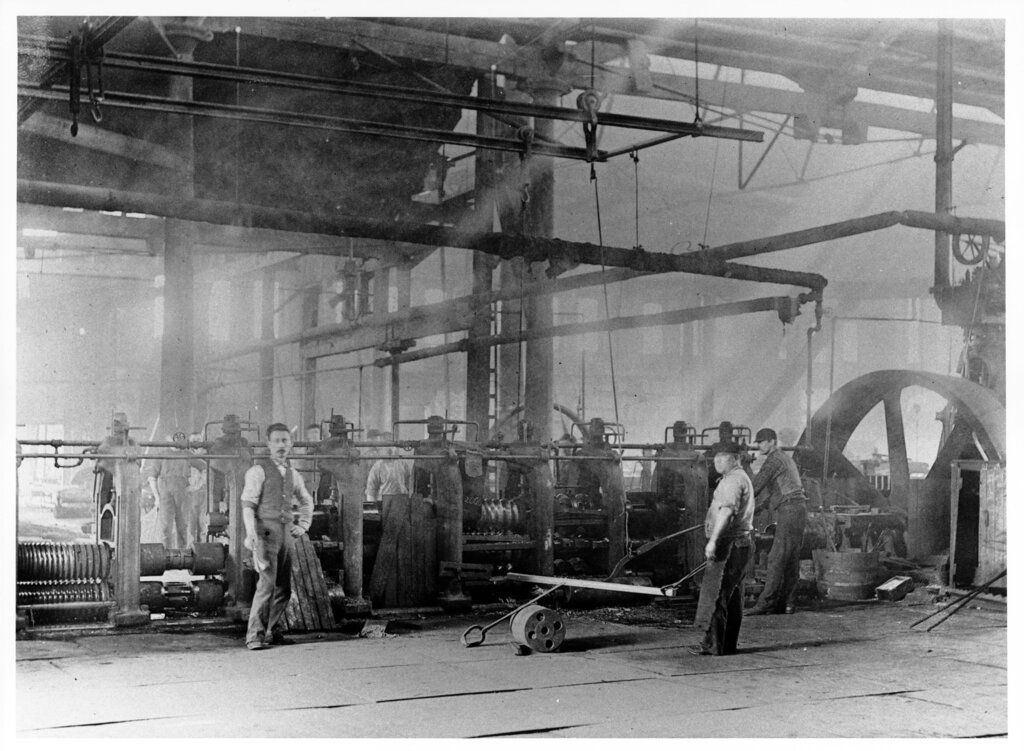
Cheap steel directly fueled the explosion of the national railroad grid. With a durable and inexpensive material for rails, bridges, and locomotives, rail lines could be laid faster and farther than ever before. The federal government accelerated this growth by awarding massive land grants to railroad companies. For every mile of track laid, the company received sections of public land alongside it, which they could then sell to finance construction and attract settlers.
This policy created a powerful incentive loop: more track led to more land sales, which funded more track. It also led to rapid consolidation, as larger, more powerful companies like the Pennsylvania Railroad and the Union Pacific bought up smaller lines to create vast, integrated networks that stitched the country together.
A Nation Wired for Power
The second critical shift was in energy. For most of the 19th century, industry ran on steam. A factory's power source was a massive, coal-hungry steam engine in the basement. All the machinery on the floors above had to be physically connected to this central engine through a complex, inefficient, and dangerous web of belts, pulleys, and shafts.
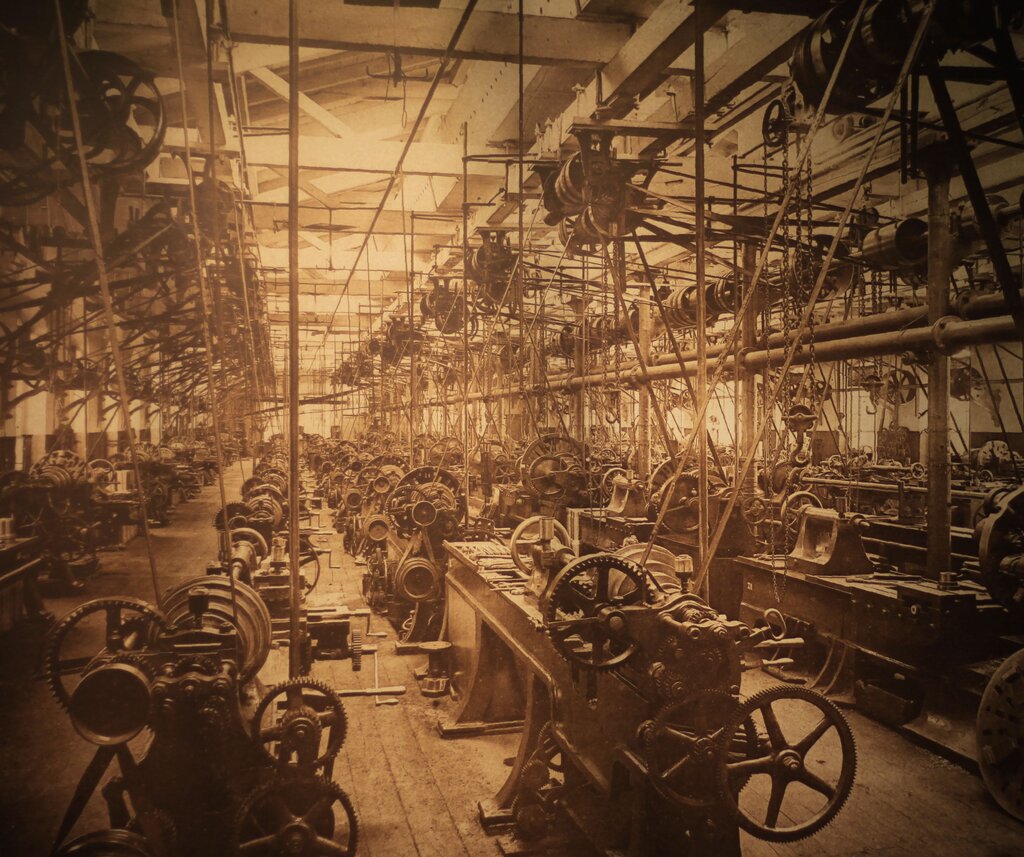
The widespread adoption of electricity in the 1880s and 1890s changed everything. With electrical power, factories no longer needed a central steam engine. Instead, they could run individual machines with their own electric motors, powered by a central generating station that might be miles away. This untethered factories from the coal pile and gave engineers incredible flexibility in how they designed production lines. Machines could be arranged for maximum efficiency and workflow, not based on their proximity to a spinning driveshaft. This was the birth of the modern assembly line.
The New Economic Geography
These interlocking systems of steel, rail, and electricity created a truly national market for the first time. A factory in Pittsburgh could now mass-produce steel beams and ship them efficiently by rail to build skyscrapers in Chicago or bridges in California. This logistical expansion had a profound effect on the economy. It allowed for immense economies of scale, favoring large corporations that could afford the massive capital investment in new factories and machinery. Local artisans and small-scale producers who had once dominated regional markets simply couldn't compete.
As a result, capital and industry became highly concentrated in specific geographic hubs. Cities like Pittsburgh (steel), Chicago (meatpacking and mail order), and New York (finance and commerce) became the nerve centers of this new industrial economy. The immense fortunes amassed by industrialists like Andrew Carnegie, John D. Rockefeller, and Cornelius Vanderbilt were a direct result of their ability to master these new systems of production and distribution, creating the stark contrasts of wealth and poverty that defined the Gilded Age.
With the foundations of large-scale production, national distribution, and flexible power in place, the stage was set for the United States to become the world's dominant economic power in the 20th century.
What was the most significant impact of the Bessemer process on U.S. industrialization?
How did the federal government actively encourage the rapid expansion of the national railroad grid after the Civil War?