The Gentiles in the Bible
Defining Israelites and Gentiles
The Children of Israel
To understand the Bible, we need to know who the key players are. At the center of the story are the Israelites. The name itself comes from a pivotal moment in the book of Genesis.
The patriarch Jacob wrestles with a mysterious figure, who then renames him 'Israel,' meaning 'he who strives with God.' From that point on, his descendants are known as the children of Israel, or Israelites.
Israelite
noun
A descendant of the patriarch Jacob (also called Israel); a member of the ancient Hebrew nation.
Jacob had twelve sons, and their families grew into the twelve tribes of Israel. These tribes formed a single nation, united by their shared ancestry and their covenant with God. Throughout the Hebrew Bible (the Old Testament), the term 'Israelite' refers to a member of this specific ethnic and religious group. It signifies more than just a nationality; it implies a special relationship with God.

The Other Nations
If the Israelites were one group, who was everyone else? The Bible lumps all other peoples together under a single category: Gentiles.
Gentile
noun
A person who is not Jewish.
The English word 'Gentile' comes from the Latin word gentilis, which means 'of a family or nation.' This is a fitting translation of the original Hebrew and Greek words. In the Hebrew Bible, the word is goy.
nation, people
Interestingly, goy could sometimes refer to Israel itself as a 'nation.' But most often, the plural form, goyim, was used to mean 'the nations'—that is, everyone who wasn't an Israelite. It was a simple way to divide the world: us and them.
A New Meaning
By the time of the New Testament, the term 'Jew' was more commonly used than 'Israelite,' but the concept of the Gentile remained. The Greek word used is ethnos.
nation, people
You might recognize the root of words like 'ethnic' and 'ethnicity.' For early Christians, who were almost all Jewish at first, the distinction between Jew and Gentile was huge. A central theme of the New Testament is the expansion of the Christian message beyond the Jewish people to all the nations (ethne), or Gentiles, of the world.
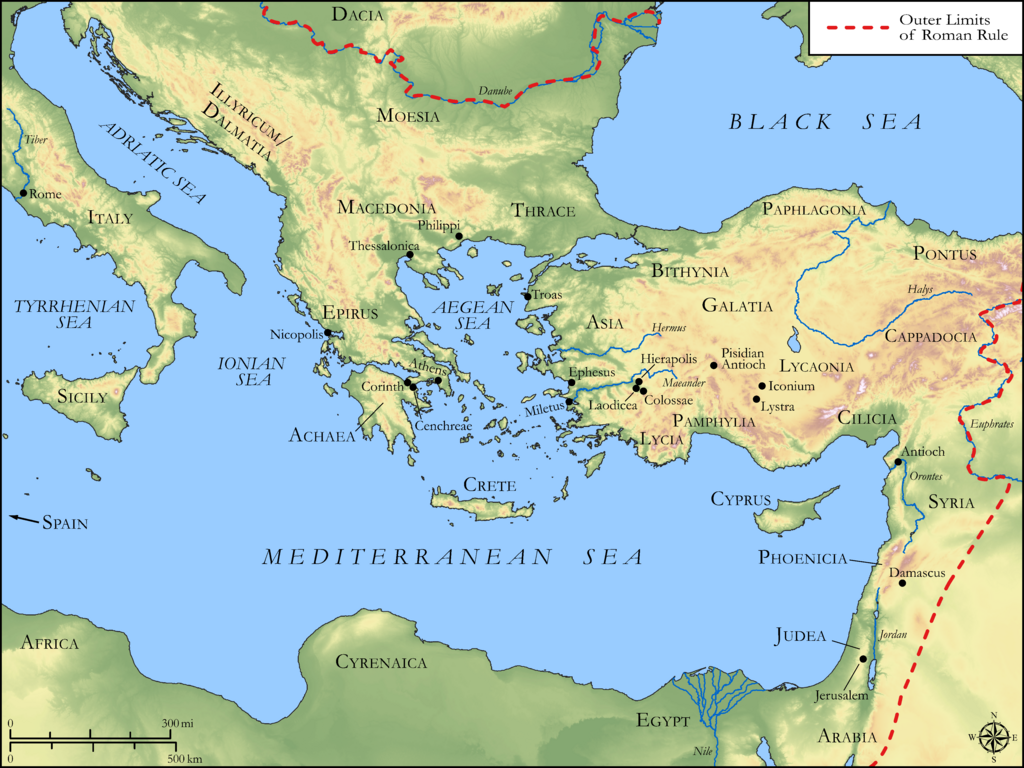
Historically, this distinction became foundational. In Rabbinic Judaism, a Gentile is simply a non-Jew. For Christianity, the category of 'Gentile' became a crucial part of its identity as a faith for all people, not just one ethnic group.
Let's check your understanding of these foundational terms.
In the Hebrew Bible, what is the primary meaning of the plural term 'goyim'?
The Israelites trace their ancestry back to the twelve sons of which biblical figure?
Knowing these two terms is the first step to understanding the narrative of the entire Bible.