The Genius of Beethoven
Early Life and Influences
A Family of Musicians
Before Ludwig van Beethoven became a musical titan, he was just a boy born into a family of court musicians in Bonn, Germany. His family life was steeped in music, but it wasn't always harmonious.
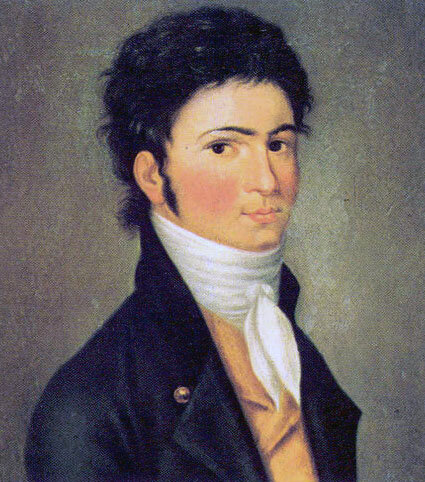
His grandfather, also named Ludwig, was the family's respected patriarch and a successful Kapellmeister—the director of music for the court. Young Beethoven admired him deeply. His father, Johann, was a tenor in the same court chapel. While musically talented, Johann was a harsh man and a heavy drinker. He saw his son's prodigious talent not as a gift to be nurtured, but as a potential source of income.
Johann wanted to market his son as the next Mozart, a child prodigy who could earn the family fame and fortune.
This ambition led to a grueling and sometimes brutal early education. Johann would often pull young Ludwig from bed in the middle of the night for keyboard lessons. The boy's days were filled with endless hours of practice on the piano, violin, and viola, often leaving him in tears.
Bonn's Brightest Talent
Despite his father's methods, Beethoven's talent was undeniable. He gave his first public performance at the age of seven. While Johann's marketing efforts didn't create an immediate sensation like Mozart, Beethoven's skills continued to grow, attracting the attention of more capable teachers.
The most important of these was Christian Gottlob Neefe. A composer and court organist, Neefe introduced Beethoven to the works of Johann Sebastian Bach, particularly the Well-Tempered Clavier. This was a formative experience, grounding Beethoven in the complex counterpoint that would later underpin his own revolutionary compositions.
Neefe did more than just teach music. He was a man of the Enlightenment, a philosophical movement that emphasized reason and individualism. He introduced Beethoven to the ideas of thinkers like Kant and Schiller, shaping the young composer's mind and instilling in him the powerful ideals of freedom and human dignity that would echo throughout his later works.
Under Neefe's guidance, Beethoven published his first work at the age of 12: a set of piano variations. Neefe prophetically wrote that if Beethoven continued on this path, he would surely become "a second Wolfgang Amadeus Mozart."
By his teenage years, Beethoven was working as an assistant court organist and playing viola in the court orchestra. The vibrant cultural life of Bonn, with its university and progressive court, provided fertile ground for his intellect and creativity. He was no longer just his father's project; he was a rising artist in his own right, soaking up the music and ideas that would fuel his journey from a gifted boy in Bonn to a legend in Vienna.
What was the primary motivation behind the harsh musical training Johann van Beethoven imposed on his young son?
Who was Christian Gottlob Neefe?