The Genesis of River Systems
Headwater Genesis Dynamics
Where Rivers Truly Begin
Rainfall is the ultimate source of a river's water, but the story of a river's birth often starts underground or in ice. Instead of a simple channel carved by storm runoff, many great rivers begin where vast, slow-moving reservoirs of water finally meet the surface. These are not sudden events but steady outflows from the Earth's hidden plumbing.
Two primary mechanisms are responsible for this genesis: the discharge of underground aquifers and the melt of massive glaciers. Each creates a distinct type of headwater, with its own rhythm and character, shaping the river for miles downstream.
The Subsurface Connection
Beneath our feet, layers of porous rock and sediment hold immense quantities of water. These underground reservoirs are called aquifers. Water seeps into them from the surface and can be stored for days, years, or even millennia. The upper level of this saturated zone is known as the , and its depth fluctuates with rainfall and seasons.
A river is born when the land's topography dips below this water table. At this intersection, groundwater is no longer contained and seeps out to the surface, a process called aquifer discharge. When this outflow is concentrated at a single point, it forms a spring. This spring becomes the reliable, year-round source of a new stream.
This steady contribution from groundwater is called baseflow. It's the reason rivers continue to flow even during long periods with no rain. Spring-fed headwaters have a very stable discharge, providing a consistent environment for aquatic life and a dependable water source.
Ice as a River Source
Glaciers are another type of massive water reservoir, just frozen. In mountainous and polar regions, rivers often begin at the edge of a melting glacier. As temperatures rise, especially in the summer, meltwater pours from the ice sheet.
This water often collects at the glacier's terminus in a . These lakes act as natural holding tanks, buffering the river from the immediate, chaotic rush of melting ice. The lake's outlet becomes the river's starting point, fed by a continuous supply of cold, sediment-rich water.
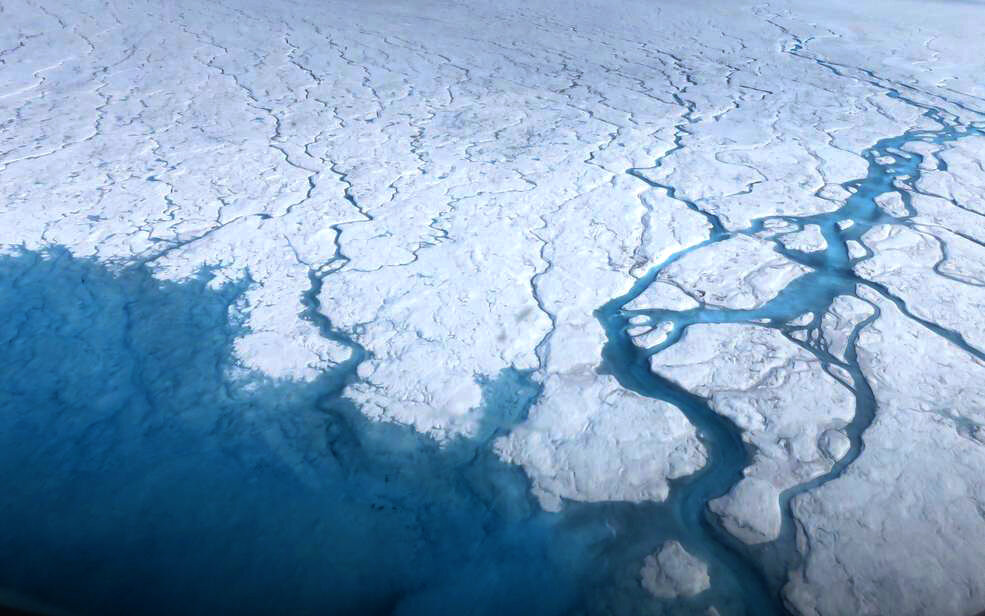
Besides surface melt, a complex network of channels can form beneath the glacier. This subglacial drainage system funnels water to the glacier's edge, sometimes in powerful, pressurized bursts. These hidden plumbing systems contribute significantly to the river's initial flow.
A Tale of Two Sources
The origin of a river deeply influences its behavior. We can see this by comparing a steady, lake-fed system with a highly variable, glacier-fed one.
The White Nile, one of the two main tributaries of the Nile River, is a classic example of a stable source. It originates from the massive reservoir of Lake Victoria. This gives it a remarkably consistent flow throughout the year, much like a spring-fed stream sustained by a large aquifer.
In contrast, a river born from a glacier has a dramatic annual pulse. Its flow is minimal in the winter when temperatures are below freezing. In the summer, its discharge skyrockets as the ice melts. This variability is best shown on a .
Each system has trade-offs. The steady flow from an aquifer or a large lake provides reliability, which is crucial for ecosystems and human water supply. The seasonal torrent from a glacier, while less predictable day-to-day, can carry immense amounts of sediment and carve powerful features into the landscape. Understanding a river's genesis is the first step in understanding the river itself.
Let's check your understanding of these river origins.
What is the term for the upper level of the saturated zone of groundwater in an aquifer?
A river maintains a steady flow even during a long drought with no rainfall. What is the most likely reason for this?
By looking at a river's source, we can predict its behavior and appreciate the hidden geological forces that give it life.