The Genesis of AI
Ancient AI Concepts
Gods and Monsters
Long before computers existed, people dreamed of creating intelligent, artificial beings. These dreams weren't found in labs but in stories, myths, and legends. It seems we’ve always been fascinated by the idea of breathing life into the inanimate.
Think of Talos, the giant bronze automaton from Greek mythology. He was said to circle the island of Crete three times a day, hurling boulders at approaching ships to protect its queen. Or consider the Golem from Jewish folklore, a giant creature sculpted from clay and brought to life through mystical rituals to defend the Jewish people of Prague.
These weren't just monster stories. They were early thought experiments about what it means to create life and what our responsibilities are to our creations.
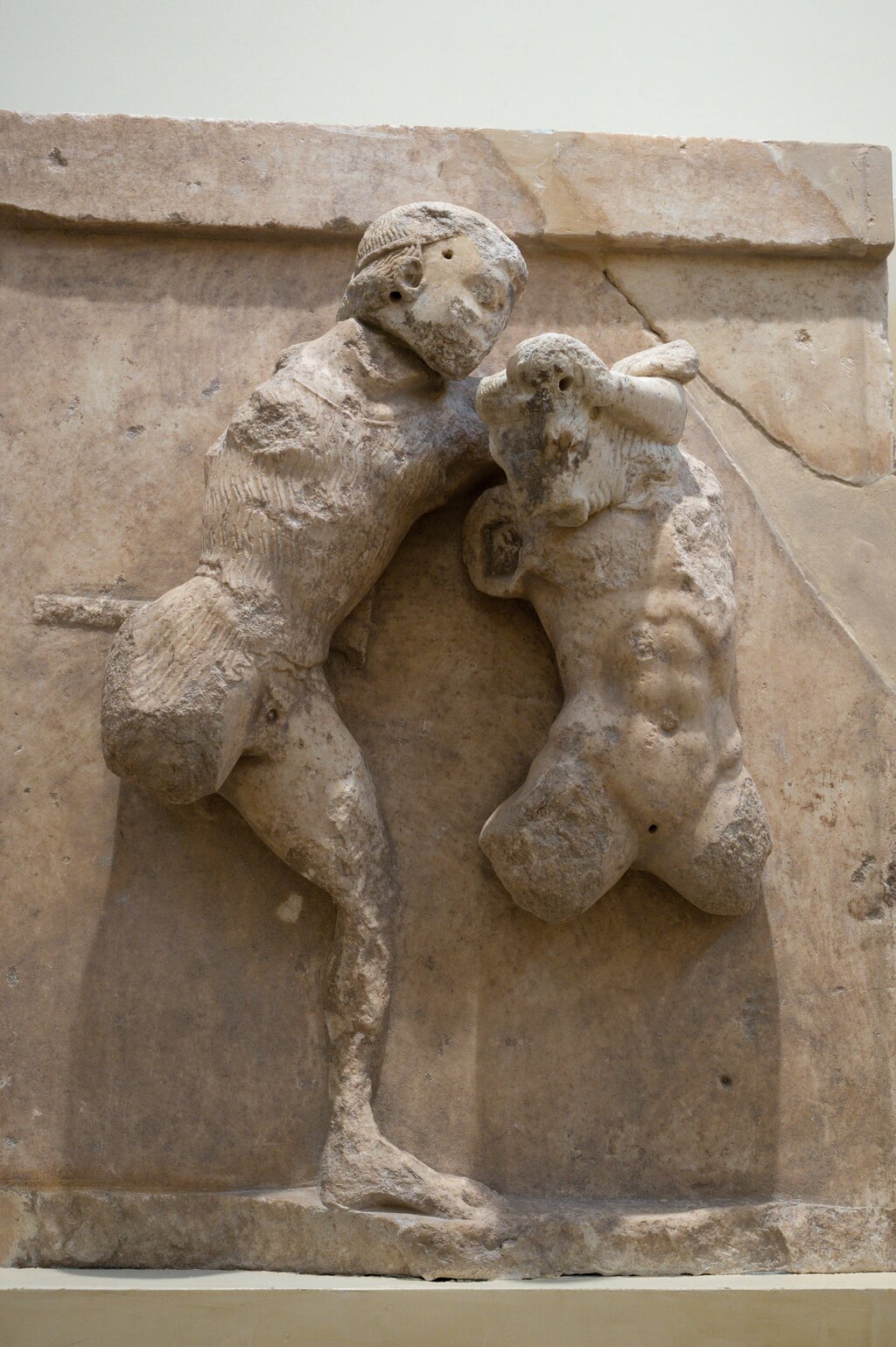
These tales reveal a deep-seated human desire to replicate ourselves and our intelligence. They also carry cautionary themes about power and control. What happens when our creation becomes too powerful or follows our commands too literally? This question is as relevant today as it was thousands of years ago.
The First Robots
The ancient Greeks didn't just tell stories; they also built things. They were master engineers who created some of the world's first automated machines, known as automata. These weren't thinking robots, but they were mechanical marvels that mimicked the actions of living beings through clever engineering.
An inventor named Hero of Alexandria, who lived in the 1st century AD, was a pioneer in this field. He designed an incredible array of devices. He created a wind-powered organ, a coin-operated holy water dispenser, and even automatic temple doors that seemed to open by magic, powered by a fire on the altar.
These inventions demonstrated a profound understanding of physics and engineering. While not intelligent, they showed that complex, life-like actions could be achieved through mechanical means. This was a crucial conceptual step: if life-like motion could be automated, what about life-like thought?
Thinking About Thinking
This question wasn't just for engineers. Philosophers also wrestled with the nature of the mind. In the 4th century BC, Aristotle meticulously studied logic. He tried to codify human thought into a series of clear, mechanical steps. His system of syllogisms was, in a way, an algorithm for reasoning.
For example:
- All men are mortal.
- Socrates is a man.
- Therefore, Socrates is mortal.
By breaking down logical arguments into a formal structure, Aristotle laid philosophical groundwork for the idea that thinking might be a process that could be understood, mapped, and perhaps, one day, replicated.
These ancient dreams, from myths about clay giants to real-life automated machines and philosophical inquiries into logic, all point to the same timeless human quest. For millennia, we have been trying to understand the spark of intelligence and wondering if we could create it ourselves. These early ideas didn't build a thinking machine, but they built the foundation upon which the field of AI would eventually be born.