The French Revolution A Historical Overview
Pre-Revolutionary France
The Old Order
Before the revolution, French society was organized into a rigid system called the Ancien Régime, or "Old Regime." Everyone belonged to one of three classes, known as Estates. Your birth almost always determined your station in life.
Ancien Régime
noun
The political and social system in France before the Revolution of 1789, characterized by a rigid social hierarchy and an absolute monarchy.
The First Estate was the clergy, the people who worked for the Catholic Church. They made up less than 1% of the population but held enormous wealth and paid almost no taxes. The Second Estate was the nobility, who were also a tiny fraction of the population. They held the top jobs in the government and military, owned vast amounts of land, and were exempt from most taxes.
Then there was everyone else: the Third Estate. This group included peasants, city workers, doctors, lawyers, and merchants. They made up about 97% of the population and shouldered nearly the entire tax burden, despite having virtually no political power.
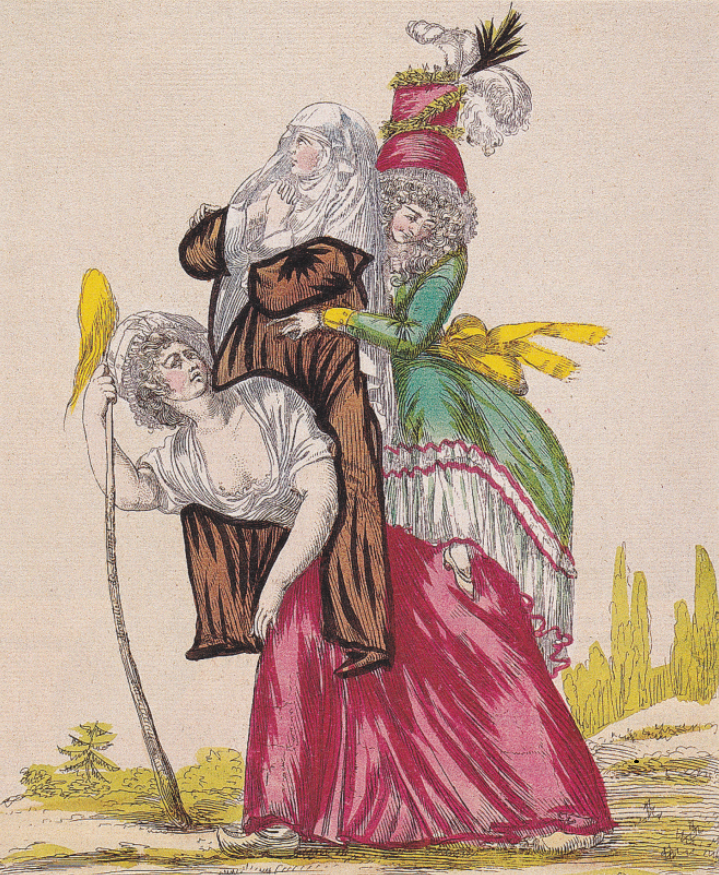
This system was fundamentally unfair. The people with the least ability to pay were taxed the most, while the wealthiest lived in luxury, contributing little to the state's finances. For the common person, life was a constant struggle with little hope for improvement.
Empty Plates and Pockets
The economic situation for the Third Estate was grim. Most people were peasants who relied on farming to survive. In the years leading up to 1789, a series of poor harvests caused widespread food shortages. The price of bread, the main food for most French families, skyrocketed. A single loaf could cost a worker an entire month's wages.
For the average French family, the price of bread was often the difference between life and death.
While the people starved, the government was drowning in debt. King Louis XVI's court at Versailles was famous for its extravagant spending. More damaging, however, was France's involvement in a series of costly wars. Supporting the American colonists in their fight for independence against Britain was a massive expense that pushed the French treasury to the breaking point.
A Revolution of the Mind
At the same time, new ideas were spreading across France. The Enlightenment was a philosophical movement that championed reason, individual rights, and the idea that governments should serve the people, not the other way around.
Thinkers like Montesquieu argued for a separation of powers in government, so no single person or group could become a tyrant. Voltaire criticized the Catholic Church's power and advocated for freedom of speech and religion. Jean-Jacques Rousseau wrote about the "social contract," the idea that a government's right to rule comes from the consent of the governed.
Key figures like John Locke, Montesquieu, and Jean-Jacques Rousseau articulated ideas about natural rights, the social contract, and the separation of powers, which resonated with revolutionaries seeking to overthrow oppressive regimes.
These ideas, once discussed only by intellectuals in Parisian salons, began to filter down to the masses. They gave the suffering Third Estate a new language to describe their frustrations. Their problems weren't just bad luck or God's will; they were the result of an unjust system that could, and should, be changed.
An unfair social structure, economic misery, and a wave of revolutionary ideas created a perfect storm. France was a powder keg, and all it needed was a spark.
Which group made up the vast majority of the French population and paid the most in taxes before the revolution?
Enlightenment thinkers like Rousseau and Montesquieu promoted ideas that directly challenged the foundation of the Ancien Régime.