The French Revolution
Ancien Régime
A Society Divided
Before the French Revolution, France operated under a system called the Ancien Régime, which translates to “old rule.” It was a world built on hierarchy, where your birth largely determined your entire life. Society was split into three distinct groups, known as the Estates.
| Estate | Who They Were | Percentage of Population |
|---|---|---|
| First Estate | Clergy (church officials) | ~1% |
| Second Estate | Nobility (aristocrats, lords) | ~2% |
| Third Estate | Everyone else (peasants, merchants, lawyers) | ~97% |
The First and Second Estates, despite being a tiny fraction of the population, held nearly all the power and wealth. The Third Estate, which included everyone from poor farmers to wealthy city merchants, represented the vast majority of French society.
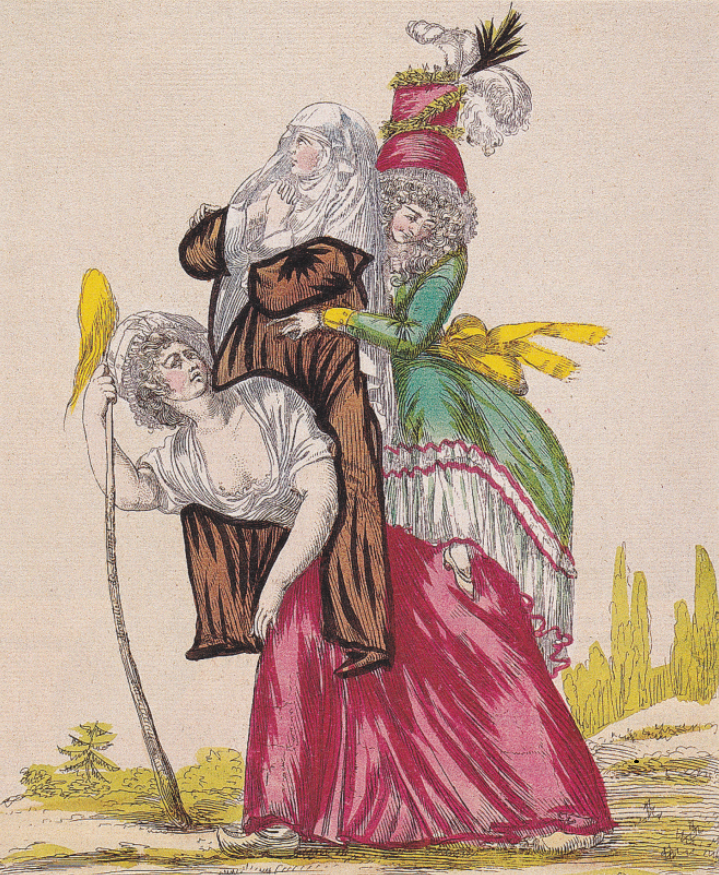
Privilege and Burden
Life was very different depending on your Estate. The clergy and nobility enjoyed enormous privileges simply because of their status. Their biggest advantage was exemption from most taxes. The nobles also had exclusive rights to high-ranking positions in the military and government. They could hunt on peasants' lands and collect tolls from people using roads and markets.
Meanwhile, the Third Estate shouldered the country's financial burden. They paid taxes to the king, tithes to the church, and feudal dues to their local lords. For a peasant farmer, this could mean handing over a huge portion of their harvest each year, leaving little for their own family. Even successful lawyers or businessmen in the Third Estate felt the sting of this inequality. They might have more money than some nobles, but they lacked the same rights and social standing.
The Third Estate sought to dismantle the archaic social structure that relegated them to the burden of taxation while denying them political representation and rights.
This system wasn't just unfair; it was becoming unsustainable.
An Empty Treasury and New Ideas
By the late 1700s, France was in serious financial trouble. The country had spent fortunes fighting expensive wars, including the American Revolution. The lavish spending of the royal court at Versailles also drained the national treasury. To cover these costs, the government kept borrowing money, sinking deeper and deeper into debt.
While the government's finances were crumbling, a wave of new ideas was sweeping across Europe. This period, known as the Enlightenment, saw thinkers question the very foundations of the Ancien Régime.
Thinkers like Voltaire championed freedom of speech and religion. Jean-Jacques Rousseau argued that a government's power should come from the consent of the people it governs. Baron de Montesquieu advocated for a separation of powers in government to prevent any one person or group from becoming too powerful.
These ideas spread through pamphlets, books, and coffeehouse discussions. They gave the frustrated members of the Third Estate a new language to describe their grievances. They began to see the problems not as an unavoidable part of life, but as a system that could, and should, be changed.
A society split by privilege, a government drowning in debt, and a population armed with powerful new ideas about liberty and rights. The stage was set for a revolution.
Let's test your understanding of France's old social order.
What were the three distinct social groups in pre-revolutionary France collectively called?
Which group shouldered the primary financial burden of taxes in the Ancien Régime?