The French Revolution
Ancien Régime
France's Old Order
Before the French Revolution in 1789, France operated under a system known as the Ancien Régime, or the "Old Order." This was the social and political structure that had been in place for centuries. Society was not organized by wealth or skill, but by birthright and tradition. It was a world of deep-seated hierarchy, where your place in life was largely determined the moment you were born.
The entire system was built on a foundation of inequality, with rights and burdens distributed unevenly across the population.
A Society Divided
French society was rigidly divided into three distinct social classes, or "Estates." These weren't just social rankings; they were legal categories that defined a person's rights, obligations, and status.
The First Estate was the clergy, the leaders of the Catholic Church. They made up less than 1% of the population but held enormous power and wealth. The Church owned about 10% of all the land in France and collected tithes, a form of tax on the people. In return for their spiritual duties, the clergy paid almost no taxes to the state.
The Second Estate was the nobility. This group, making up about 2% of the population, included everyone from knights to the royal family itself. They were the great landowners, controlling roughly 25% of France's land. The nobles held the top positions in the government, the military, and the courts. Like the clergy, they were almost entirely exempt from paying taxes. They also had exclusive rights, such as the right to hunt and the right to collect feudal dues from the peasants living on their land.
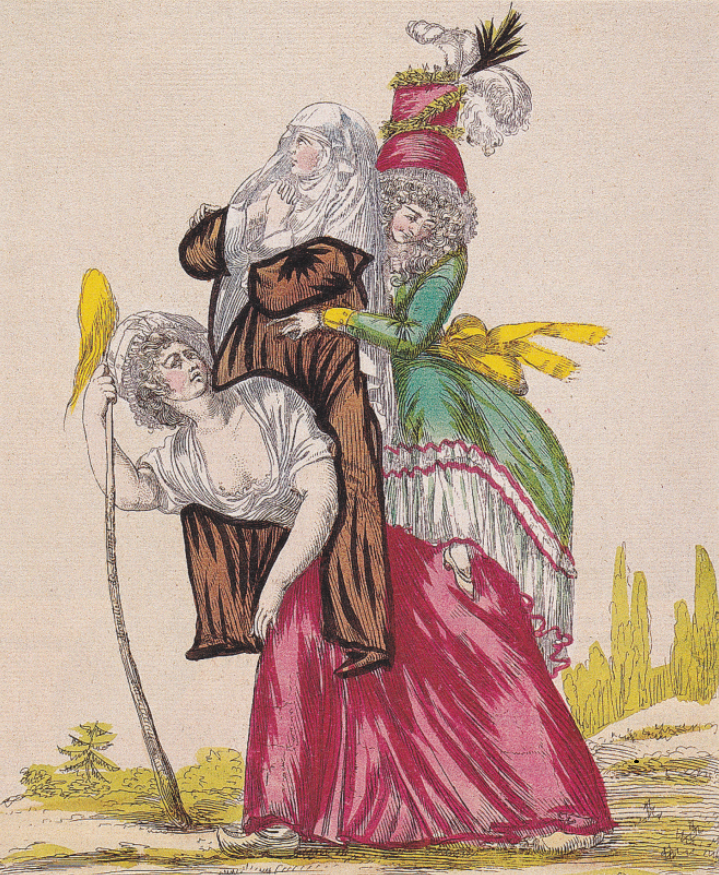
Finally, there was the Third Estate. This was everybody else. It included a vast and diverse group of people, from poor peasant farmers to urban workers to wealthy middle-class merchants and lawyers, known as the bourgeoisie. The Third Estate made up over 97% of the population.
Despite their numbers, they had virtually no political power. More importantly, they shouldered almost the entire tax burden of the nation. They paid taxes to the king, tithes to the church, and feudal dues to their local lords. This triple burden left many in a state of perpetual poverty and frustration.
| Estate | Who They Were | Population | Land Ownership | Taxation |
|---|---|---|---|---|
| First | Clergy | <1% | ~10% | Paid almost no taxes |
| Second | Nobility | ~2% | ~25% | Paid almost no taxes |
| Third | Everyone Else | >97% | ~65% | Paid nearly all taxes |
An Empty Treasury
By the late 1700s, France was on the brink of bankruptcy. The government's spending habits were reckless. Decades of lavish spending by the monarchy, particularly at the extravagant Palace of Versailles, had drained the royal treasury. Costly wars only made the problem worse.
Ironically, France's support for the American Revolution was a major factor. While helping the American colonists win their freedom from Britain was a political victory, it came at a staggering financial cost, pushing the French government deeper into debt.
To solve the crisis, the government needed more money. But with the two wealthiest estates exempt from taxes, the only option was to squeeze more from the already overburdened Third Estate.
This created a perfect storm. An unfair social structure, a crippling tax system, and a government drowning in debt set the stage for massive unrest. The people of the Third Estate, especially the educated bourgeoisie, began to question the fairness of the Ancien Régime. They saw a system where privilege was inherited, not earned, and where the vast majority of people paid for the luxuries of a tiny few. Change was becoming not just desirable, but inevitable.