The Flat Earth Myth
Introduction to Flat Earth Theory
An Ancient Idea
For much of human history, the idea of a flat Earth wasn't a fringe theory—it was the most logical conclusion. From a ground-level perspective, the world looks flat. Ancient civilizations, from the Egyptians to the Babylonians, based their cosmologies on this direct observation. They envisioned the world as a flat plane, often covered by a dome-like sky, or firmament, where the celestial bodies moved.
These early models were intricate and varied. Some depicted the Earth as a rectangle floating in a vast ocean, while others saw it as a circular disk. These views weren't born from ignorance but from a genuine attempt to make sense of the world using the available tools and evidence.
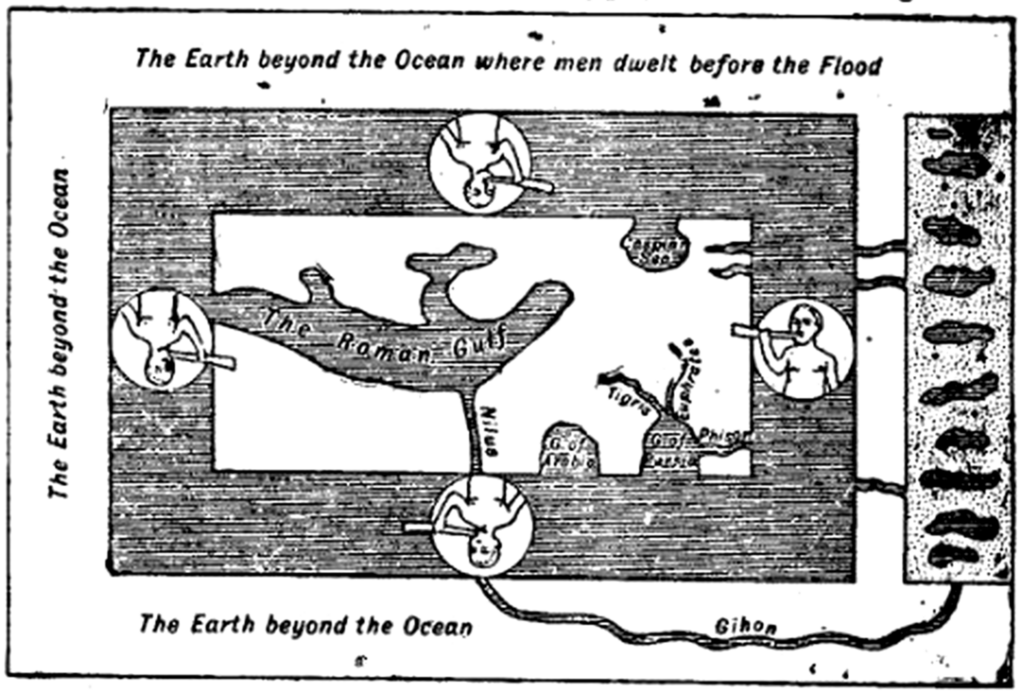
While Greek philosophers like Pythagoras and Aristotle began arguing for a spherical Earth as early as the 6th century BC, the flat Earth model persisted in various forms for centuries. It was a simple, intuitive way to understand our place in the cosmos.
The Modern Revival
After centuries of being a historical footnote, flat Earth theory saw a surprising resurgence in the 19th century. English writer Samuel Rowbotham, writing under the pseudonym "Parallax," published a pamphlet called Zetetic Astronomy: Earth Not a Globe. His work laid the foundation for the modern movement, arguing that the Earth is an enclosed plane centered at the North Pole.
However, it was the rise of the internet and social media that truly fueled the theory's modern revival. Online forums, video-sharing platforms, and social networks created spaces where these ideas could be shared and discussed, reaching a global audience. The ability to connect with like-minded individuals helped build a community around a shared distrust of established scientific consensus.
Modern Flat Earth theory is less about ancient cosmology and more about questioning authority and mainstream narratives in the digital age.
Core Arguments
Modern proponents have developed a detailed model to explain their view of the world. While beliefs can vary, a few core arguments are widely shared.
First is the shape itself. In this model, the Earth is a flat disc. The Arctic is at the center, and Antarctica is not a continent but a massive ice wall encircling the known world. This wall supposedly holds in the oceans.
Second, many flat-earthers reject the concept of gravity. Instead, they propose that the disc of the Earth is constantly accelerating upwards at a rate of 9.8 m/s². This concept, called Universal Acceleration, would create the same downward force we perceive as gravity, pinning us to the ground.
Under Universal Acceleration, objects don't fall down; the ground rushes up to meet them.
Finally, a central theme is a large-scale conspiracy. Proponents argue that space agencies like NASA, governments, and scientists have been deceiving the public for decades. The motivations for this alleged cover-up are debated within the community, ranging from financial control to hiding the true nature of existence. This belief in a conspiracy is essential for explaining away photographic evidence of a spherical Earth, which is dismissed as computer-generated imagery (CGI).
These foundational beliefs form the basis for a worldview that challenges conventional science and relies on a different interpretation of evidence and authority.