The Five Elements of TCM Diagnosis
Introduction to Five Elements
The Five Elements
Beyond the physical world, Traditional Chinese Medicine (TCM) uses a powerful system of correspondences to understand the body and its relationship to the environment. This system is built on the Five Elements: Wood (木, mù), Fire (火, huǒ), Earth (土, tǔ), Metal (金, jīn), and Water (水, shuǐ).
These aren't just literal substances. Instead, think of them as phases or dynamic forces that represent different stages of transformation. They describe the cyclical patterns of nature—the changing seasons, the cycle of birth and death—and mirror those same processes within our own bodies. This concept grew from ancient Taoist philosophers observing the natural world and seeing its patterns reflected in human health.
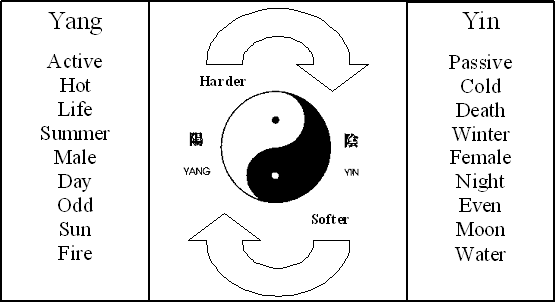
Just as Yin and Yang describe the dualistic nature of the universe, the Five Elements add another layer of detail. They represent the different ways that Qi, or life energy, manifests and moves. While Yin and Yang represent the fundamental opposition and balance, the Five Elements describe the flow and transformation of energy between these two poles. Everything, from a season to an emotion to an organ system, can be categorized by its elemental nature.
A Dynamic Cycle
The Five Elements are not isolated. They exist in a dynamic relationship, constantly interacting and influencing one another. Two primary cycles govern these interactions: the generating cycle and the controlling cycle. For now, let's focus on the generating cycle, also known as the Sheng (生) cycle. This cycle is one of nourishment and creation, where each element gives rise to the next.
This cycle follows a simple, natural logic:
- Water nourishes Wood (plants need water to grow).
- Wood nourishes Fire (fire burns wood for fuel).
- Fire nourishes Earth (ash from a fire becomes part of the soil).
- Earth nourishes Metal (metals and minerals are mined from the earth).
- Metal nourishes Water (water condenses on metal surfaces).
Keeping the Balance
In TCM, health is a state of dynamic balance among the Five Elements. When each element is in its proper strength and the generating cycle flows smoothly, the body's Qi is harmonious and we feel healthy and vibrant. Disease arises when this balance is disrupted.
An imbalance in one element will inevitably affect the others, creating a cascade of disharmony throughout the system.
For example, if the Water element is weak (deficient), it may fail to nourish the Wood element, leading to problems associated with Wood. Conversely, if the Fire element is too strong (in excess), it could overwhelm the Earth element. A TCM practitioner uses this framework to understand the root cause of symptoms. By observing a patient's emotions, complexion, voice, and pulse, they can identify which elements are out of balance. Treatment, whether through acupuncture, herbal medicine, or diet, aims to restore the harmonious flow of energy between the elements, thereby helping the body to heal itself.
In the generating (Sheng) cycle of the Five Elements, which element is nourished by Wood?
How are the Five Elements best understood within the framework of Traditional Chinese Medicine?
Understanding this web of relationships is fundamental to grasping the holistic approach of TCM, which views the body not as a collection of separate parts, but as an interconnected, energetic ecosystem.