The First Constitutional Convention Explained
Articles of Confederation
The First Rulebook
After declaring independence from Great Britain, the newly formed United States needed a plan for how to govern itself. The leaders were wary of creating a powerful central government like the British monarchy they had just overthrown. Their solution was the Articles of Confederation, the nation's first written constitution.
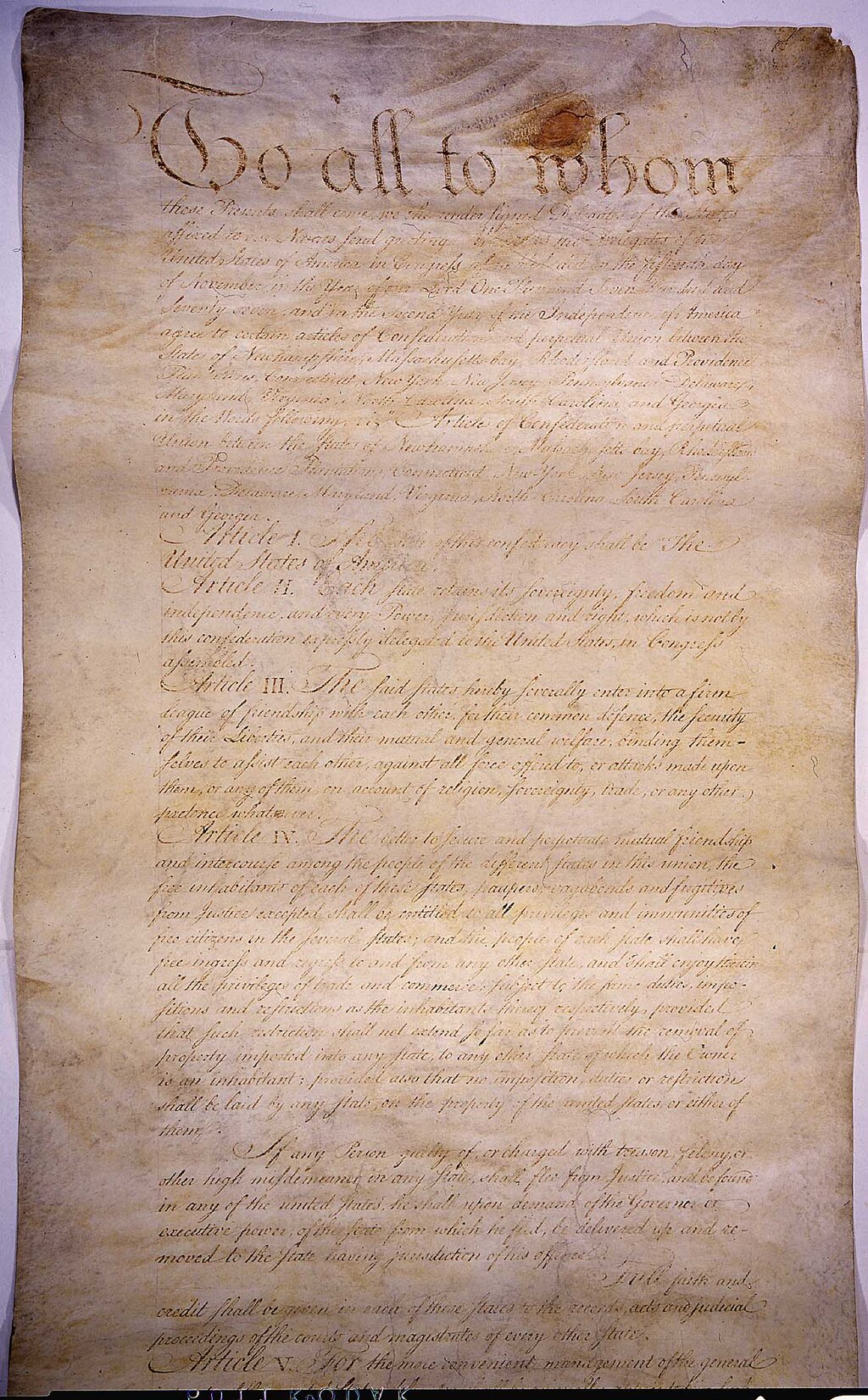
Ratified in 1781, the Articles established a “firm league of friendship” among the thirteen states. This setup reflected a deep-seated fear of centralized authority. The states saw themselves as independent entities, loosely united for common purposes like defense, but retaining their own sovereignty and power. The central government was intentionally designed to be weak, acting more like a coordinator than a ruler.
A Government on a Leash
The government under the Articles had a simple structure. There was just one branch, a unicameral (one-house) legislature called the Congress of the Confederation. There was no president to enforce laws and no national court system to interpret them.
In this Congress, every state, regardless of its population, had a single vote. This meant that tiny Rhode Island had as much say as populous Virginia. Passing any significant law was difficult, requiring the approval of at least nine of the thirteen states. Amending the Articles was nearly impossible, as it required a unanimous vote.
The central government could not act directly on the people; it could only act through the states.
The powers granted to Congress were extremely limited. While it could declare war, make treaties, and manage relations with Native American tribes, it had no power to enforce its decisions. Its biggest weaknesses were its inability to tax or regulate commerce.
| Powers Granted to Congress | Powers Denied to Congress |
|---|---|
| Declare war and make peace | Levy taxes on the people |
| Sign treaties with foreign nations | Regulate interstate or foreign trade |
| Borrow money | Raise a national army (could only request troops from states) |
| Settle disputes between states | Enforce its own laws |
| Establish a postal service | Create a national court system |
To get money, Congress had to ask the states for funds, which they often refused to provide. To get soldiers for defense, it had to request them from state militias. This system left the national government perpetually broke and powerless to address national problems.
Cracks in the Foundation
It didn't take long for the weaknesses of the Articles to cause serious trouble. The national government couldn't pay off its debts from the Revolutionary War because it couldn't raise money. States started printing their own money, leading to economic chaos and inflation.
States also acted like rival countries. They imposed tariffs on goods from other states, stifling trade and creating economic disputes. Foreign countries like Britain and Spain took advantage of the weak central government, refusing to honor treaty obligations and encroaching on American territory.
One of the most alarming events was Shays' Rebellion in 1786. Desperate farmers in Massachusetts, led by Daniel Shays, revolted against high taxes and debt collection. The national government was powerless to intervene.
The state militia eventually suppressed the rebellion, but the incident sent a shockwave across the country. It became clear to many leaders, including George Washington and James Madison, that the Articles of Confederation were failing. The “league of friendship” was not strong enough to hold the new nation together.
The inability to manage finances, regulate trade, or maintain domestic order created a sense of crisis. This growing fear that the young republic was on the verge of collapse led to a call for a convention. The goal was to revise the Articles, but it would soon become a meeting to create an entirely new framework for the American government.