The Fascinating World of Fascia
Introduction to Fascia
The Body's Internal Web
Imagine a thin, silvery-white film that wraps around every muscle, bone, nerve, and organ in your body. This isn't science fiction; it's fascia. Fascia is a continuous web of connective tissue that runs from head to toe, providing structure and support to everything inside you. Think of it as the body's internal scaffolding, holding everything in its proper place.
fascia
noun
A sheet of connective tissue, primarily collagen, beneath the skin that attaches, stabilizes, encloses, and separates muscles and other internal organs.
This vital tissue is primarily made of collagen fibers, which give it strength and resilience. Also present are elastin fibers, providing flexibility, all suspended in a gel-like substance called ground substance. This composition allows fascia to be both strong enough to support you and flexible enough to allow for movement.
Layers of Support
Fascia isn't a single, uniform sheet. It's organized into distinct layers, each with a specific job.
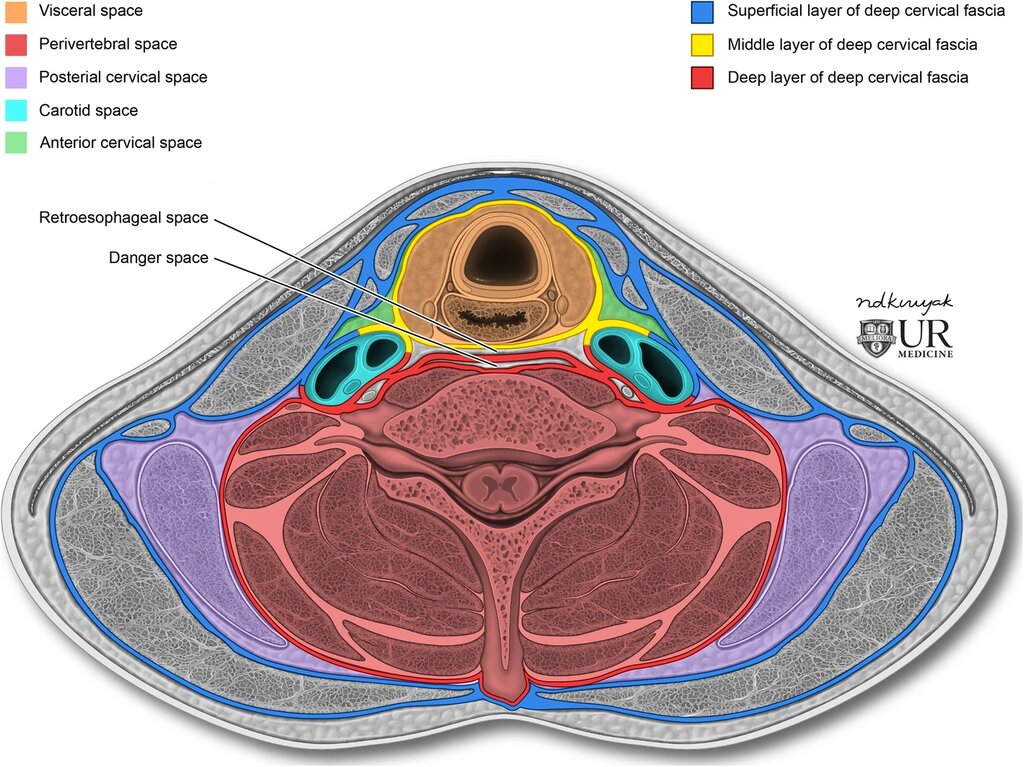
Superficial Fascia This is the layer just beneath your skin. It's a loose web containing fat and water, acting as a storage depot and body-wide insulation. It also allows your skin to glide smoothly over the structures underneath.
Deep Fascia Deeper inside, you'll find the deep fascia. This layer is much denser and more fibrous. It wraps individual muscles and groups of muscles, creating compartments. This organization is crucial for proper muscle function, as it helps transmit force and prevents muscles from bowing out when they contract. It also encases bones, nerves, and blood vessels, providing a protective sheath.
Visceral Fascia This innermost layer suspends your organs within their cavities, like the heart in the chest or the intestines in the abdomen. It holds them in place while still allowing for necessary movements, like the beating of your heart or the expansion of your lungs.
A Fascia Origin Story
Fascia begins to form very early in life. During embryonic development, the body is organized into three primary germ layers: the ectoderm, endoderm, and mesoderm. All connective tissues, including bone, cartilage, and fascia, arise from the middle layer, the mesoderm.
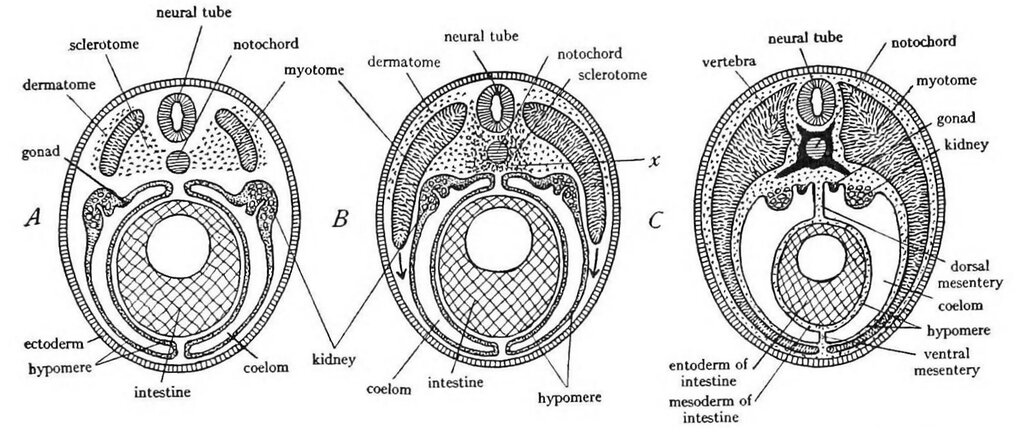
Specifically, fascia develops from a type of embryonic tissue called mesenchyme. As the embryo grows, these mesenchymal cells multiply and produce the collagen fibers and ground substance that will form the intricate fascial network we have as adults. This process lays down the blueprint for the body's entire structural framework.
More Than Just Wrapping
For a long time, fascia was viewed as simple packing material. We now know it's a dynamic and active sensory organ. The fascial network is rich with nerve endings, making it one of our most sensitive tissues.
These nerves include:
- Mechanoreceptors: These nerve endings sense mechanical forces like pressure, stretch, and vibration. They constantly send information to your brain about your body's position and movement.
- Nociceptors: These are pain receptors. The high concentration of these nerves in fascia is why fascial tension or injury can be a significant source of pain.
- Proprioceptors: This subset of mechanoreceptors provides your sense of body awareness, or proprioception. They tell your brain where your limbs are in space without you having to look.
This extensive innervation means fascia is not just a passive structure. It's a communication system, constantly relaying information about your body's state to your nervous system. This plays a critical role in movement, coordination, and even pain perception.
Time to check your understanding of these foundational concepts.
What is the primary protein fiber that gives fascia its strength and resilience?
A physical therapist explains that the tissue separating individual muscle groups is crucial for transmitting force. Which type of fascia are they describing?
From its layered structure to its vital role as a sensory organ, fascia is a fundamental component of the human body. Understanding its composition and function provides a new lens through which to view movement, posture, and overall health.