The Fascinating World of Etymology
Introduction to Etymology
The Secret History of Words
Every word has a story. Some are short and simple, while others are long tales of travel and transformation. The study of these word histories is called etymology. It's like being a detective, but instead of solving crimes, you're uncovering the secret lives of the words we use every day.
etymology
noun
The study of the origin of words and the way in which their meanings have changed throughout history.
Knowing a word's origin isn't just trivia. It can unlock the meaning of unfamiliar words and show you the hidden connections between different ideas. By understanding how words are built, you can expand your vocabulary and grasp concepts more quickly.
The Building Blocks
Many words in English are constructed from smaller pieces, like LEGO bricks. The core piece is the root, which holds the word's basic meaning. Other parts can be added to the beginning or end to change that meaning.
A prefix is a piece added to the front of a root. A suffix is added to the end. Let's take the word unhelpful. The root is help. The prefix un- means "not," and the suffix -ful means "full of." So, the word literally means "not full of help."
| Part | Type | Meaning | Example |
|---|---|---|---|
port | Root | to carry | transport (to carry across) |
re- | Prefix | again, back | replay (to play again) |
tele- | Prefix | distant | telephone (distant sound) |
-logy | Suffix | the study of | biology (the study of life) |
-er | Suffix | one who does | teacher (one who teaches) |
Once you start recognizing these common parts, you can make educated guesses about new words you encounter. You begin to see the architecture behind the language.
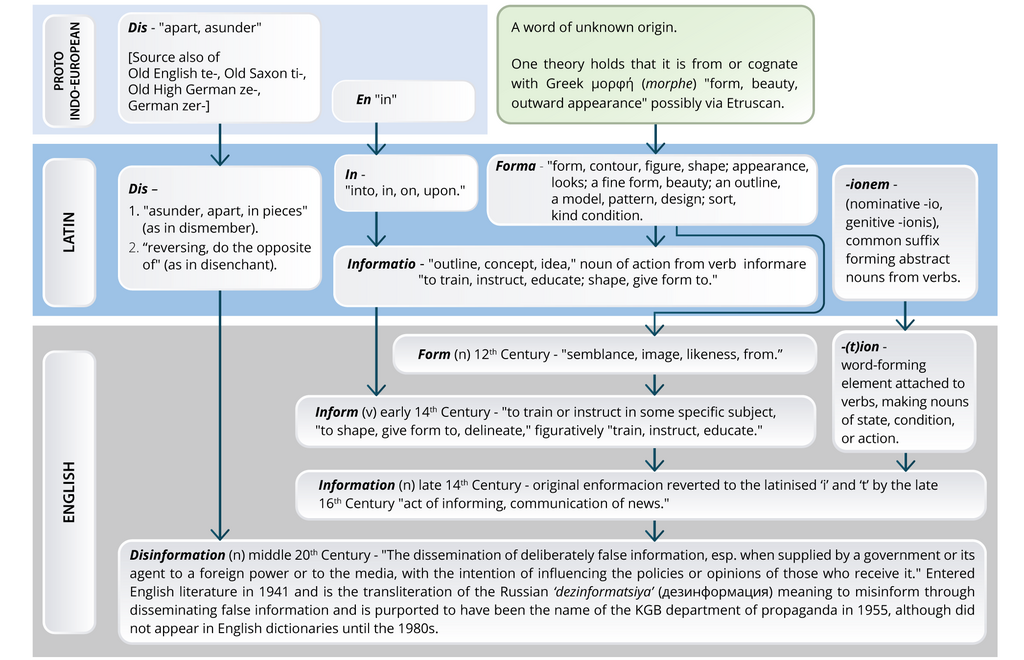
A Product of History
Words don't just appear out of thin air. They are borrowed, blended, and born from historical events. When cultures interact through trade, migration, or conflict, they exchange words along with goods and ideas.
English is a perfect example. Its core is Germanic, from the Anglo-Saxons. But after the Norman Conquest in 1066, a huge number of French words flooded the language, especially in areas like law, government, and fine dining. That's why we have words like cow (from Old English) for the animal in the field, but beef (from French) for the meat on the table. Later, during the Renaissance, scholars looked to ancient Greece and Rome, borrowing thousands of words from Latin and Greek for science and philosophy.
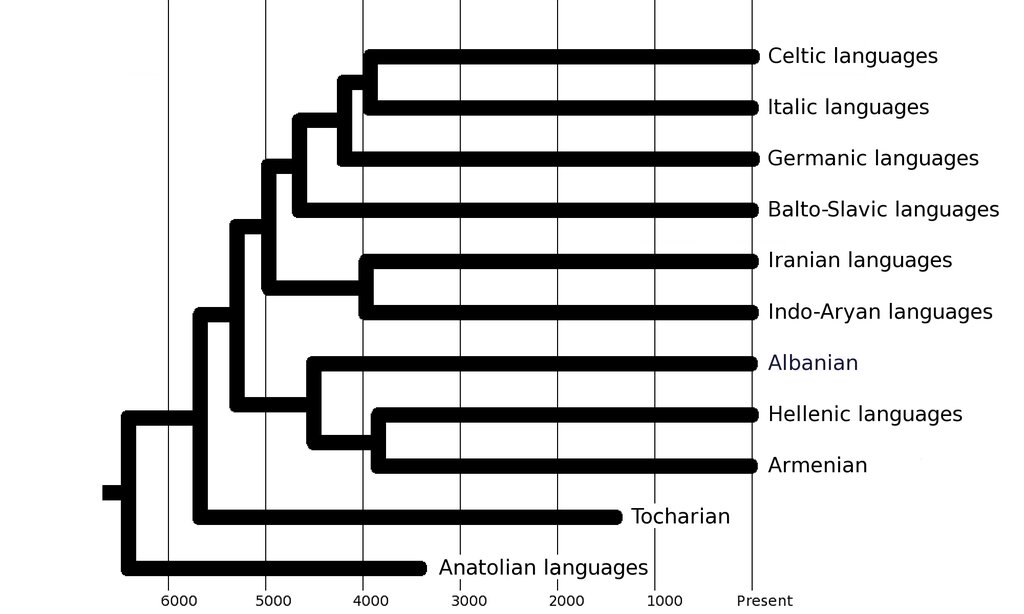
This tree shows how major language families, like Celtic, Germanic, and Italic (which includes Latin), are related. They all branch off from a single ancestor, much like species in an evolutionary tree. English sits on the Germanic branch but has borrowed heavily from the Italic and Hellenic (Greek) branches.
Your Research Toolkit
You don't need to be a linguistics professor to explore etymology. Your most powerful tool is one you've probably used many times: a dictionary.
Good dictionaries, both in print and online, provide the etymology of a word, usually in brackets near the definition. They use abbreviations to show the word's path. For example, you might see something like [ME < OFr < L], which means the word came into Middle English from Old French, which in turn got it from Latin.

Think of a dictionary's etymology section as a passport for a word, stamped with all the languages it has visited on its journey to the present day.
Besides standard dictionaries, specialized online resources like the Online Etymology Dictionary (Etymonline) are fantastic for digging deeper into a word's past. These tools make it easy for anyone to become a word detective.
Ready to test your knowledge? This quiz will cover the basic ideas we've just explored.
What is the study of the origin and history of words called?
In the word "reread", the part "re-" is an example of what?
By understanding where words come from, you gain a deeper appreciation for the language you use every day.