The Fall of Rome
Introduction to the Western Roman Empire
An Empire Divided
For centuries, the Roman Empire was a single, sprawling entity. But by the late 3rd century AD, it had become too large and complex to be managed by one person in one city. The empire faced constant threats along its vast borders and internal instability.
Emperor Diocletian introduced a radical solution in 285 AD: the Tetrarchy, or rule by four. He split the empire into eastern and western halves, each with a senior emperor (an Augustus) and a junior emperor (a Caesar). The idea was to create a more responsive and stable government. While this system didn't last, the idea of splitting administrative duties did.
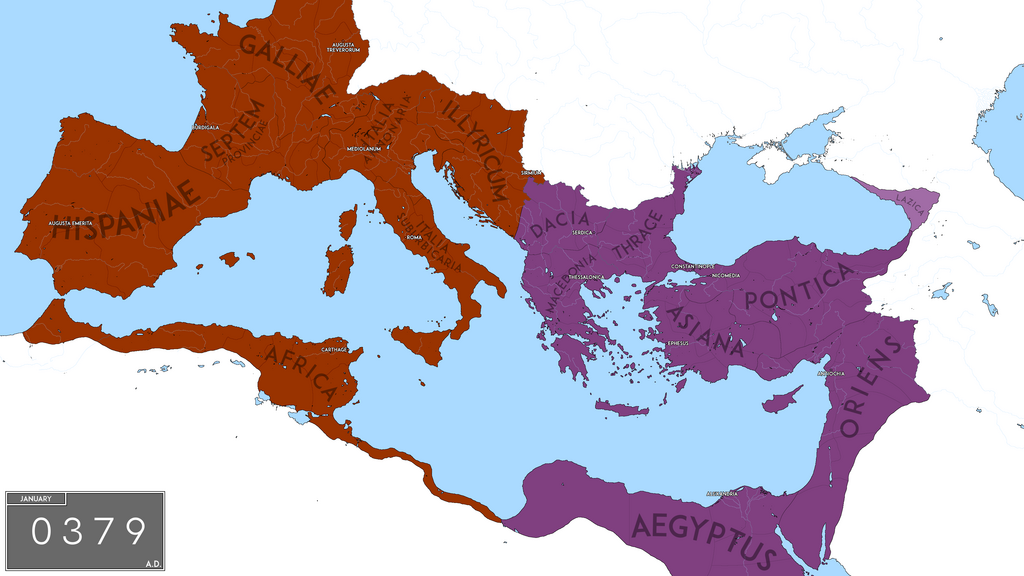
The empire was reunified and split several times over the next century. The final, permanent division happened in 395 AD after the death of Emperor Theodosius I. He bequeathed the western half to his son Honorius and the eastern half to his other son, Arcadius. From this point on, the Western Roman Empire and the Eastern Roman Empire (later known as the Byzantine Empire) would follow their own separate paths.
Provinces, Prefectures, and Power
The Western Roman Empire controlled a vast territory. It included Italy, Gaul (modern-day France), Britannia (most of Great Britain), Hispania (Spain and Portugal), and the northern coast of Africa. It was a mosaic of different cultures, languages, and peoples, all living under Roman rule.
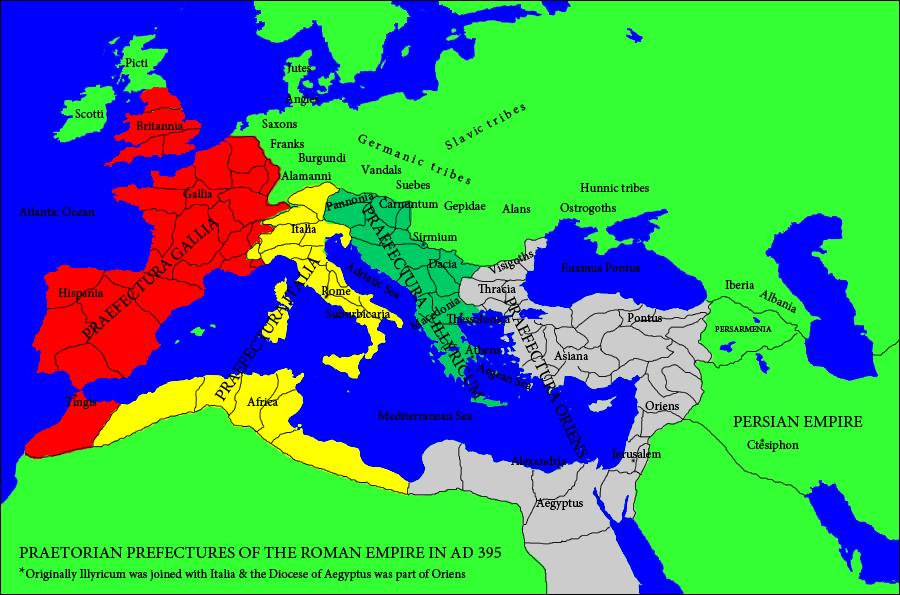
To manage this expanse, the empire was organized into a complex hierarchy. At the top was the emperor, who held supreme authority. Below him, the territory was divided into large administrative units called praetorian prefectures. The West had two: the Prefecture of Italy and Africa, and the Prefecture of Gaul (which included Britannia and Hispania).
These prefectures were further subdivided into dioceses, and the dioceses into provinces. Each province had a governor responsible for collecting taxes, administering justice, and maintaining public order. While the Roman Senate still existed, its power had waned significantly; it was largely a prestigious city council for Rome itself. This layered system was designed to ensure that imperial commands were carried out efficiently across thousands of miles.
The Engine of the West
The empire's economy was built on agriculture. Large estates called latifundia produced grain, olive oil, and wine, often using slave labor or tenant farmers. Grain from the fertile provinces of North Africa and Sicily was especially crucial for feeding the massive population of Rome.
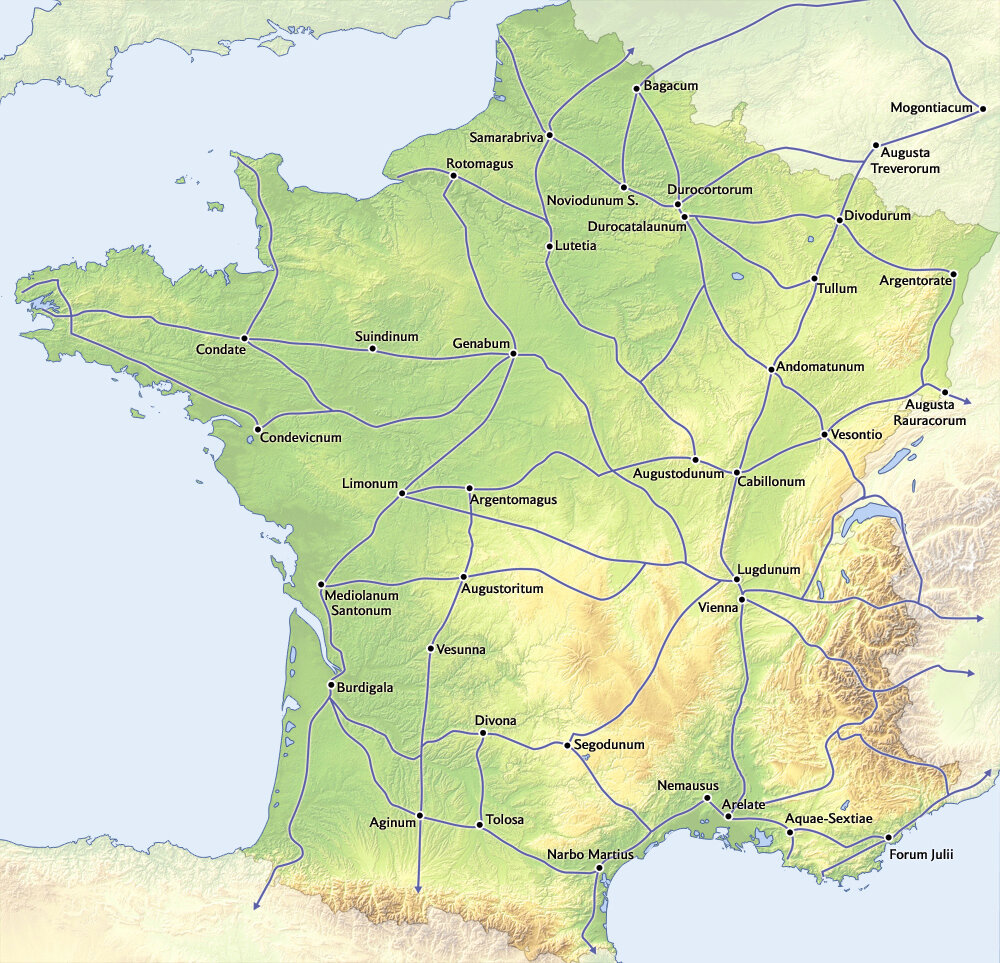
A remarkable network of roads, originally built for moving legions, became the arteries of commerce. These stone-paved highways connected distant provinces, allowing goods and merchants to travel with unprecedented speed and safety. However, the most important highway was the Mediterranean Sea, which the Romans called Mare Nostrum—'Our Sea'. Sea trade was cheaper and faster than overland transport, connecting the entire empire in a single economic web. Goods flowed from Gaulish potteries, Spanish mines, and African farms to markets across the West.
A Shared Roman Identity
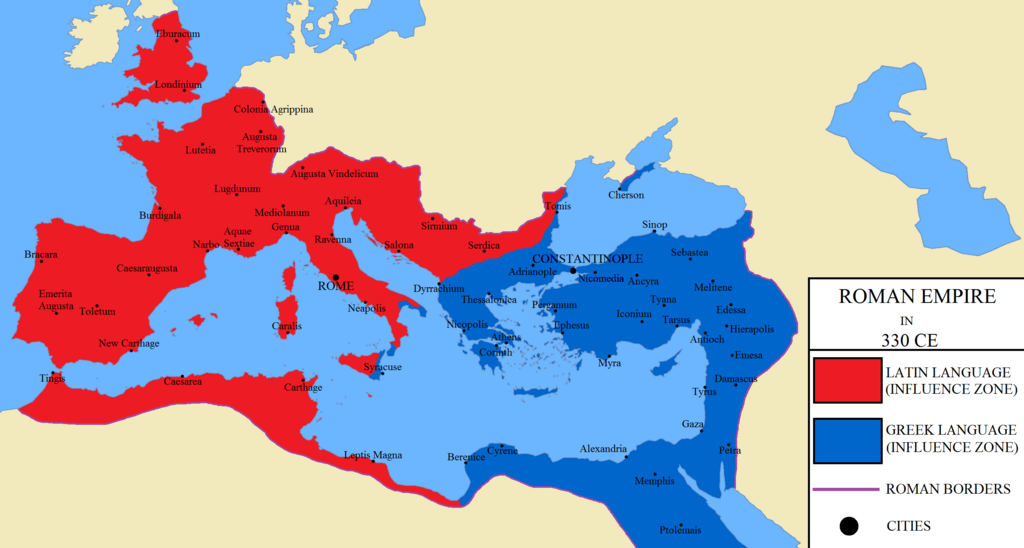
What held this diverse empire together? A key element was a shared Roman culture, or Romanitas. This began with language. While many local languages survived, Latin was the language of government, law, and the military throughout the West. Educated people from Britain to Africa could communicate using a common tongue.
Roman law provided another unifying force. It established a consistent legal framework that applied to all citizens, offering a sense of predictability and justice. Society itself was highly stratified, with a small elite of senators and landowners at the top and a vast population of poor commoners, tenant farmers, and slaves at the bottom.
Religion also played a central role. For most of its history, the empire embraced a polytheistic pagan tradition. However, by the time of the split in 395 AD, Christianity had become the official state religion. This shift created a new, powerful institution—the Church—that would shape the West's identity for centuries to come.
Now, let's test what you've learned about the foundations of the Western Roman Empire.
What event marked the final, permanent division of the Roman Empire into Western and Eastern halves?
The Western Roman Empire was organized into a hierarchy of administrative units. What were the largest of these units called, which were then subdivided into dioceses?
Understanding the structure, economy, and culture of the Western Roman Empire is the first step in exploring its complex history and eventual transformation.