The Fabric of Existence
Quantum Measurement Problem
The Moment of Truth
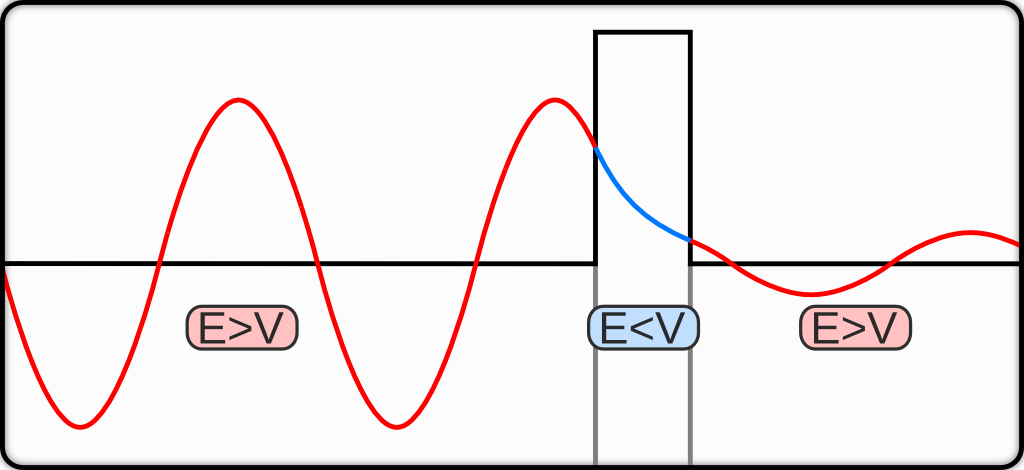
A quantum system, like an electron, exists in a haze of possibilities. Before we look at it, it isn't in one specific place. Instead, it's described by a wavefunction, a mathematical object that represents all its potential locations, velocities, and other properties at once. This is the principle of superposition. But the moment we measure it—the moment we try to pinpoint its location—the haze vanishes. The electron snaps to a single, definite position. This sudden transition from a superposition of many possibilities to a single reality is called wavefunction collapse, or reduction.
The core mystery is this: Why does the smooth, predictable evolution of a wavefunction give way to a sudden, probabilistic collapse upon measurement?
This question is the heart of the Measurement Problem. The famous Schrödinger equation beautifully describes how a wavefunction evolves over time. It's deterministic; if you know the state now, you can predict its future state perfectly. Yet, the act of measurement is anything but. We can't predict the exact outcome, only the probability of each possibility. The mathematics of evolution and the mathematics of measurement don't seem to fit together. So, what counts as a "measurement"? What triggers the collapse?
For decades, one of the most provocative ideas was the von Neumann-Wigner interpretation, which suggested that the collapse is triggered by the consciousness of an observer. In this view, a physical measuring device, like a Geiger counter, would simply become entangled with the quantum system, entering a superposition itself. It would be both "clicked" and "not clicked" until a conscious mind observed the device, forcing nature to pick one state. This interpretation directly links the quantum world to the subjective experience of an observer, touching on what philosopher David Chalmers calls the Hard Problem of Consciousness—the question of why we have subjective experiences at all.
An Escape from Consciousness
While philosophically intriguing, the idea of a consciousness-driven collapse doesn't sit well with most physicists. It makes humans central to the universe's mechanics and is difficult to test. A more widely accepted physical explanation is a phenomenon where a quantum system loses its distinct quantum properties due to interactions with its environment.
No quantum system is perfectly isolated. An atom in a superposition of states is constantly bumping into air molecules, absorbing stray photons, and interacting with thermal vibrations. Each interaction entangles the atom with a piece of its environment. Very quickly, the information about the original superposition gets spread out and scrambled across trillions of environmental particles. The system and its environment become one vast, entangled mess. From our limited perspective, looking only at the atom, the quantum weirdness has been washed out. The system now behaves classically. It appears to have collapsed into a single state, without any need for a conscious observer to force its hand. The "measurement" is simply the irreversible process of the system's quantum state leaking into the environment.
Decoherence reframes the measurement problem: the collapse isn't a magical event, but a physical process of entanglement with the environment.
This doesn't fully solve the measurement problem for everyone. Some argue that the entire system, including the environment, is still technically in one massive superposition, and decoherence only explains why we don't perceive it. But it provides a powerful physical mechanism that moves the discussion away from the mind and back into the realm of measurable, physical interactions.
According to quantum mechanics, what happens to an electron's wavefunction the moment its position is measured?
The 'Measurement Problem' highlights the fundamental conflict between the deterministic evolution described by the Schrödinger equation and the probabilistic nature of wavefunction collapse.
The debate highlights a fascinating split: is reality only fixed when it's experienced, or is the universe sorting itself out, moment by moment, through countless physical interactions?