The Evolution of Video Games
Early Video Games
The First Experiments
Video games didn't just appear overnight. Their roots go back to the mid-20th century, a time when computers were massive machines that filled entire rooms. In university labs and research centers, computer scientists began creating simple games and simulations, not for entertainment, but as a way to test the capabilities of this new technology.
It goes as far back as the early 1950s, when academic computer scientists began designing simple games and simulations as part of their research.
These early creations were basic, often text-based or displayed on primitive oscilloscope screens. They were foundational experiments that proved computers could be used for more than just crunching numbers. They could create interactive, virtual spaces.
A Galaxy on a Screen
A major leap forward happened in 1962 at MIT. A group of programmers led by Steve Russell created one of the first and most influential digital computer games: Spacewar!. Developed on a PDP-1 minicomputer, it was a far cry from the simple simulations that came before it.
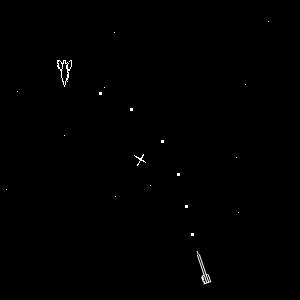
The game pitted two player-controlled spaceships against each other in a zero-gravity duel. Players had to navigate around a central star, whose gravitational pull affected their ships, while trying to destroy their opponent with torpedoes. Spacewar! was never sold; instead, its code was freely shared among the small community of programmers, who would copy it, modify it, and run it on other PDP-1 computers across the country. It became a blueprint for countless games to come.
The Arcade Era Begins
The next challenge was bringing video games out of the lab and to the public. The first attempt was Computer Space, released in 1971. Inspired directly by Spacewar!, it was the first commercially sold, coin-operated arcade video game. Housed in a futuristic fiberglass cabinet, it was designed to capture the imagination.
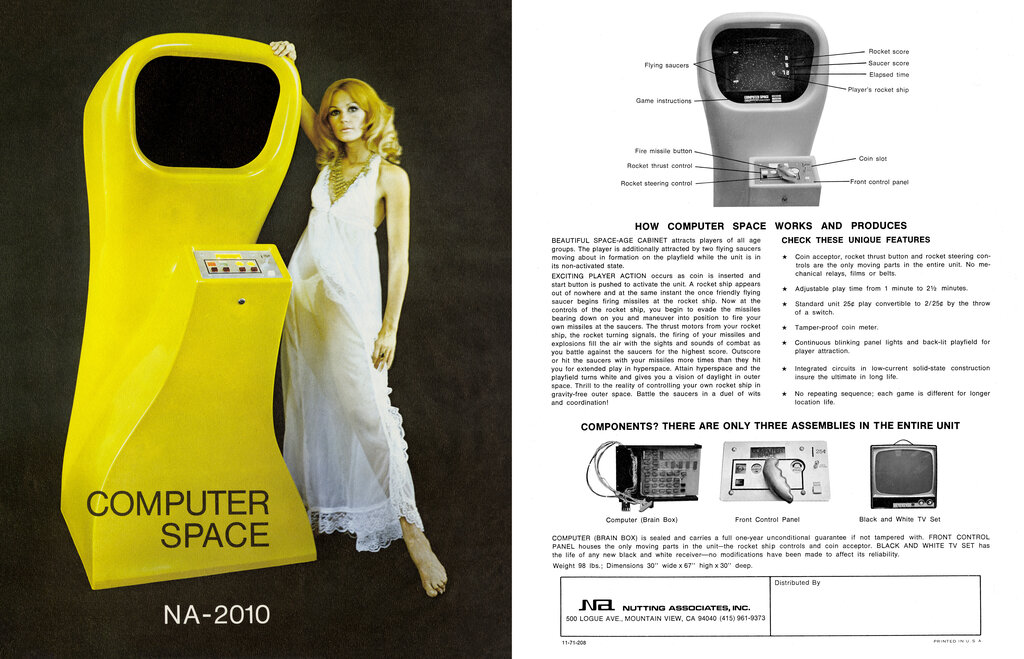
However, Computer Space proved too complex for the average person in a bar or arcade. The controls were complicated, and the gameplay wasn't immediately obvious. It was a commercial disappointment, but a crucial first step.
The breakthrough came a year later, in 1972, from a new company called Atari. Their game was the opposite of complex. It was a simple, two-dimensional take on table tennis called Pong.
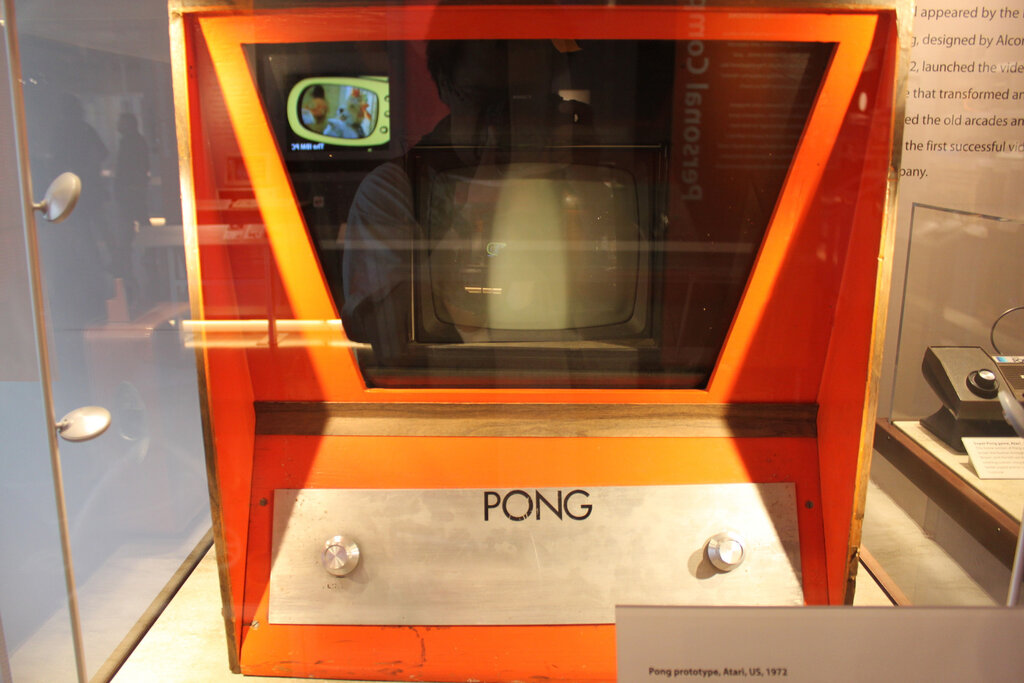
Players controlled a vertical paddle and hit a square ball back and forth. The instructions were printed right on the machine: "Avoid missing ball for high score." The simplicity was genius. Anyone could understand and play it within seconds. The game was an instant sensation, and the demand for arcade cabinets exploded.
While not the first commercially produced video game, Pong was the first to be successful and is often credited with being the starting point of the modern video game industry.
Pong wasn't the first video game, or even the first arcade game. But its massive success proved that there was a huge commercial market for video games. It marked the true beginning of the video game industry, turning interactive digital entertainment from a niche curiosity into a mainstream phenomenon.
Ready to test your knowledge?
What was the primary purpose for the creation of the earliest computer games in university labs?
The influential 1962 game Spacewar! was never sold commercially. How did it spread to other computer programmers?
These early pioneers laid the groundwork for everything that followed, from the golden age of arcades to the complex virtual worlds we explore today.