The European Renaissance
Origins of the Renaissance
A World in Transition
For centuries, life in Europe was structured by a rigid system known as feudalism. Society was a pyramid, with kings at the top, nobles below them, and a vast population of peasants, or serfs, at the bottom. The focus of daily life was on survival and the afterlife. The Catholic Church was the central authority, and the collective was valued far more than the individual.
But by the 14th century, this world was starting to crack. The Black Death, a devastating plague, swept across the continent, wiping out a huge portion of the population. This catastrophe had an unexpected side effect: with fewer workers available, serfs could demand better wages and more freedom. The old feudal bonds began to weaken.
The rigid social structure of the Middle Ages started to give way to new possibilities. People began to look at the world, and their place in it, differently.
The Rise of City-States
While much of Europe was still dominated by monarchies and feudal lords, a different model was emerging in northern Italy. Here, powerful and independent city-states like Florence, Venice, and Milan were thriving. These weren't kingdoms ruled by birthright, but republics governed by wealthy merchants, bankers, and guild members.
Trade and commerce fueled their growth. Families like the Medici in Florence became incredibly wealthy through banking and used their fortunes to gain political power. This new urban upper class had money to spend and a desire to display their status. Instead of building castles, they funded art, architecture, and public works, competing with other city-states for prestige.
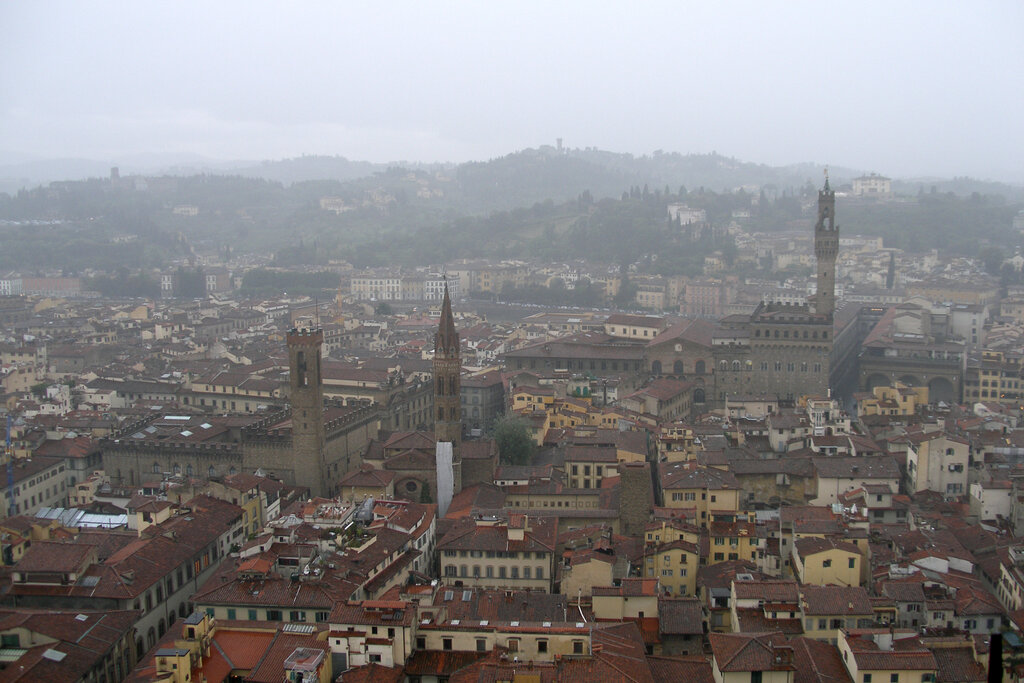
This environment fostered innovation and a civic pride that was unique for its time. Success was seen not just as a matter of divine favor, but as the result of human ingenuity and ambition. This shift in perspective laid the groundwork for a massive cultural change.
A New Focus on Humanity
As the old ways of thinking faded, a new intellectual movement took hold: humanism. Scholars began turning back to the literature, philosophy, and history of ancient Greece and Rome. They were fascinated by the classical world's focus on human reason, potential, and achievement.
humanism
noun
An intellectual movement that focused on human potential and achievements, drawing inspiration from classical Greek and Roman thought.
This wasn't a rejection of religion. Many humanists were devout Christians. Instead, it was a change in emphasis. They believed that humans were God's greatest creation and that it was important to develop one's talents and abilities to the fullest in this life, not just prepare for the next. This idea is sometimes called secularism, meaning a greater focus on worldly matters.
The ideal person was no longer the humble monk, but the well-rounded individual skilled in many areas, from poetry and politics to art and athletics. This intellectual rebirth, or Renaissance, started in Italy and would eventually spread across all of Europe, changing Western civilization forever.
Ready to review what we've covered?
Now, let's check your understanding.
What was a major catalyst for the weakening of the feudal system in the 14th century?
How did the governance of powerful Italian city-states like Florence and Venice primarily differ from the dominant political structure in the rest of feudal Europe?
The combination of social upheaval, new political structures, and a revolutionary way of thinking created the perfect storm in 14th-century Italy for a cultural explosion. This was the dawn of the Renaissance.