The Essentials of 5G Wireless
Introduction to Wireless Communication
Signals in the Air
Wireless communication feels like magic, but it’s all about sending information through the air using invisible waves. These are called radio waves, a type of electromagnetic radiation. Think of them like ripples spreading out after you toss a stone into a pond. Instead of water, these waves travel through the air, and instead of a stone, a transmitter sends them out.
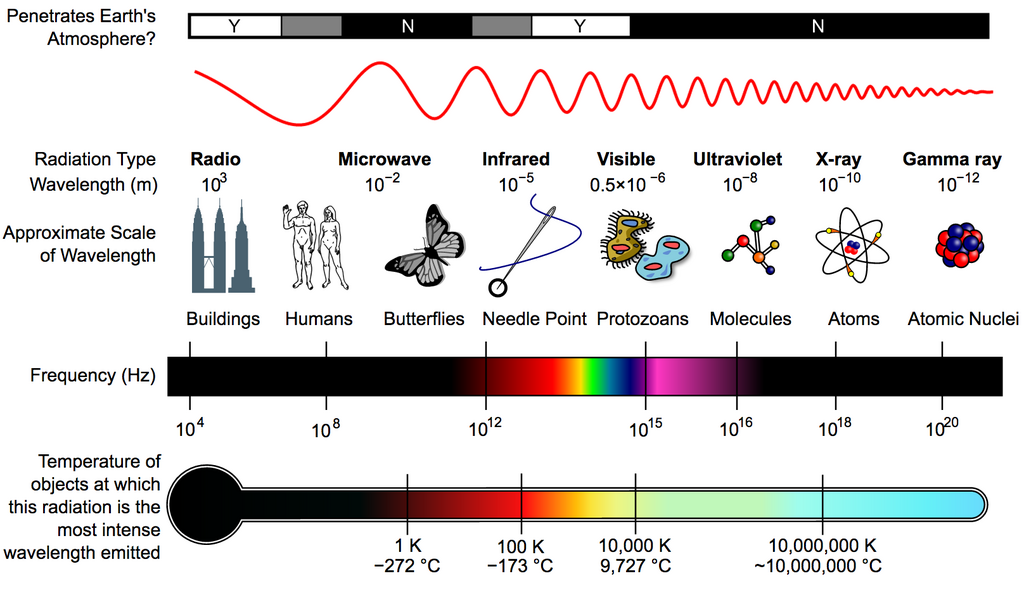
Of course, a plain radio wave doesn't carry your voice or a web page. To send information, we have to change, or modulate, the wave. Imagine you’re using a flashlight to send a message to a friend across a field. You could change the brightness (amplitude) or blink it on and off in a pattern (frequency) to spell out words. Radio transmission works similarly. A transmitter encodes digital data—your voice converted to 1s and 0s, for example—onto a carrier wave by slightly altering its properties. A receiver, like your phone, then tunes into that specific wave, decodes the changes, and turns it back into the original information.
Building the Network
Your phone doesn't just talk to another phone directly. It connects to a whole network of devices that work together to pass the message along. The most visible part of this network is the cell tower, also known as a base station. Your phone sends a low-power radio signal to the nearest tower.
That tower is connected to a much larger system called the core network. Think of the core network as the brains of the operation. It manages all the connections, routes your calls and data to their destinations, and connects to the global internet. When you move, the network seamlessly hands off your connection from one tower to the next, so your call doesn't drop.
Generations of Progress
Wireless technology has evolved rapidly over the decades, with each new generation bringing major new capabilities. It's a bit like a family tree, where each new member is faster and smarter than the last.
| Generation | Key Feature | What It Enabled |
|---|---|---|
| 1G (1980s) | Analog Voice | The first mobile phone calls |
| 2G (1990s) | Digital Voice & SMS | Clearer calls and text messaging |
| 3G (2000s) | Mobile Data | Basic web browsing and email on phones |
| 4G (2010s) | High-Speed Data | Video streaming, app stores, social media |
| 5G (2020s) | Ultra-Fast & Low Latency | Near-instant communication, IoT, VR/AR |
It started with 1G in the 1980s. These were the chunky
First Generation (1G): Analog signals for voice calls only. Think of it like a walkie-talkie, but connected to the phone network.
The 1990s brought 2G, which was a huge leap. It used digital signals instead of analog, which made calls clearer and more secure. More importantly, 2G introduced us to text messaging (SMS) and very basic data services.
3G arrived in the 2000s and was all about bringing the internet to our phones. It was fast enough for web browsing, sending emails, and downloading music, paving the way for the first smartphones.
Then came 4G in the 2010s. This generation was built for speed. It made high-definition video streaming, online gaming, and the app-centric world we know today possible. 4G transformed phones from simple communication tools into powerful pocket computers.
Now, we have 5G. It isn't just a faster version of 4G. It's designed to be incredibly fast, with almost zero delay (low latency). This opens the door for new technologies like self-driving cars that need to communicate instantly, augmented reality, and connecting billions of smart devices in the Internet of Things (IoT).
Each generation builds on the one before it, using the same basic principles of radio waves and networks but in more advanced ways. It's a continuous story of making our world more connected.
How is information, like your voice or data, encoded onto a radio wave for wireless transmission?
What is the primary role of a cell tower in a mobile network?