The Eredivisie Explained
Eredivisie Origins
A Patchwork of Leagues
Before 1956, Dutch football was a scattered affair. There wasn't a single, unified national league. Instead, the country was divided into several regional amateur leagues. At the end of the season, the champions of these separate competitions would enter a playoff tournament to decide the national champion.
This system worked for a long time, but it had its limits. Because the sport was strictly amateur, players couldn't be paid. This started to become a problem in the early 1950s. Talented Dutch players began leaving the Netherlands to play professionally in countries like France and Italy, where they could make a living from football. The drain of top talent was a wake-up call that Dutch football needed to change to keep its best players at home.
The Push for Professionalism
The push for professional football gained serious momentum, leading to the formation of a rival, unsanctioned professional league in 1954 under the NBVB (Dutch Professional Football Association). The official football association, the KNVB, initially resisted but soon realized the change was inevitable. Later that year, the two associations merged, and professional football was officially introduced in the Netherlands.
After two transitional seasons with multiple top divisions, the KNVB decided to create a single, elite national league. The goal was to concentrate the best talent, increase competition, and create a more compelling product for fans. In 1956, the Eredivisie, meaning "Honor Division," was born.
The First Season
The inaugural 1956–57 Eredivisie season kicked off with 18 clubs from across the country. For the first time, teams would play each other home and away in a round-robin format, with the club at the top of the table at the end of the season crowned the national champion. No more playoffs were needed.
The new league was a success. It created a clear and competitive structure for Dutch football. That first season was fiercely contested, and it ended with Ajax of Amsterdam winning the title, marking the beginning of their long history of success in the professional era.
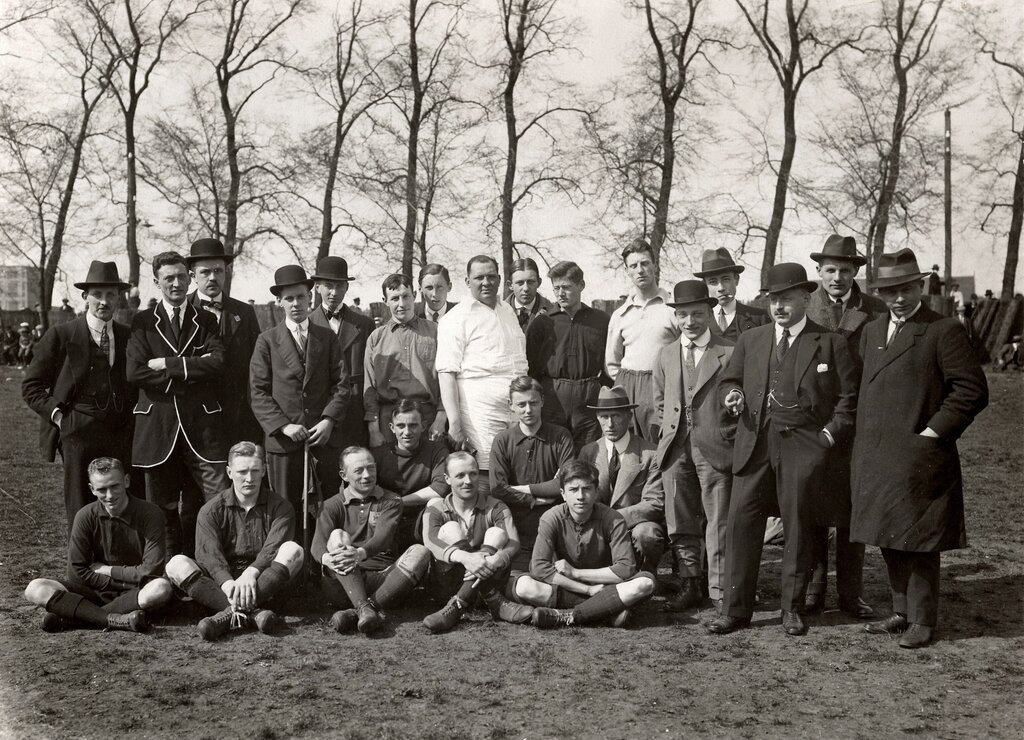
However, the transition wasn't seamless. Many clubs struggled with the financial demands of professionalism. Paying player salaries, improving stadium facilities, and managing travel for a national league were significant hurdles. Some clubs couldn't keep up and either merged or faded away.
There was also cultural resistance. Many traditionalists believed in the amateur ideal and viewed the introduction of money as a corruption of the sport's spirit.
Despite these challenges, the creation of the Eredivisie was a crucial step. It laid the foundation for the professionalization of Dutch football and set the stage for the international success that Dutch clubs and the national team would achieve in the decades to follow.
Let's review what you've just learned.
What was the primary driver for the introduction of professional football in the Netherlands during the 1950s?
How was the national football champion of the Netherlands decided immediately before the establishment of the Eredivisie in 1956?