The Epic Journey of the English Language
Old English Foundations
The Birth of English
The story of English doesn't begin in England as we know it today. It starts around 450 CE with the arrival of several Germanic tribes in Britain. These groups, mainly the Angles, Saxons, and Jutes, crossed the North Sea from what is now Denmark and northern Germany.
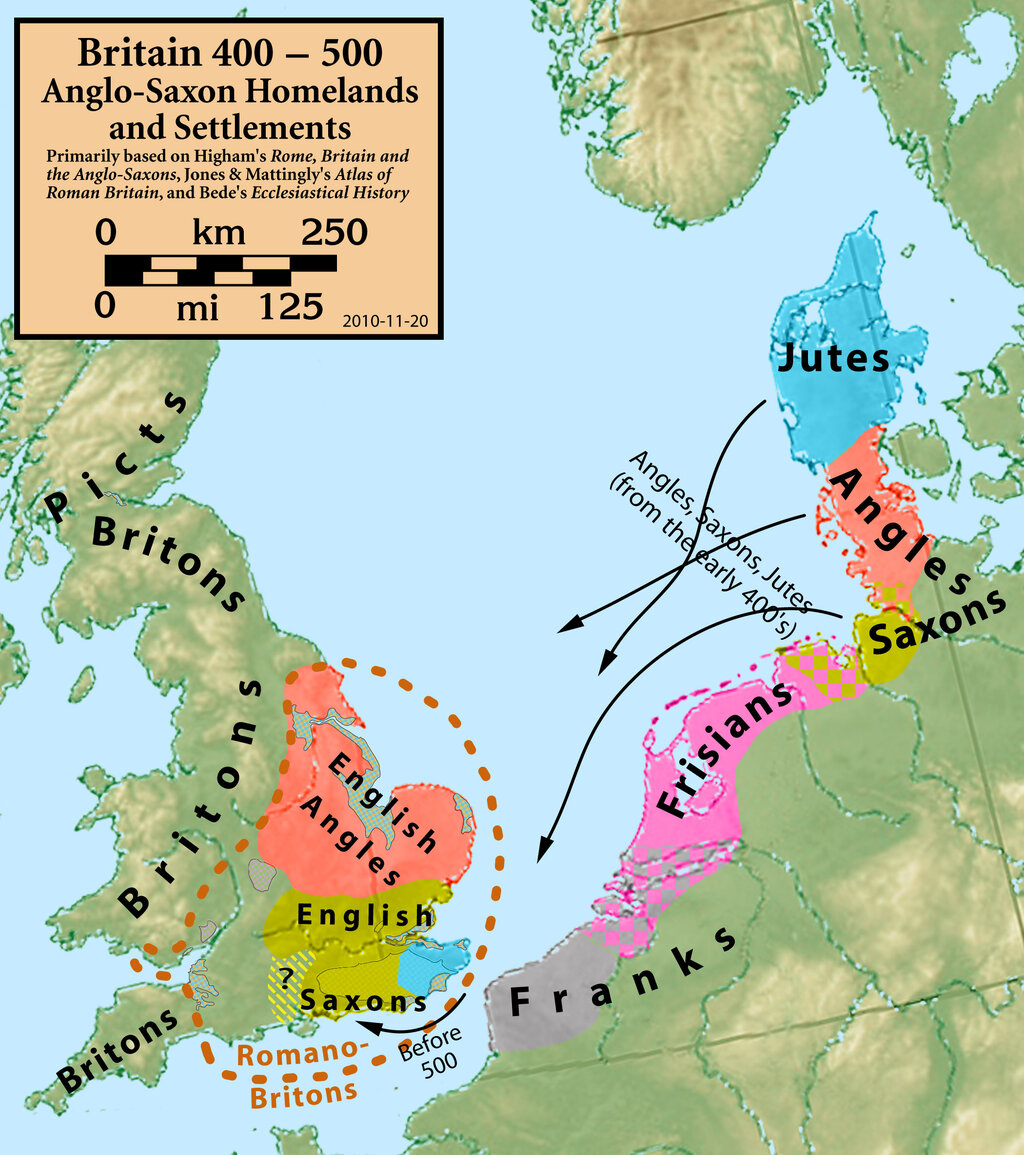
When they arrived, the native inhabitants of Britain were the Britons, who spoke Celtic languages. The Germanic newcomers pushed the Celtic speakers to the peripheries of the island, into areas we now know as Wales, Cornwall, and Scotland. The dialects spoken by the Angles, Saxons, and Jutes began to merge, creating a new language: Old English, or as they would have called it, Englisc.
This early form of English was the dominant language in England for roughly 700 years. It was a purely Germanic language at its core, sharing many features with other languages of the time like Old High German, Old Dutch, and Old Norse.
Old English developed out of the combined dialects of Germanic tribes called the Angles, Saxons, and Jutes, who invaded Britain in the 5th century.
A Different Kind of Grammar
If you were to hear Old English, you likely wouldn't understand a word. Its grammar was fundamentally different from the English we speak today. The biggest difference was its reliance on inflections.
Modern English uses word order to show a word's function. In "The dog chases the cat," we know the dog is doing the chasing because it comes before the verb. Old English didn't work that way. Instead, it used an inflectional system, changing the endings of nouns, pronouns, and adjectives to indicate their role in a sentence. This is similar to how modern German or Russian works.
These endings, called cases, showed whether a noun was the subject, direct object, indirect object, or showed possession. Nouns also had different forms for singular and plural, and were assigned one of three genders: masculine, feminine, or neuter.
Let's look at the word for "stone," stān, a masculine noun. Its ending changed depending on how it was used.
| Case | Singular | Plural |
|---|---|---|
| Nominative (Subject) | stān | stānas |
| Accusative (Direct Object) | stān | stānas |
| Genitive (Possessive) | stānes | stāna |
| Dative (Indirect Object) | stāne | stānum |
Because these endings provided all the grammatical information, word order was much more flexible. You could write "Se hund jagaþ þā catt" (The dog chases the cat) or "Þā catt se hund jagaþ" and the meaning would remain clear because the noun endings (-hund as subject, þā catt as object) tell you who is doing what to whom. This freedom is very different from today's strict Subject-Verb-Object sentence structure.
New Words, New Influences
While Old English was a Germanic language, it didn't exist in a vacuum. It absorbed words from other languages it came into contact with, slowly building its vocabulary.
Surprisingly, the influence from the native Celtic languages was minimal. It's mostly seen in place names, especially for rivers and hills. Names like Thames, Avon, Dover, and London all have Celtic origins.
Latin had a more significant impact, coming in two waves. The first was from the Roman occupation of Britain before the Anglo-Saxons arrived. The second, and much larger, wave came with the arrival of Christianity in 597 CE. The Church introduced a host of new concepts and the Latin words to describe them.
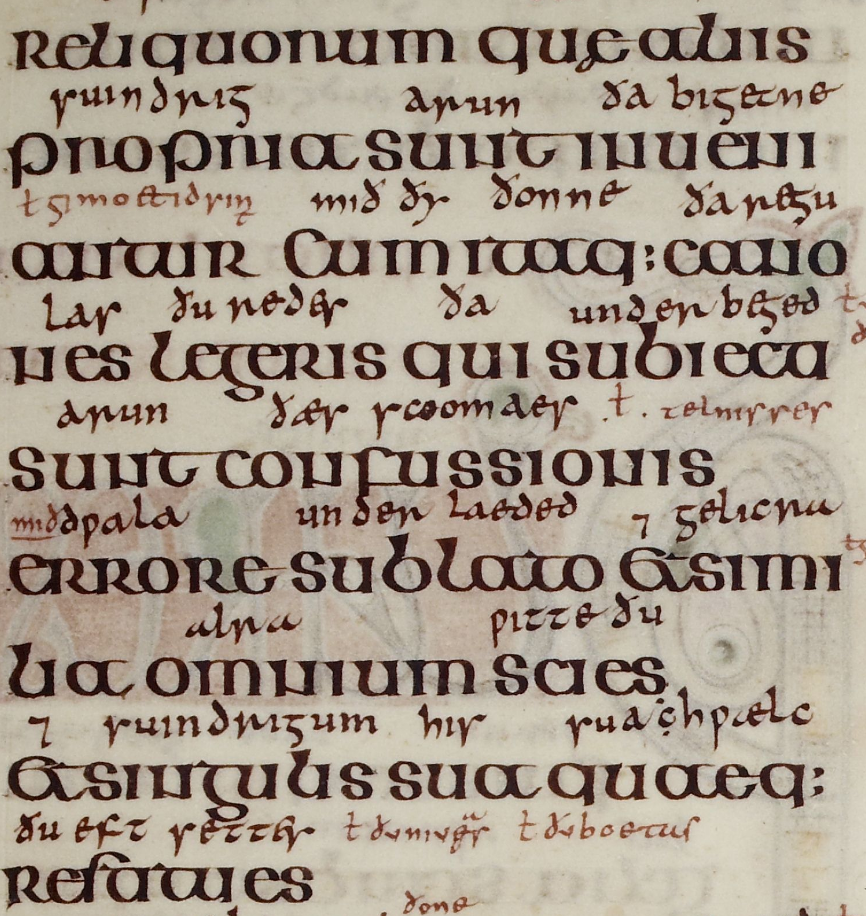
Words related to religion, learning, and domestic life entered the language, such as abbot, priest, school, candle, and rose. Many of these loanwords are still with us today.
The most transformative influence on Old English came from another group of invaders: the Vikings. Starting in the late 8th century, Norse-speaking raiders and settlers from Scandinavia began arriving in England. Their language, Old Norse, was also Germanic and was similar enough to Old English that communication was possible.
As Vikings settled and integrated, Old Norse words flooded into English. This influence was profound, affecting not just nouns and verbs but the very core of the language.
Everyday words like sky, skin, leg, window, and egg come from Old Norse. So do fundamental verbs like get, take, give, and die. Even pronouns were affected; the modern pronouns they, them, and their are Norse borrowings that replaced the original Old English forms.
The interaction between Old English and Old Norse speakers also had a grammatical effect, helping to simplify some of the complex inflectional endings of Old English and pushing it toward the more analytic structure we know today.
The language that would become Old English was brought to Britain by Germanic tribes from which modern-day region?
What was the most significant grammatical feature of Old English that distinguishes it from Modern English?