The Enigmatic Okapi
Introduction to Okapi
The Forest Giraffe
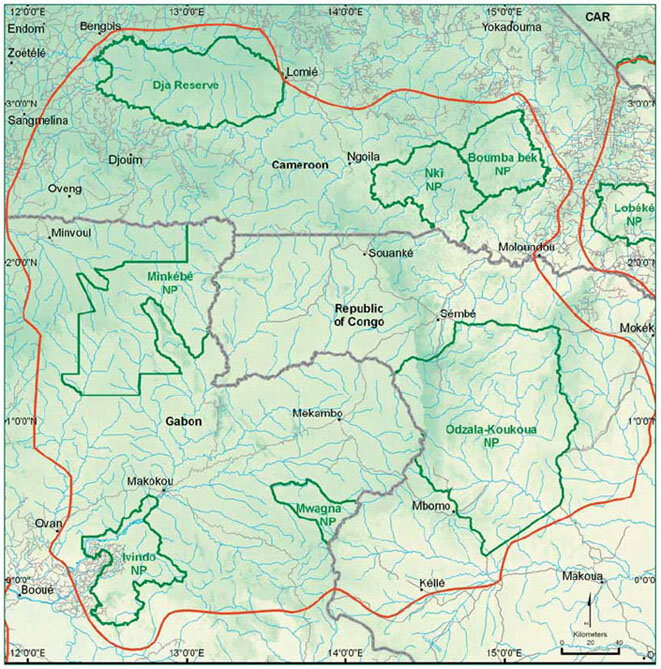
Deep in the rainforests of the Democratic Republic of Congo lives an animal that looks like it was pieced together from other creatures. It has the legs of a zebra, the body of a horse, and a head that could only belong to a giraffe. This is the okapi, one of the most reclusive and fascinating large mammals on Earth.
The okapi's coat is a rich, velvety dark brown or purplish-red that helps it blend into the dense shadows of the forest undergrowth. But its most striking feature is the set of horizontal, creamy-white stripes on its hindquarters and front legs. These stripes look so much like a zebra's that early European explorers were completely stumped. The stripes act as camouflage, breaking up the animal's outline in the filtered sunlight of the rainforest.
Despite the zebra stripes, the okapi is not related to zebras at all. Its closest—and only—living relative is the giraffe.
The family connection becomes clear when you look at the okapi's head. It has the same long face, large ears that can rotate independently, and a remarkably long, prehensile tongue. The tongue is so long, an okapi can use it to wash its own eyelids and clean its ears. Male okapis also have two small, skin-covered horns on their foreheads called ossicones, just like giraffes.
A Giraffe's Only Cousin
The okapi (Okapia johnstoni) and the giraffe are the last two surviving members of the family Giraffidae. They share a common ancestor but evolved down very different paths. While giraffes adapted to the open savannas, growing tall to browse on high branches, the okapi remained in the forest, retaining a more ancient body plan suited for moving through dense vegetation.
The 'African Unicorn'
Though well-known to the Indigenous peoples of the Ituri Forest, the okapi was a complete mystery to Western science until the early 20th century. For years, rumors circulated of a shy, horse-like animal in the Congo, sometimes called the 'African unicorn'.
In 1901, the British governor of Uganda, Sir Harry Johnston, was determined to find it. At first, local guides provided him with pieces of striped skin. Thinking he had discovered a new species of forest zebra, he sent them to London. But soon after, he acquired a complete skin and two skulls. The skulls' unique features, especially the ossicones on the male's, proved the animal was not a zebra, but a long-lost relative of the giraffe. Johnston had found the okapi.
The discovery caused a sensation. Here was a large, living mammal completely unknown to science, a 'living fossil' that provided a glimpse into the giraffe's evolutionary past. Its reclusive nature and the remote, dense forest it calls home are why it remained hidden for so long.
What is the primary function of the okapi's distinctive leg stripes?
The okapi and the giraffe are the last two surviving members of what family?
The okapi is a perfect example of how much we still have to learn about the natural world.