The English Language Unveiled
Origins of English
The Ancient Roots
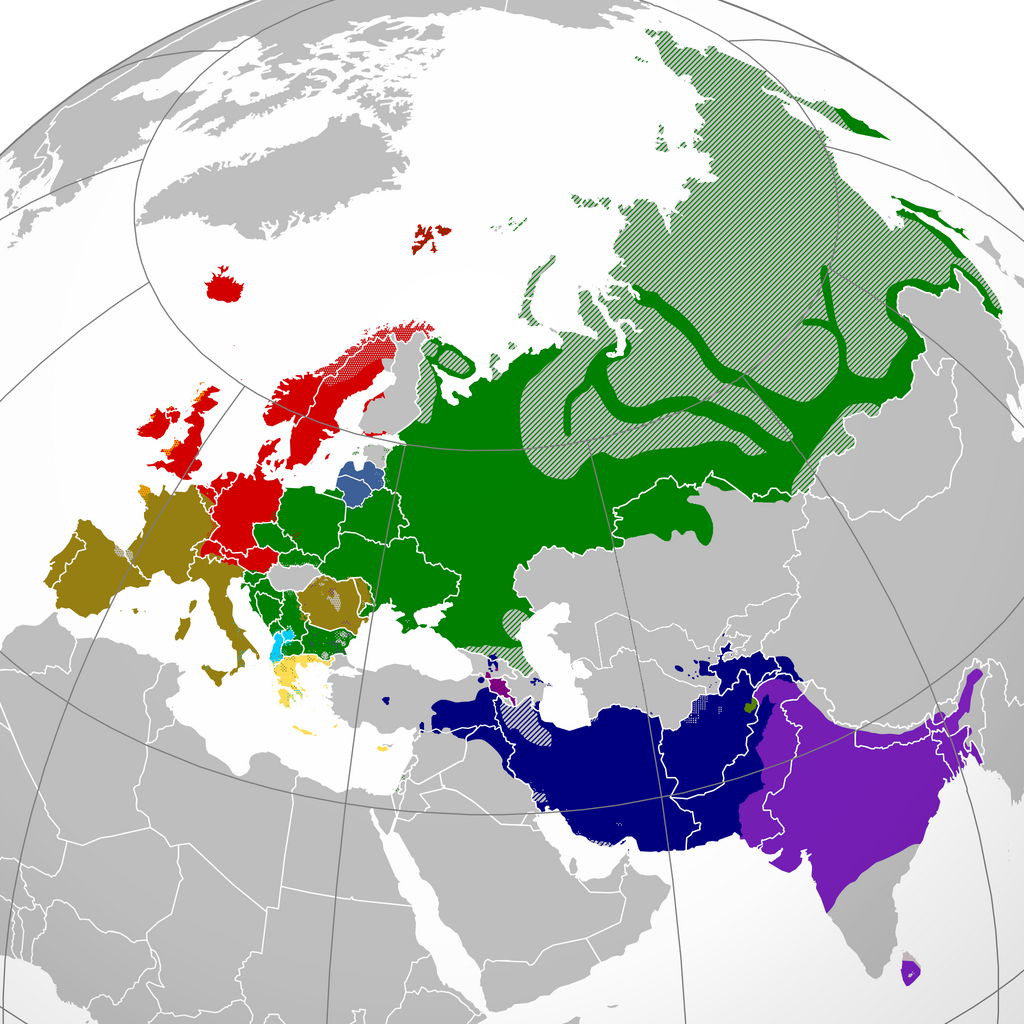
English, like most languages spoken in Europe and parts of Asia, belongs to a massive language family. Its ultimate ancestor is a tongue we call Proto-Indo-European, or PIE. This language was spoken thousands of years ago, long before writing was common, so we have no direct record of it. Instead, linguists have reconstructed PIE by comparing its daughter languages, from Hindi and Persian to Russian and Spanish, and finding common patterns.
Everyone agrees on one key point: the Indo-European languages descend from a common ancestor, a mother tongue called Proto-Indo-European, or PIE.
The most widely accepted theory places the PIE homeland in the steppes north of the Black and Caspian Seas. Around 6,000 years ago, its speakers began to migrate, spreading out across Europe and Asia. As groups became isolated from one another, their shared language slowly fractured into distinct dialects, which eventually became new languages.
A Germanic Branch
One of the language branches that grew from PIE is called Germanic. The people who spoke this language, known as Proto-Germanic, settled in Northern Europe. Over time, their speech developed unique characteristics that set it apart from other Indo-European offshoots like Latin or Slavic.
One of the most significant changes was a series of shifts in consonant sounds. For example, a 'p' sound in PIE often became an 'f' sound in Proto-Germanic. This is why we have English father and Latin pater, or English foot and Latin pedis. These systematic changes are a key fingerprint of the Germanic language family.
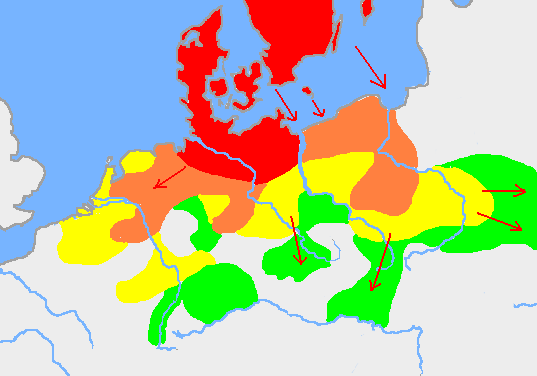
Proto-Germanic itself eventually split into three main groups: North Germanic (which gave rise to Old Norse and modern Scandinavian languages), East Germanic (which included Gothic, now extinct), and West Germanic. It is from the West Germanic branch that English ultimately descends, alongside languages like German, Dutch, and Frisian.
Arrival in Britain
For centuries, the island of Britain was a Roman province, and its inhabitants, the Britons, spoke a Celtic language. But in the early 5th century, the Roman Empire withdrew its legions to defend its collapsing heartland. This departure left Britain vulnerable to attack.
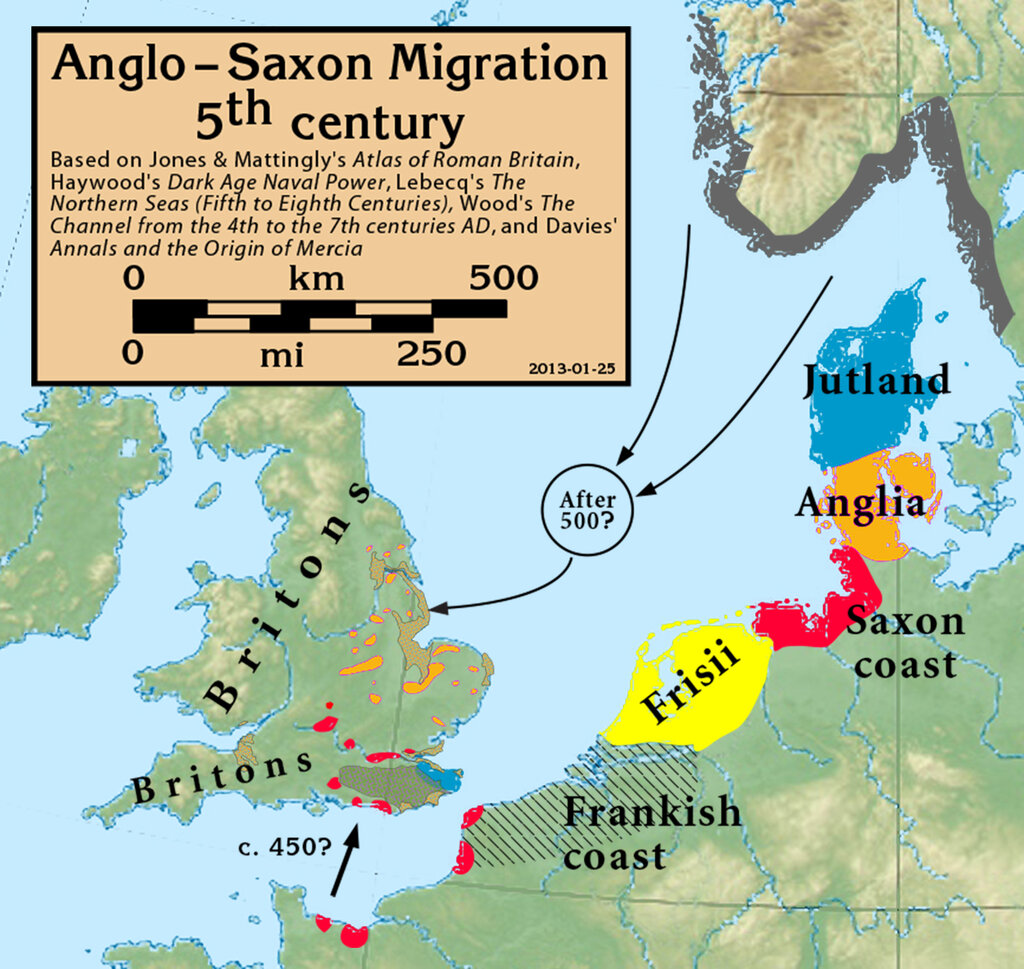
Seizing the opportunity, several West Germanic tribes from the coasts of modern-day Denmark and Germany crossed the North Sea. These groups, known to history as the Angles, the Saxons, and the Jutes, began to raid and eventually settle in Britain. They gradually pushed the native Celtic-speaking Britons into the western and northern parts of the island, to areas we now know as Wales, Cornwall, and Scotland.
The collection of dialects spoken by these Germanic settlers is what we now call Old English, or Anglo-Saxon. This language, spoken from roughly 450 to 1150 AD, is the true beginning of English. It sounded and looked very different from the English of today, closer to German or Dutch, but it provided the foundation upon which our modern language was built.
Over time, the new land came to be called Englaland (the land of the Angles), and their language Englisc.
As the Anglo-Saxons established kingdoms, their dialects also became distinct. The four main dialects of Old English were Northumbrian (spoken in the north), Mercian (in the Midlands), Kentish (in the southeast), and West Saxon (in the southwest). Although all were forms of Old English, they had their own variations in pronunciation and vocabulary. Much of the Old English literature that survives, including the epic poem Beowulf, was written in the West Saxon dialect, which became the most prominent literary standard of the time.
Now, let's test your understanding of how English began.
What is the name of the reconstructed ancestral language from which English and many other languages in Europe and Asia descend?
The English word "fish" and the Latin word "piscis" both derive from a common Proto-Indo-European root. This difference in the initial sound ('f' vs. 'p') is an example of what?
From these ancient migrations and linguistic shifts, the earliest form of the English language was born, setting the stage for centuries of change and development.