The English Language
Origins of English
A Language Family Tree
The story of English begins long before England existed. It starts with a language we can't read or hear, because no one has spoken it for at least 5,000 years. Scholars call it Proto-Indo-European, or PIE. It’s the great-ancestor of hundreds of modern languages, from Hindi and Persian to Spanish and Russian.
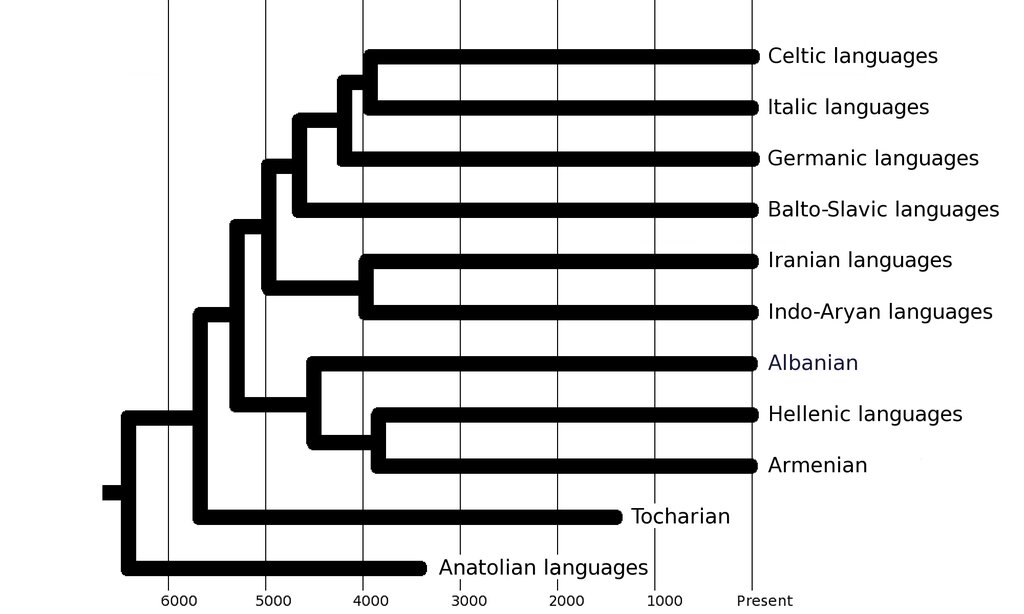
PIE was spoken by people living in the Pontic-Caspian steppe, a vast grassland north of the Black Sea. As these people migrated across Europe and Asia, their language changed, splitting into different branches like a massive family tree. One of those branches was Proto-Germanic.
The Germanic Branch
Proto-Germanic was the parent of languages like German, Dutch, Swedish, and, of course, English. These languages share a common inheritance of core words for family, the body, and the natural world. Think of words like brother (brōþēr in Old English), water (wæter), and arm (earm). They sound similar across Germanic languages because they come from the same source.
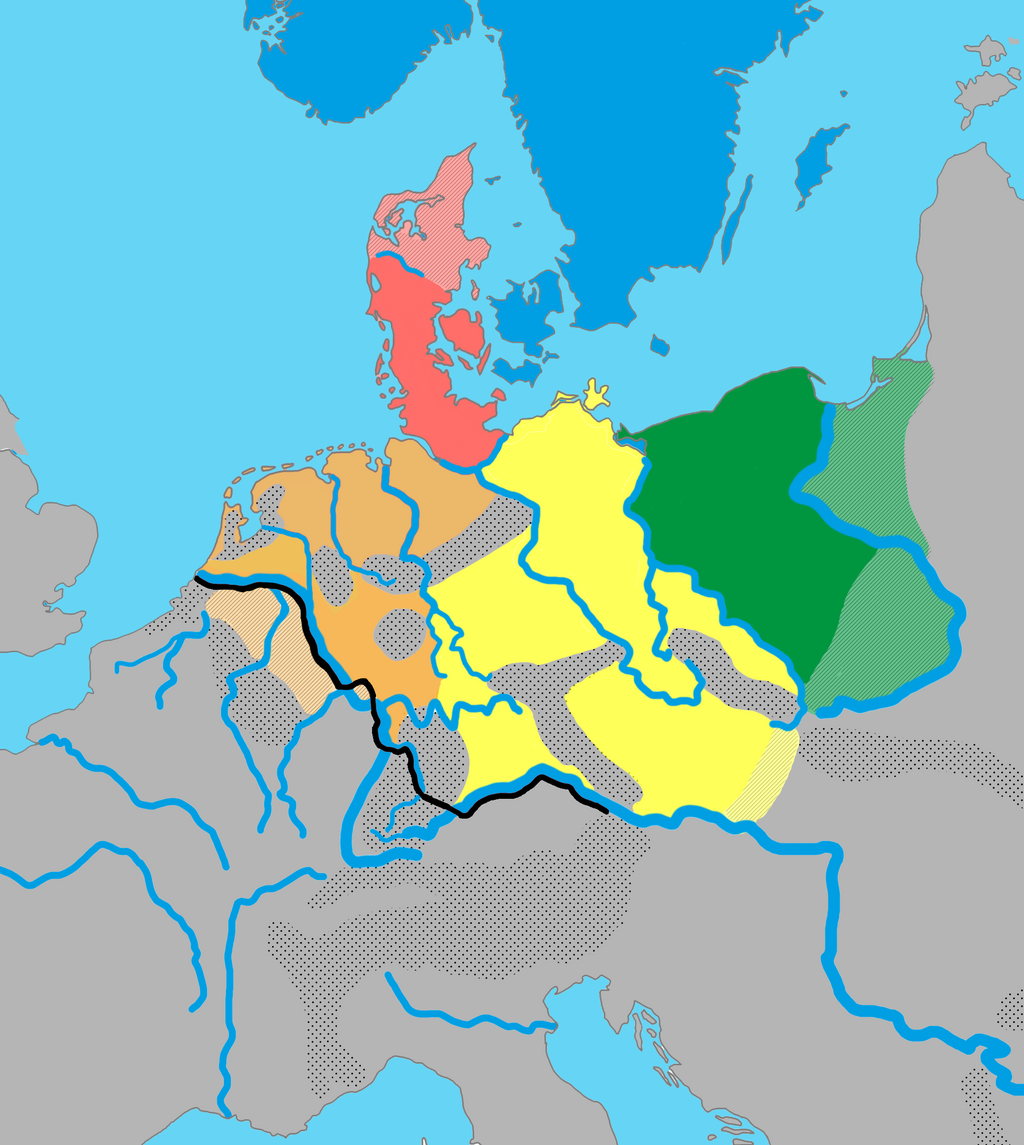
The speakers of these early Germanic dialects were tribes living in northern Europe. Among them were the Angles, the Saxons, and the Jutes.
Arrival in Britain
In the 5th century, after the Roman Empire withdrew its legions from Britain, these Germanic tribes began migrating across the North Sea. They settled in the land, pushing the native Celtic-speaking Britons to the west and north.
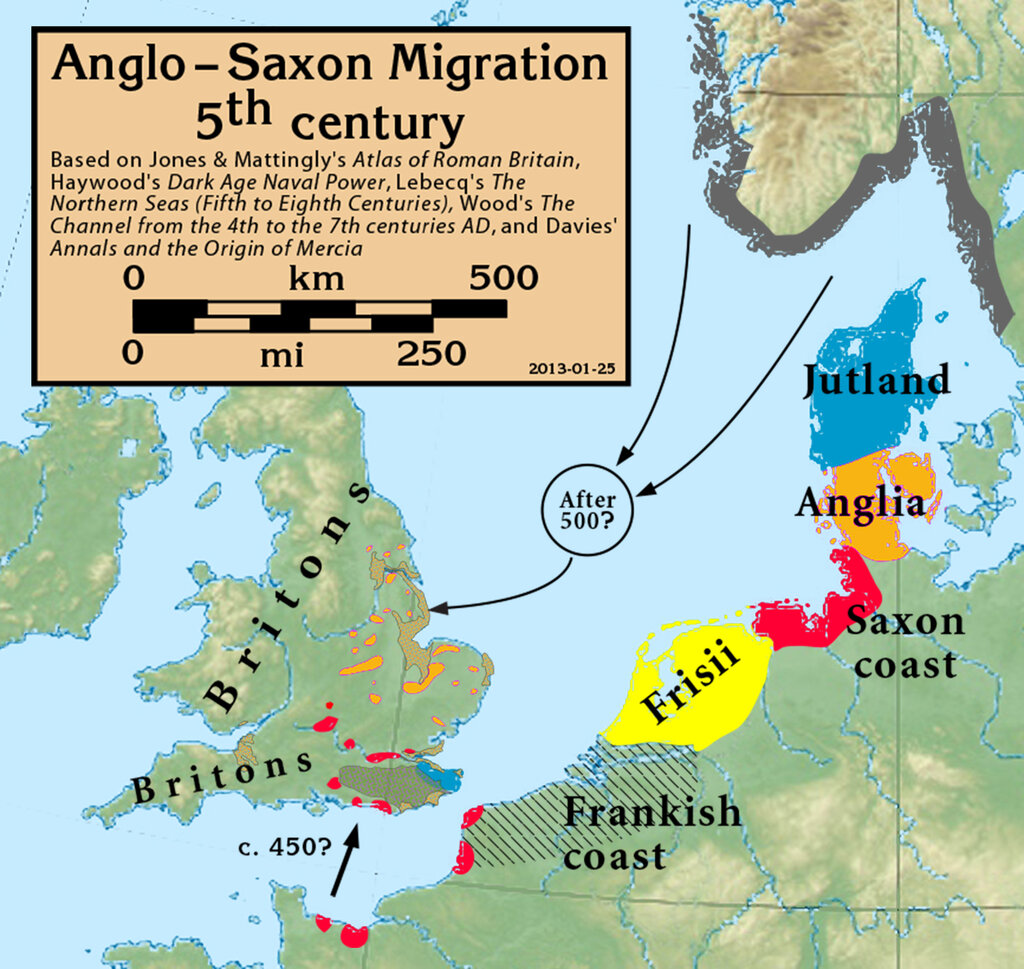
The dialects spoken by the Angles, Saxons, and Jutes merged over time, creating a new language: Old English, or Anglo-Saxon. This was the language of the epic poem Beowulf and the historical records of King Alfred the Great. It looked and sounded very different from the English we speak today.
Hwæt! Wē Gār-Dena in geārdagum,þēodcyninga, þrym gefrūnon,hū ðā æþelingas ellen fremedon. (Listen! We have heard of the glory of the Spear-Danes, of the kings of the people, in days of yore, how the noble princes performed courageous deeds.) - Beowulf, lines 1-3
Old English wasn't written with the Latin alphabet at first. Instead, it used a runic script called the futhorc, named after its first six letters.
futhorc
noun
The runic alphabet used to write Old English, consisting of 24 to 33 characters.
Vikings and Normans
Old English didn't develop in a vacuum. Starting in the late 8th century, Viking raiders from Scandinavia began attacking and eventually settling in parts of England. They spoke Old Norse, another Germanic language.
Because the two languages were related, communication was possible. Over time, many Old Norse words entered Old English. Words like sky, egg, skin, and window, and even pronouns like they, them, and their, are all gifts from the Vikings.
The next, and most dramatic, shift came in 1066. William the Conqueror, Duke of Normandy, invaded and seized the English throne. The new ruling class spoke Norman French, a language with Latin roots.
One of the most obvious effects of the conquest was the introduction of Anglo-Norman, a northern dialect of Old French with limited Nordic influences, as the language of the ruling classes in England, displacing Old English.
For the next 300 years, England was a country with two languages. The common people spoke English, while the court, the government, and the nobility spoke French. This linguistic division had a massive impact. Thousands of French words flooded into English, especially in areas like law (judge, jury, evidence), food (beef, pork, mutton), and government (parliament, sovereign, state).
The grammar of English also simplified, losing many of the complex noun endings that Old English had. The result was a new, blended language: Middle English. This was the language of Chaucer, and it was much closer to the English we recognize today.
Let's check your understanding of how English evolved.
What language, spoken around 5,000 years ago in the Pontic-Caspian steppe, is considered the great-ancestor of English and hundreds of other languages?
Old English, the language of the epic poem Beowulf, was formed from the merging dialects of which groups who migrated to Britain in the 5th century?
The English we speak is a tapestry woven from Germanic, Norse, and French threads, built on a foundation that stretches back thousands of years.