The English Language
Origins of English
A German Family Tree
The story of English begins long before England existed. It starts with Germanic tribes in northern Europe. Around the 5th century AD, three of these tribes—the Angles, Saxons, and Jutes—sailed across the North Sea to Britain. At the time, the native Britons spoke Celtic languages, the ancestor of modern Welsh and Gaelic. But the newcomers brought their own West Germanic dialects, which would eventually push Celtic to the fringes of the island.
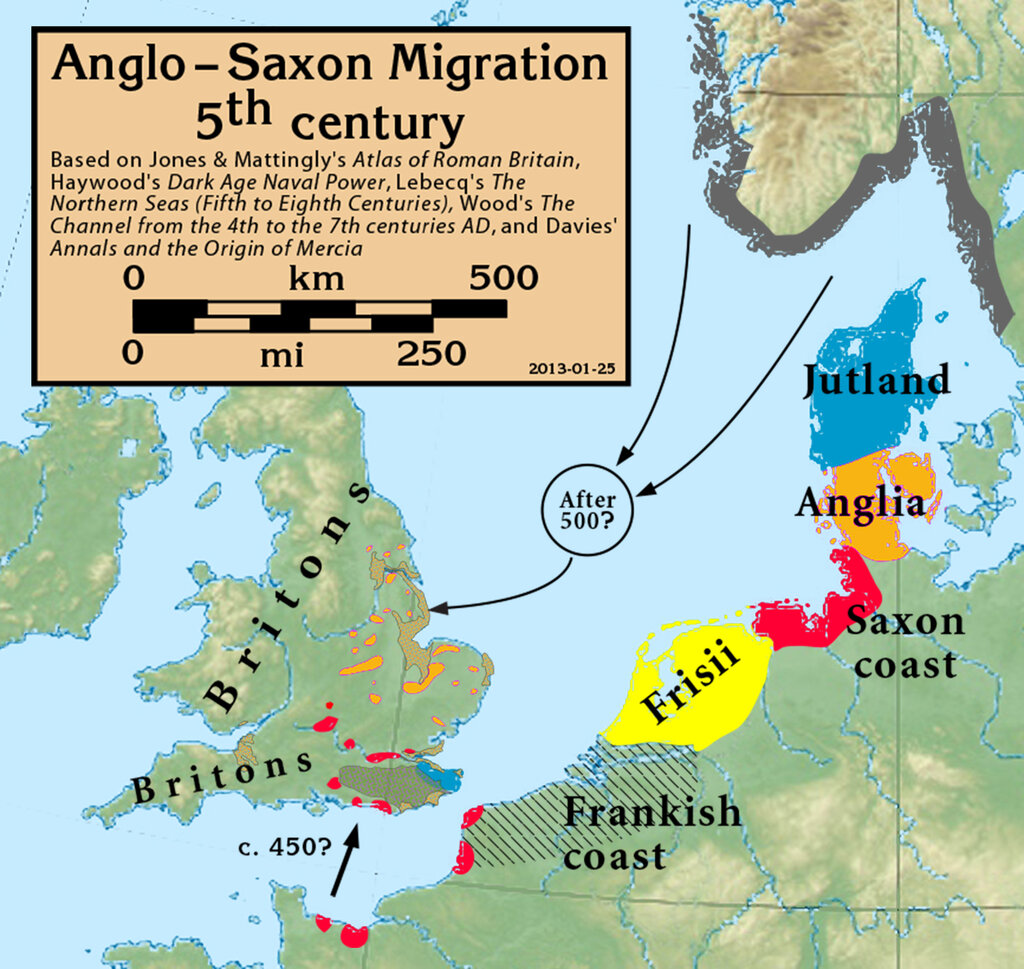
These dialects weren't a single, unified language. Think of them as being as different as modern Scottish, American, and Australian English. Over time, in their new home, these related ways of speaking merged and evolved. The result was a new language we now call Old English, or Anglo-Saxon. This is the earliest form of English, and it looks and sounds very foreign to us today. For example, the opening line of the epic poem Beowulf reads: "Hwæt! We Gardena in geardagum, þeodcyninga, þrym gefrunon."
Fundamentally, English is a Germanic language. Core words like I, you, man, woman, eat, and drink all come from these early roots.
Viking Visitors
For several centuries, Old English developed on its own. Then, around the late 8th century, a new wave of visitors arrived: the Vikings. These Norsemen, hailing from modern-day Denmark, Norway, and Sweden, were also Germanic peoples. Their language, Old Norse, was a cousin to Old English. The two were different, but similar enough that speakers could probably understand each other with a little effort.
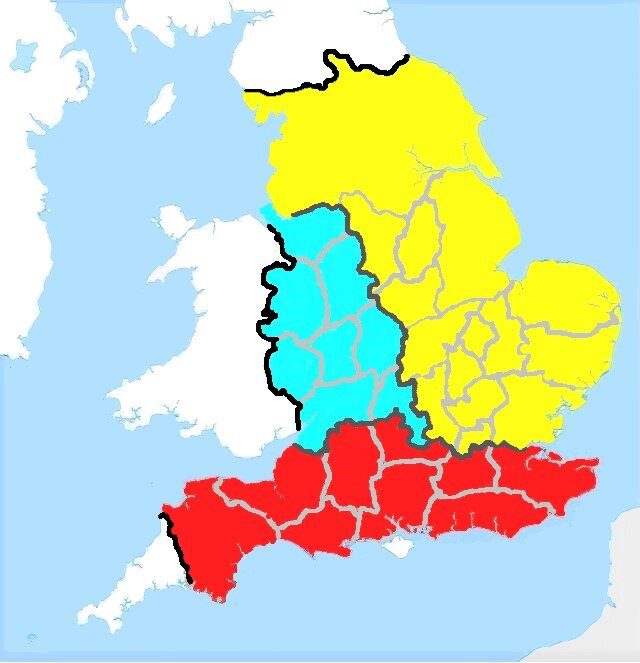
The Vikings didn't just raid; they settled, especially in the north and east of England in an area that became known as the Danelaw. As they lived alongside the Anglo-Saxons, their languages began to mix. Old Norse gave English many common words we use every day. If you've ever felt anger, sat in the dirt, or looked at your freckles, you're using words from the Vikings.
This influence was profound. Old Norse even gave us basic words like they, them, and their, which replaced their Old English equivalents. It also contributed to grammatical simplification. Where Old English had complex noun endings, the practical need for communication between two similar but different languages helped wear them away. The table below shows some examples of words that came from Old Norse, often existing alongside the original Old English word.
| Old Norse Word | Modern English | Old English Word |
|---|---|---|
skirt | skirt | scyrte (shirt) |
sky | sky | heofon (heaven) |
egg | egg | ǣg |
kaka | cake | coecel |
The Norman Conquest
The single most transformative event in the history of English happened in 1066. William the Conqueror, Duke of Normandy, invaded and seized the English throne. These Normans were originally Vikings who had settled in northern France and adopted the French language and culture.
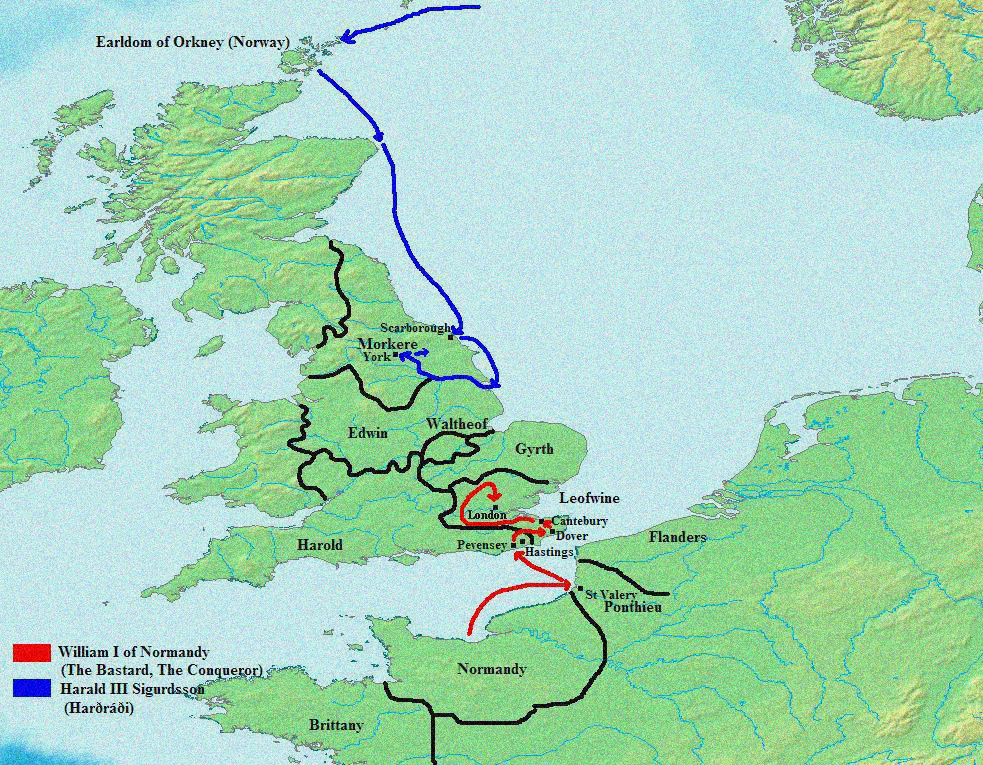
For the next 300 years, French became the language of power in England. The king, the courts, the government, and the nobility all spoke Norman French. Old English, the language of the conquered Anglo-Saxons, was considered common and unsophisticated. However, it never disappeared. The vast majority of the population—the farmers and laborers—continued to speak it.
The Norman Conquest dramatically reshaped English culture, language, and identity.
Because the two languages coexisted for so long, a massive amount of French vocabulary poured into English. This is why English has so many synonyms. The Anglo-Saxons had simple, earthy words for farm animals, while the French-speaking elite had refined words for the meat served at their tables.
| Animal (from Old English) | Meat (from Norman French) |
|---|---|
cow | beef (buef) |
pig / swine | pork (porc) |
sheep | mutton (moton) |
calf | veal (veel) |
deer | venison (venaison) |
French also gave us thousands of words related to law (judge, jury, evidence), government (parliament, sovereign, state), and fine living (mansion, banquet, cuisine). But the core of the language—its grammar and most common words—remained Germanic. The result was a hybrid language, with a simple Germanic structure and an enormous, layered vocabulary drawn from French, Latin (via French), and Old Norse.
Let's review some key terms before seeing what you've learned.
Now, test your knowledge of how English began.
The earliest form of English, known as Old English, primarily developed from the dialects of which three Germanic tribes?
The Viking invasions and settlement in the Danelaw had a profound impact on the English language. Which of the following is a key linguistic contribution from their language, Old Norse?
These three major influences—Germanic settlement, Viking invasion, and the Norman Conquest—created the unique foundation of the English language. This layered history is why English has such a rich and varied vocabulary.