The English Language
Origins of English
An Ancient Ancestor
English, like more than 400 other languages, is part of a massive language family called Indo-European. Linguists believe most languages spoken from India to Europe today descend from a single, prehistoric mother tongue. They call it Proto-Indo-European, or PIE for short.
No one ever wrote PIE down. It was spoken thousands of years ago, long before writing was common. Scholars have reconstructed it by comparing its daughter languages and working backward. They look for similarities in words for universal concepts like family, numbers, and nature. For example, the PIE root for "night" was likely nokwts. You can see its echo in Spanish (noche), German (Nacht), and of course, English (night).
Over millennia, groups of PIE speakers migrated, spreading across Europe and Asia. As they settled in new lands and lost contact with each other, their shared language slowly fractured into distinct dialects, which eventually became new languages.
One of these branches was Proto-Germanic. It became the parent of languages like German, Dutch, Swedish, and, most importantly for our story, English.
The Arrival of English
For centuries, the native inhabitants of Britain were Celts, who spoke Celtic languages. But in the 5th century AD, after the Roman Empire abandoned the island, everything changed. Three Germanic tribes—the Angles, Saxons, and Jutes—migrated from what is now northern Germany and Denmark. They crossed the North Sea and settled in Britain.
These tribes brought their languages with them. Over time, their various West Germanic dialects merged to form a new language: Old English, also known as Anglo-Saxon. This is the true beginning of English. The name "England" itself comes from these settlers. It means "land of the Angles."
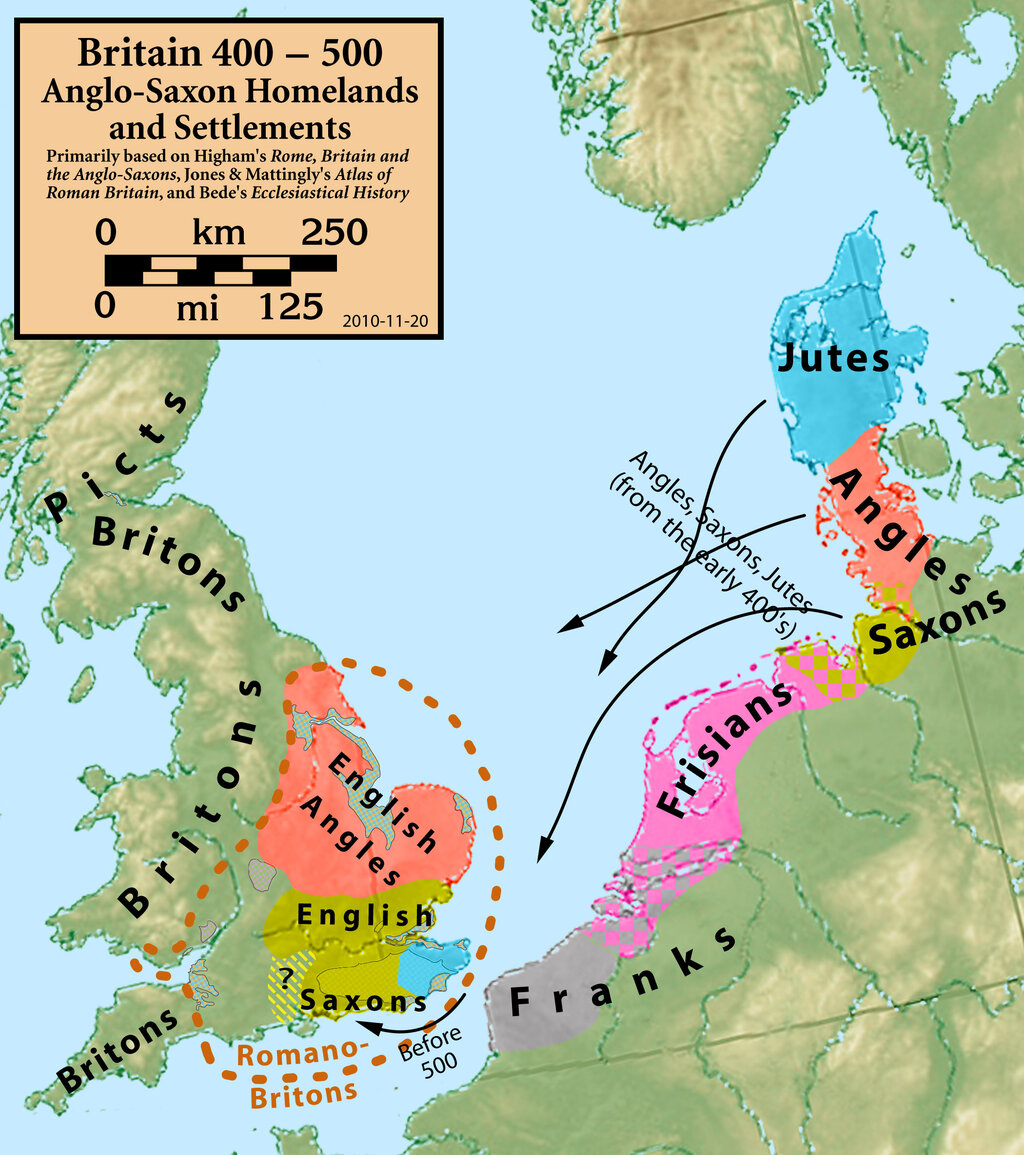
Old English sounded nothing like the English we speak today. It had a complex grammar, with nouns changing their endings based on their role in a sentence. It also had grammatical gender, meaning objects like a spoon or a shield could be considered masculine, feminine, or neuter. If you want to hear a modern language that feels similar, listen to German or Icelandic.
Take a look at this manuscript of Beowulf, the most famous work of Old English literature. You can see how unfamiliar the script and words are.
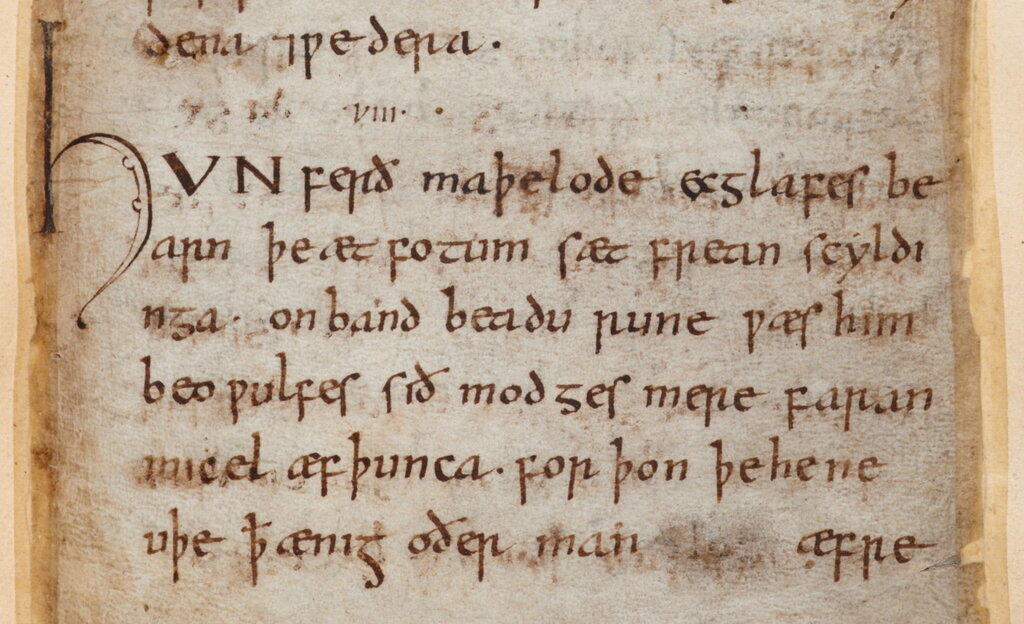
Hwæt! Wē Gār-Dena in geārdagum, þeodcyninga, þrym gefrunon, hū ðā æþelingas ellen fremedon.
In modern English, that means: "Listen! We have heard of the glory of the Spear-Danes in days of yore, how those princes performed courageous deeds."
Borrowing and Bending
Even in its earliest stages, English was a great borrower of words. The Anglo-Saxons didn't just replace the languages of Britain; they absorbed bits of them. Two languages in particular left a deep mark on Old English: Latin and Old Norse.
The influence of Latin came in waves. The first came from the Roman soldiers and merchants who occupied Britain for centuries before the Anglo-Saxons arrived. This early contact gave English words related to trade and construction. Think of words like wine, street, and wall. Later, when Anglo-Saxon England converted to Christianity in the 6th and 7th centuries, another flood of Latin words arrived with the missionaries. These were mostly religious terms.
| Latin Loanword | Original Latin | Meaning |
|---|---|---|
| priest | presbyter | elder, priest |
| candle | candela | a light, torch |
| school | schola | place of learning |
| bishop | episcopus | overseer |
Then came the Vikings. Starting in the late 8th century, Scandinavian raiders—speakers of Old Norse—began attacking and eventually settling in large parts of northern and eastern England. This area became known as the Danelaw.
Old Norse and Old English were related Germanic languages, so speakers could probably understand each other. This close contact had a huge impact. The Vikings gave English thousands of words, many of which are core parts of our vocabulary today.
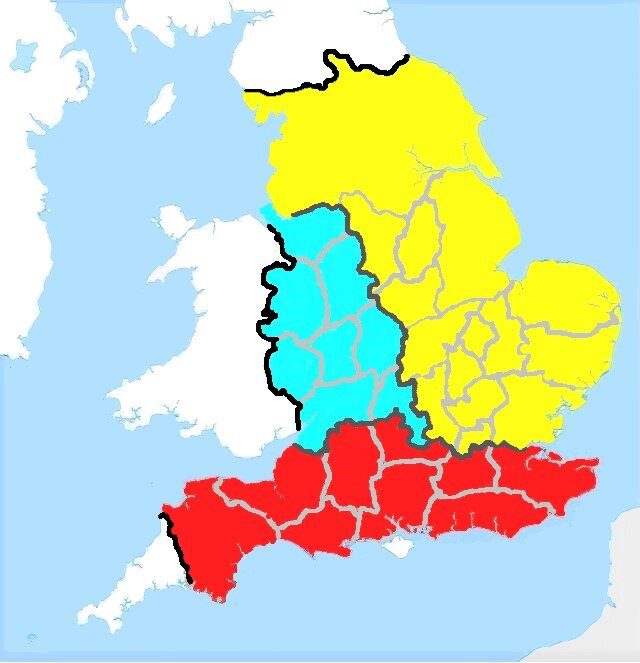
Many Norse loanwords are simple, everyday words. If you see a word with a hard sk sound, like sky or skin, it's likely from Old Norse. The Anglo-Saxon equivalent, sc, softened into a sh sound (like shirt or ship). The Vikings even gave us basic pronouns like they, them, and their, which replaced the clunkier Old English forms.
This period of invasion and settlement was chaotic, but it laid the foundation for the English language. It established the Germanic core of the language while showing its remarkable ability to adopt and adapt words from other cultures. This flexibility would become one of English’s defining features as it continued to evolve.