The Endocrine System Explained
Endocrine System Overview
The Body's Wireless Network
Your body has two major systems for communication. The nervous system is like a wired network, sending rapid, specific electrical signals through nerves. The endocrine system, on the other hand, is like a wireless broadcast. It sends messages far and wide using chemical messengers called hormones.
The endocrine system is a network of glands and organs that produce, store, and release hormones into the bloodstream.
These glands are located throughout your body. They work together to oversee many of your body's most important long-term processes, like growth, metabolism, and reproduction. Think of it as a team of managers making sure everything runs smoothly behind the scenes.
Endocrine vs. Exocrine
Your body has two main types of glands: endocrine and exocrine. They both produce important substances, but they release them in very different ways.
Endocrine glands are ductless. They release hormones directly into the bloodstream. From there, the circulatory system carries these hormones to target cells all over the body.
Exocrine glands, in contrast, use ducts to send their products to a specific location. Sweat glands releasing sweat onto your skin, salivary glands producing saliva in your mouth, and glands in your stomach releasing digestive juices are all examples of exocrine glands.
| Feature | Endocrine Glands | Exocrine Glands |
|---|---|---|
| Release Method | Directly into bloodstream | Through ducts to a specific surface |
| Substances | Hormones | Enzymes, sweat, saliva, oil |
| Target | Distant cells and organs | Local areas (e.g., skin, mouth) |
| Examples | Pituitary, thyroid, adrenal | Salivary, sweat, pancreas (digestive part) |
Hormones as Messengers
Hormones are the heart of the endocrine system. They act as chemical signals, each with a specific job to do. After a gland releases hormones into the blood, they travel throughout the body, but they don't affect every cell they pass.
Hormone
noun
A chemical substance produced in the body by a gland that controls and regulates the activity of certain cells or organs.
A hormone can only influence a cell that has a matching receptor, which is a special protein on the cell's surface or inside it. This is often called the "lock and key" model. The hormone is the key, and the receptor is the lock. If the key fits the lock, the hormone can deliver its message and cause a change in the cell.
Maintaining Balance
The ultimate goal of the endocrine system is to maintain homeostasis. This is the state of steady internal conditions that your body needs to function properly, like maintaining a constant body temperature or stable blood sugar levels.
Homeostasis is the body's ability to maintain a stable, constant internal environment despite changes in external conditions.
When something is out of balance, an endocrine gland is often triggered to release a hormone. This hormone travels to its target cells and prompts a response that helps return the body to its stable state. Most of this regulation happens through a process called a negative feedback loop. Think of it like a thermostat. When the room gets too hot, the thermostat signals the air conditioner to turn on. Once the room cools to the right temperature, the thermostat signals it to turn off. The endocrine system works in a similar way to prevent hormone levels from getting too high or too low.
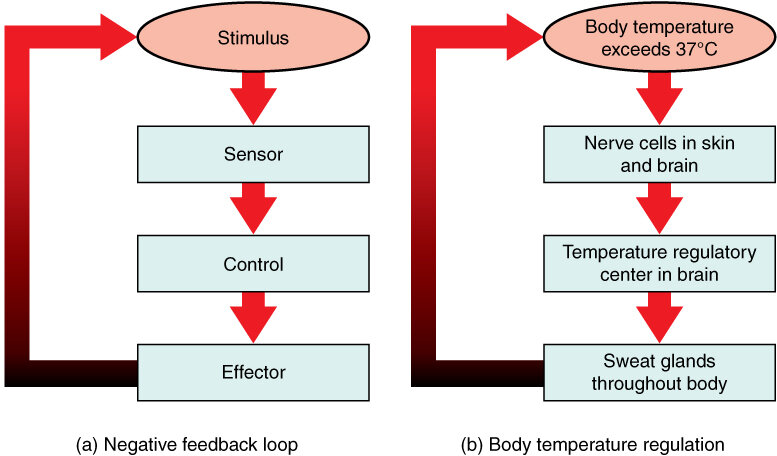
This system of glands and hormones is a powerful, silent force that coordinates countless functions, ensuring your body runs correctly day and night.
How do endocrine glands differ from exocrine glands?
The 'lock and key' model describes how a hormone interacts with a specific ___________ on a target cell.