The End of an Era Ellis Island Immigration
Ellis Island's Peak Years
The Golden Door
For millions of people, the first real glimpse of America was the imposing, French Renaissance-style building on Ellis Island. After a long and arduous journey across the Atlantic, often in crowded steerage compartments, ships would dock in New York Harbor. While first and second-class passengers were typically inspected and processed aboard the ship, those in third class were ferried to the island for inspection. This was the start of a process that could take hours, or in some cases, days.
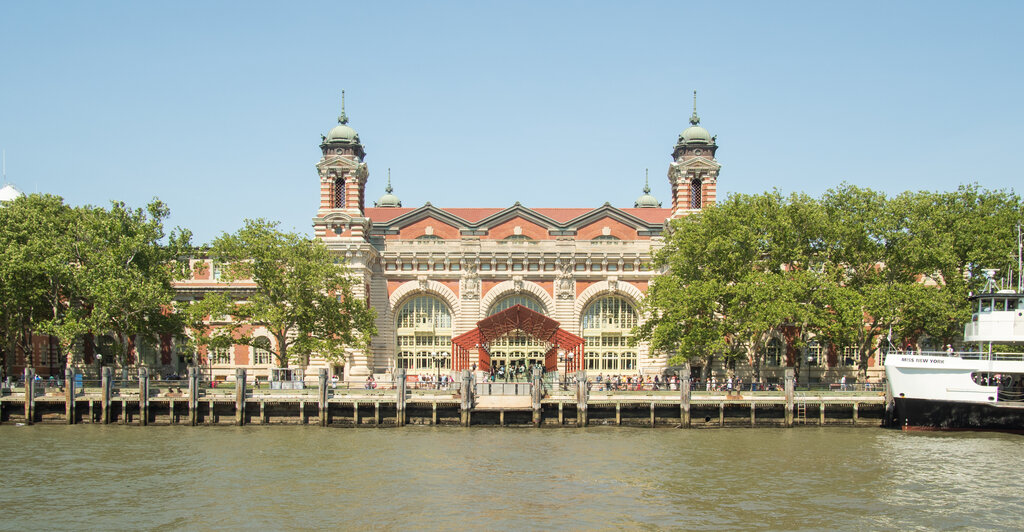
The period between 1900 and 1914 marked the high tide of immigration through Ellis Island. The sheer volume was staggering. On an average day, officials processed around 5,000 people. On the busiest single day, April 17, 1907, a record 11,747 immigrants arrived. In total, more than 12 million people passed through the station during these peak years, accounting for about 75% of all immigrants who entered the United States through Ellis Island in its entire history.
The Inspection Gauntlet
Upon disembarking, immigrants were directed into the main building and up a steep flight of stairs into the Registry Room, often called the Great Hall. This climb served as the first, unofficial medical test. Doctors watched from the top of the stairs, looking for anyone who seemed out of breath, limped, or showed signs of physical or mental distress. This was the beginning of the
gauntlet
noun
A series of challenges, trials, or criticisms that a person must endure to achieve a goal.
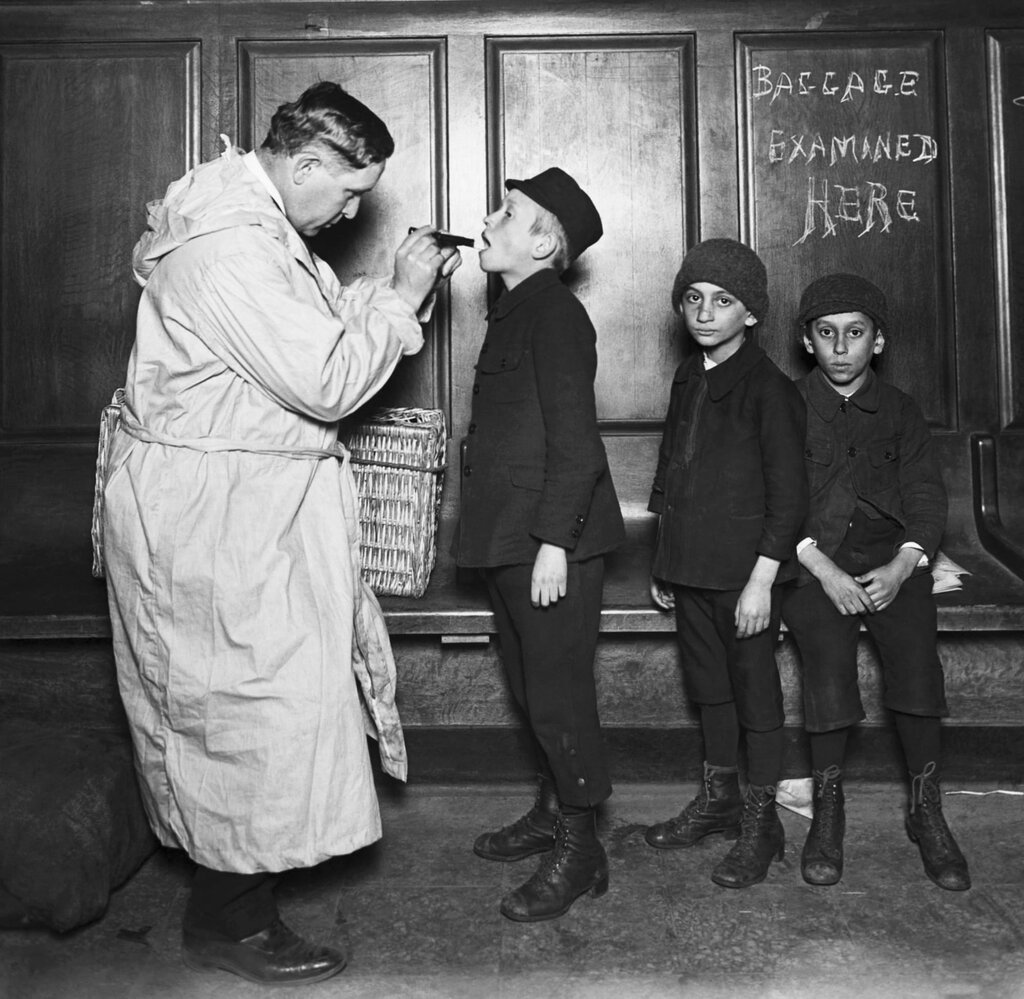
In the Great Hall, immigrants waited in long lines for the official medical and legal inspections. The medical exam was notoriously quick, sometimes lasting only six seconds. Doctors looked for signs of contagious diseases, especially trachoma, a highly infectious eye disease that was a common cause for deportation. They used a buttonhook to flip eyelids inside out to check for it, a procedure many found frightening.
Those who passed the medical exam moved on to the legal inspection. An inspector, often with the help of an interpreter, would ask a series of 29 questions. They would verify the information on the ship's manifest, checking names, occupations, and destinations. The key questions were designed to ensure the immigrant could support themselves and would not become a public charge. "Do you have work waiting for you?" "Who paid for your passage?" "How much money do you have?"
Immigrants were often advised to have at least 💲25 with them and the address of a relative or friend in America.
Detention and Deportation
While most immigrants—around 80%—were processed and left the island within a few hours, the remaining 20% were detained for further inspection. Detention could be for medical reasons, requiring treatment at the island's hospital, or for legal issues. Some were held until a family member could come to vouch for them and provide funds. For a small percentage, about 2%, the journey ended in disappointment. They were deemed "likely to become a public charge," a contract laborer, or medically unfit, and were sent back to their country of origin on the next available ship.
For those who passed all inspections, the ordeal was over. They were led to the so-called "kissing post," an area where they could reunite with family and friends who were already in America. From there, they could take a ferry to Manhattan to begin their new lives or head to the railroad ticket office to continue their journey to other parts of the country.
Upon arriving at Ellis Island, what was the purpose of having immigrants walk up a steep flight of stairs into the Registry Room?
During the peak years of immigration from 1900 to 1914, approximately what percentage of all immigrants who ever entered through Ellis Island were processed?
The years from 1900 to 1914 cemented Ellis Island's place in history as the primary gateway to America, shaping the nation's identity for generations to come.