The Electron Transport Chain and ATP Synthesis
Cellular Respiration
The Cell's Energy Factory
Every living cell needs energy to function, from contracting a muscle to building a new protein. The primary source of this energy is glucose, a simple sugar. Cellular respiration is the process cells use to break down glucose and convert its stored chemical energy into a usable form called adenosine triphosphate, or ATP.
Think of glucose as a $100 bill. It holds a lot of value, but you can't use it in a vending machine. ATP is like the quarters and dollar bills the cell can use for its everyday transactions. Cellular respiration is the currency exchange process, happening in three main stages.
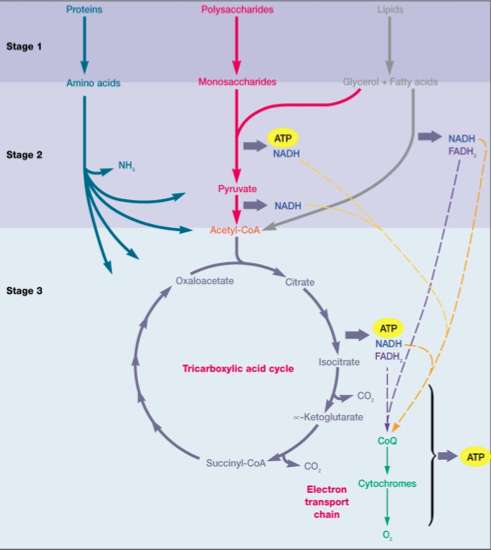
Stage 1: Glycolysis
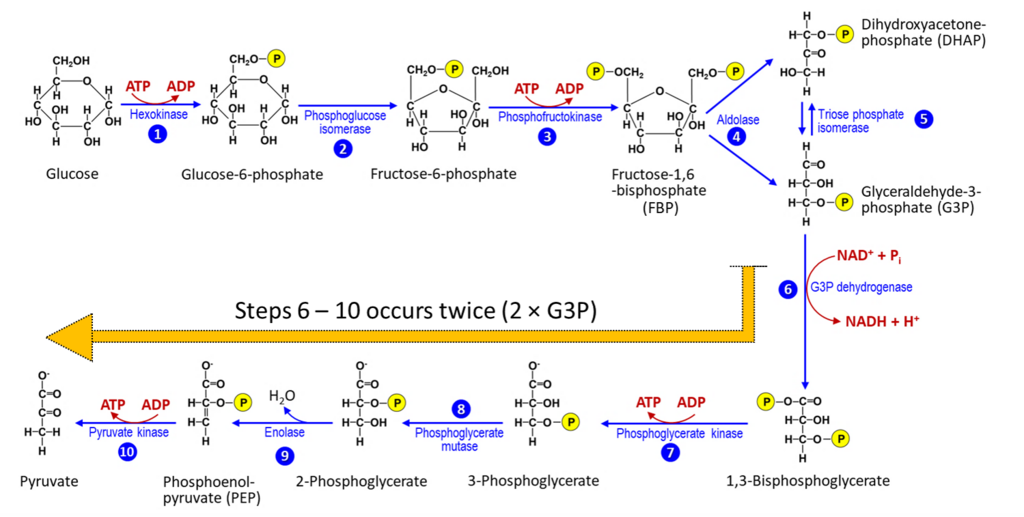
The first stage is glycolysis, which literally means “sugar splitting.” It takes place in the cell's cytoplasm, outside the mitochondria. In this series of reactions, one six-carbon molecule of glucose is broken down into two three-carbon molecules of pyruvate.
Glycolysis
noun
The metabolic pathway that converts glucose into pyruvate. The free energy released in this process is used to form the high-energy molecules ATP and NADH.
This process doesn't require oxygen and produces a small net gain of two ATP molecules. More importantly, it also captures high-energy electrons and passes them to an electron carrier molecule called NAD+, converting it to NADH. These NADH molecules are like tiny rechargeable batteries, holding energy that will be cashed in during the final stage.
Stage 2: The Citric Acid Cycle
When oxygen is present, the pyruvate molecules produced during glycolysis move into the mitochondria, the cell's main power plants. Here, each pyruvate is converted into a two-carbon molecule called acetyl-CoA, releasing a molecule of carbon dioxide in the process.
This acetyl-CoA then enters the citric acid cycle, also known as the Krebs cycle. Think of this cycle as a metabolic Ferris wheel. Acetyl-CoA gets on, and as the wheel turns through a series of chemical reactions, its carbon atoms are released as carbon dioxide—the very CO₂ we exhale. With each turn, the cycle generates a small amount of ATP and, crucially, loads up more electron carriers, creating a stockpile of NADH and another carrier called FADH₂.
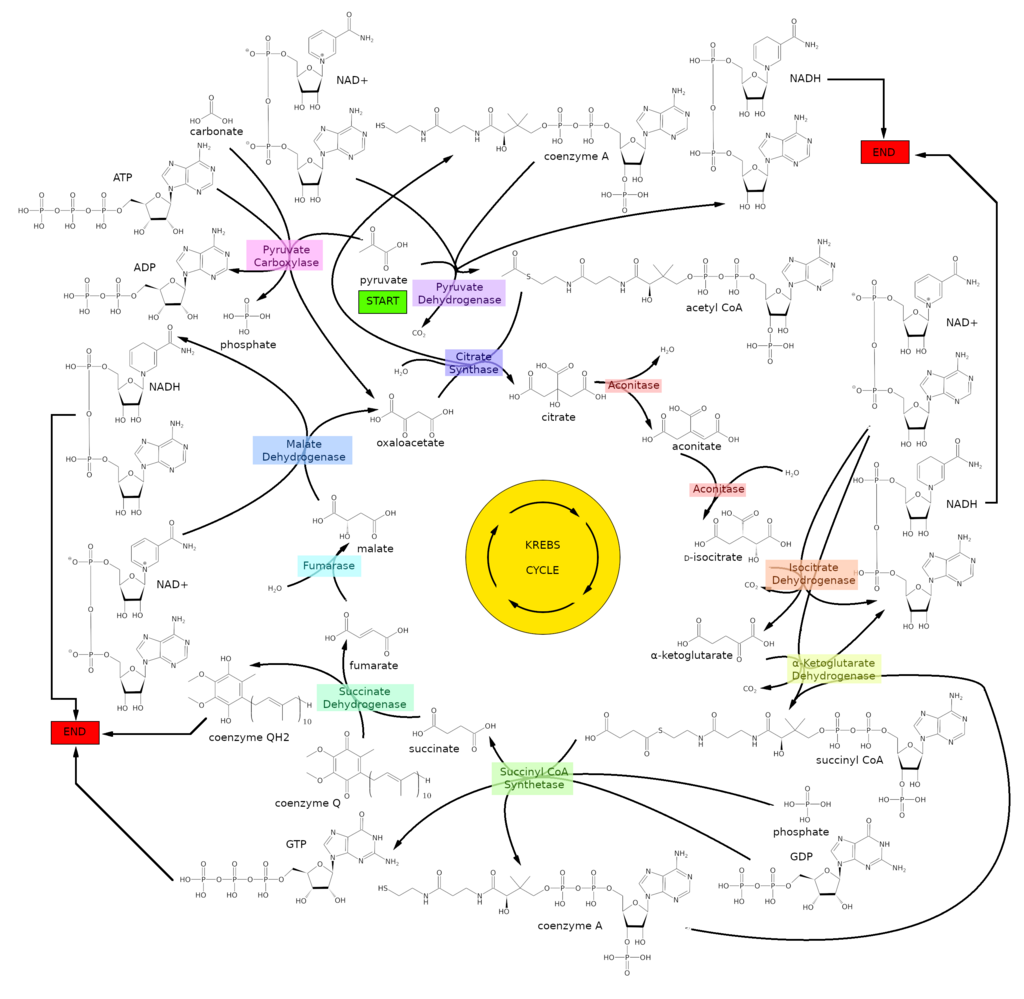
After two turns of the citric acid cycle (one for each pyruvate from the original glucose molecule), all six carbon atoms from the glucose have been released as carbon dioxide.
Stage 3: The Electron Transport Chain
The final stage is where the big energy payoff happens. The electron transport chain is a series of protein complexes located in the inner mitochondrial membrane. The NADH and FADH₂ molecules generated in the previous stages arrive here and drop off their high-energy electrons, like delivery trucks unloading valuable cargo.
As these electrons are passed down the chain from one protein to the next, they release energy. At the very end of the chain, the electrons combine with oxygen and hydrogen ions to form water. This is why oxygen is essential for aerobic respiration; it's the final electron acceptor, clearing the way for the chain to keep running.
The energy released as electrons move down the chain is used to create a large number of ATP molecules. While glycolysis and the citric acid cycle produce a small amount of ATP directly, they primarily serve to load up the electron carriers. The electron transport chain is the main event, converting the energy held by those carriers into a form the cell can readily use. This final stage is by far the most productive, generating the vast majority of ATP during cellular respiration.
Time to check what you've learned.
What is the primary goal of cellular respiration?
Where in the cell does glycolysis occur, and does it require oxygen?
With these three stages, a single molecule of glucose is systematically broken down to produce a significant amount of ATP, powering the life of the cell.