The Eiffel Tower
Introduction to 19th-Century Paris
A City Reborn
In the late 19th century, Paris was a city of contradictions. It was still healing from the wounds of the Franco-Prussian War (1870–1871), a conflict that ended the Second Empire of Napoleon III and left parts of the city in ruins. The brief but bloody uprising of the Paris Commune that followed deepened these scars.
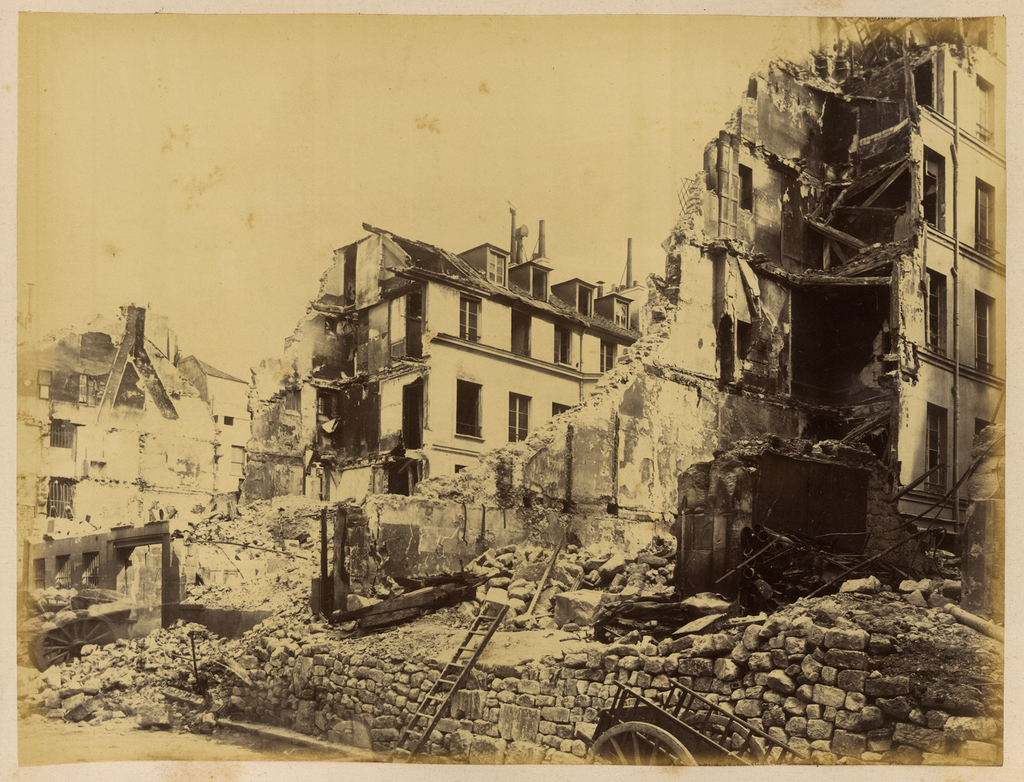
From this turmoil, the Third Republic was born. This new government was determined to prove France's resilience and restore its place as a global leader in industry, culture, and innovation. The leaders of the Republic saw grand international exhibitions, or World's Fairs, as the perfect stage to showcase a revitalized nation. They wanted to project an image of stability, progress, and modern marvel.
The Haussmann Revolution
Even before the war, Paris had been undergoing a radical transformation. Under Napoleon III, Prefect Georges-Eugène Haussmann had been tasked with remaking the city. From the 1850s to 1870, he tore down the dense, dark, and often unsanitary medieval neighborhoods.
In their place, he carved out the city we recognize today. Wide, tree-lined boulevards, grand public squares, and expansive parks like the Bois de Boulogne replaced narrow, winding streets. This massive urban renewal project wasn't just about aesthetics. The new avenues improved traffic flow, brought light and air into the city center, and made it easier for troops to quell unrest. Haussmann also oversaw the construction of a modern sewer system, aqueducts for clean water, and a network of gas lamps that illuminated the city at night.
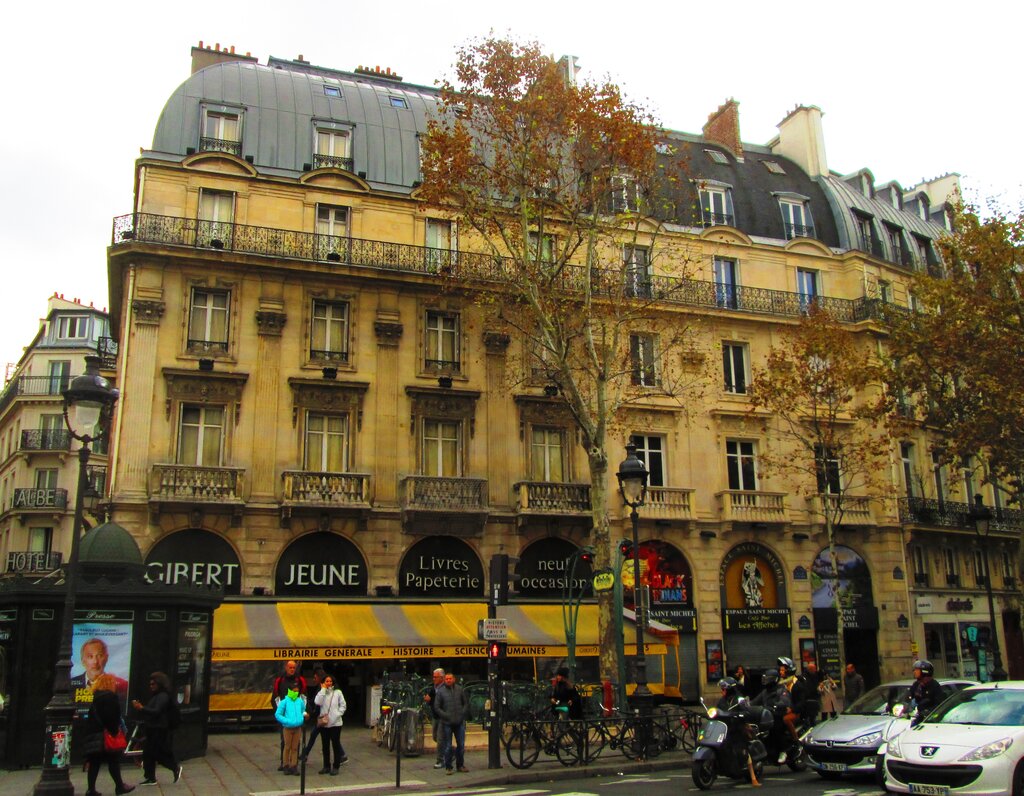
The result was a new Paris, one defined by elegant, six-story apartment buildings with uniform cream-colored stone facades. It was a city built for strolling, for spectacle, and for commerce. The wide boulevards became the heart of public life, lined with theaters, cafés, and the world's first department stores.
A Crucible of Culture
This transformed city was a magnet for artists and thinkers. The late 19th century was the era of the Belle Époque, or "Beautiful Era," a period of optimism, peace, and artistic innovation in France. The cafés and salons buzzed with new ideas.
The official art world was dominated by the conservative Académie des Beaux-Arts, which favored historical and mythological subjects. But a new generation of artists was breaking away. The Impressionists, including Claude Monet, Pierre-Auguste Renoir, and Camille Pissarro, turned their attention to modern life. They painted the boulevards, the parks, the railway stations, and the people of Haussmann's Paris, capturing fleeting moments with bold brushstrokes and a new emphasis on light.
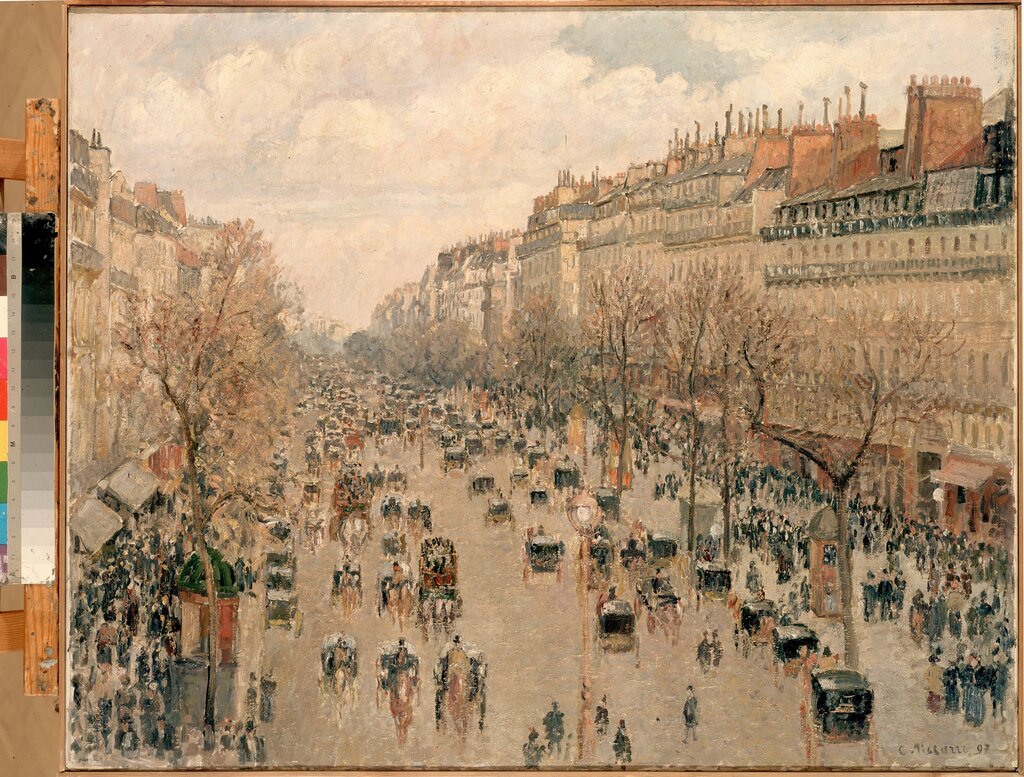
This clash between tradition and modernity was everywhere. While Impressionists painted the changing cityscape, engineers and architects were experimenting with new industrial materials like iron and glass. There was a growing public appetite for spectacular, forward-looking projects. It was in this dynamic environment—a nation eager to prove its strength, a city physically rebuilt for grand gestures, and a culture fascinated by the new—that the idea for a truly monumental structure for the 1889 World's Fair would take root.
What major conflict immediately preceded the establishment of France's Third Republic?
Which of the following was NOT a primary goal of Baron Haussmann's renovation of Paris?
This period of dramatic change set the stage for one of the most iconic structures in the world.