The Early Bird Advantage
Understanding Circadian Rhythms
Your Body's Internal Clock
Have you ever wondered why you naturally feel sleepy around the same time each night and wake up around the same time each morning, even without an alarm? The answer lies in your circadian rhythm. This is your body's internal 24-hour clock, a natural process that regulates your sleep-wake cycle.
Think of it as a master schedule that coordinates your body's functions, telling you when to be alert and when to rest.
These rhythms are not just about sleep. They influence a wide range of your body's processes, including hormone release, metabolism, and body temperature. When your daily habits align with this internal clock, your body functions more efficiently. When they're out of sync, you might feel groggy, unfocused, or unwell.
The Master Conductor
So, what controls this internal clock? The main conductor is a tiny region in your brain's hypothalamus called the suprachiasmatic nucleus, or SCN. It's made up of about 20,000 nerve cells and acts as the body's master clock.
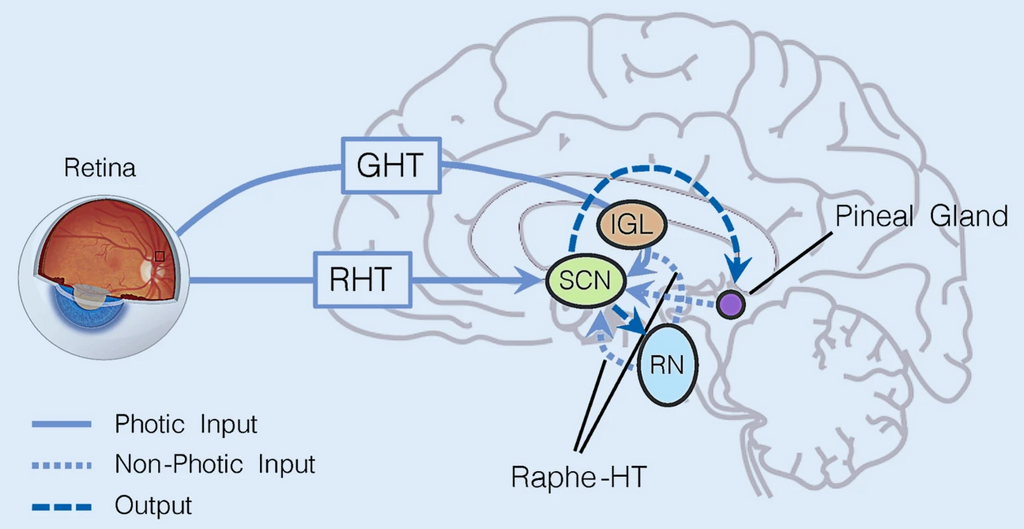
The SCN's primary cue for setting your 24-hour cycle is light. When light enters your eyes, signals travel along your optic nerve directly to the SCN. In response, the SCN synchronizes your internal clock with the outside world. This is why getting sunlight in the morning is so effective at making you feel awake. At its core, this process is driven by a feedback loop of clock genes and their protein products within SCN cells, which cycle up and down over a 24-hour period.
More Than Just Sleep
While controlling sleep is a major job of the circadian rhythm, its influence extends much further. Throughout the day, your SCN sends signals that regulate various bodily functions in a coordinated rhythm.
| Time of Day | Typical Circadian-Driven Function |
|---|---|
| Morning | Cortisol (stress hormone) levels peak to promote wakefulness. |
| Afternoon | Body temperature is highest, and physical performance peaks. |
| Evening | The SCN signals the pineal gland to release melatonin, making you feel sleepy. |
| Night | Body temperature drops and metabolic processes slow down during sleep. |
For example, in the evening, as light fades, your SCN prompts the release of melatonin, a hormone that induces sleepiness. In the morning, it triggers a rise in cortisol to increase alertness. This elegant system ensures your body is prepared for the demands of the day and can properly rest and repair at night.
Now let's review the key terms we've discussed.
Ready to check your understanding?
What is the primary function of the body's circadian rhythm?
Which part of the brain acts as the master clock for the circadian rhythm?
Understanding your body's natural clock is the first step toward working with it, not against it.