The Double Slit Experiment Explained
Introduction to Wave-Particle Duality
Both Wave and Particle
In our everyday world, things are either one thing or another. A baseball is a solid object, a particle. The ripples in a pond are waves. These two ideas seem completely separate. But in the quantum world, this clear distinction breaks down. Tiny things like electrons and photons can act like particles in some situations and like waves in others. This strange but fundamental concept is called wave-particle duality.
The wave-particle duality has indicated that a quantum object may exhibit the behaviours of both wave and particle, depending upon the circumstances of the experiment.
It’s not that an electron is sometimes a particle and sometimes a wave. It is something else entirely, an entity that has properties of both. Which set of properties we see depends entirely on how we choose to measure it. This idea shatters the foundation of classical physics, where objects have definite, observable properties regardless of how we look at them.
Light's Particle Nature
For centuries, scientists debated whether light was a wave or a stream of particles. By the 19th century, the evidence for light as a wave seemed overwhelming. But then an experiment called the photoelectric effect created a major puzzle.
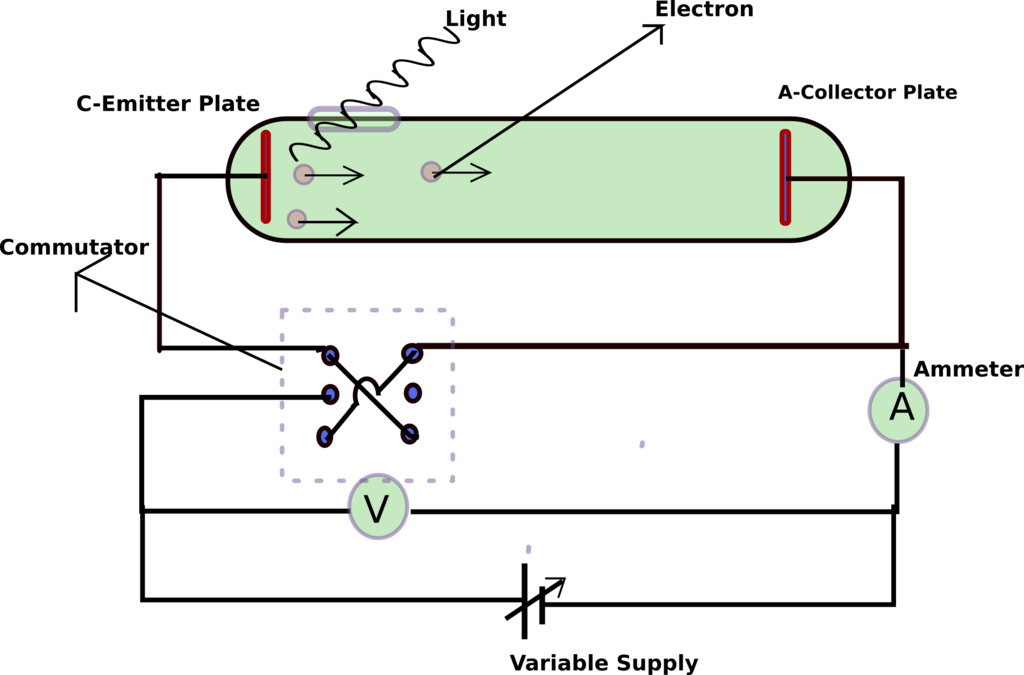
Scientists observed that when light shines on a metal surface, it can knock electrons loose. If light were just a wave, you’d expect that a brighter, more intense light wave would give the electrons more energy. But that’s not what happened. The energy of the ejected electrons depended only on the light's color (its frequency), not its brightness. A brighter light just knocked out more electrons, not more energetic ones.
In 1905, Albert Einstein proposed a revolutionary solution. He suggested that light itself is made of discrete packets of energy, which we now call photons. The energy of each photon is directly proportional to its frequency. A single photon kicks out a single electron, and any extra energy from the photon becomes the electron's kinetic energy. This explained the experimental results perfectly and provided strong evidence that light, which clearly behaves like a wave in many situations, also has a particle-like nature.
photon
noun
A quantum of light and all other forms of electromagnetic radiation. It is the force carrier for the electromagnetic force.
The Electron's Wave Nature
If waves like light can act like particles, could particles like electrons act like waves? In 1924, Louis de Broglie proposed that all matter has wave-like properties. This was a bold idea, as there was no experimental evidence for it at the time. He even came up with an equation to describe the wavelength of any object:
This idea was so strange that it wasn't immediately accepted. But just a few years later, in 1927, physicists Clinton Davisson and Lester Germer stumbled upon the proof. They were studying how a beam of electrons scattered off a nickel crystal. To their surprise, the electrons didn't scatter randomly like tiny billiard balls. Instead, they formed a distinct pattern of high and low intensity, a pattern that could only be explained by diffraction.
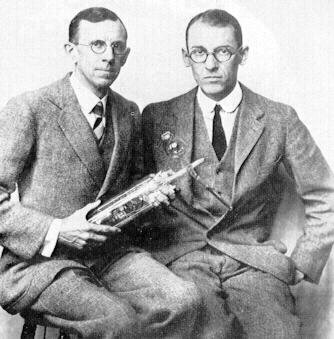
Diffraction is a hallmark of waves. It’s what happens when waves bend around an obstacle or spread out after passing through an opening. The pattern Davisson and Germer saw was an interference pattern, created as the electron waves scattered by the crystal's atoms interfered with each other. It was undeniable proof that electrons, which we always thought of as particles, also behave like waves.
This confirmation of wave-particle duality was a cornerstone of the new theory of quantum mechanics. It forced physicists to abandon the simple, intuitive pictures of the classical world and embrace a far more strange and probabilistic reality.