The domestication of cats
Wildcat Evolution
The First Felines
Before there were house cats, there were wildcats. And before wildcats, there were the ancestors of all felines. The story of your pet cat begins millions of years ago, with the evolution of a diverse and successful family of predators: Felidae.
Felidae
noun
The biological family of cats. A member of this family is called a felid.
The cat family tree has deep roots. Its members first appeared around 25 million years ago. These early felids were likely small, forest-dwelling carnivores. Over millennia, they diversified, spreading across the globe and adapting to new environments. This process created several major lineages, or branches, of the cat family.
One of these branches, known as the Domestic Cat lineage, is our focus. It includes a group of smaller cats that are more closely related to each other than to lions or tigers. Within this lineage, a specific group called the Felis genus emerged.
Enter the Genus Felis
The Felis genus represents a more recent chapter in cat evolution. These are small to medium-sized cats, typically weighing between 3 and 10 kilograms. They are characterized by their slender bodies, relatively long tails, and a skull shape optimized for hunting small prey like rodents, birds, and lizards. Their evolutionary success is tied to their adaptability.
Unlike many larger cats that require vast territories, Felis species can thrive in a wide range of habitats, from deserts and forests to grasslands and scrublands.
Within this genus, several distinct species arose, including the European wildcat (Felis silvestris), the Chinese mountain cat (Felis bieti), and the jungle cat (Felis chaus). But one species in particular is the star of our story: the African wildcat, Felis lybica.
The African Wildcat
Genetic studies have confirmed that all modern domestic cats are descended from a single subspecies: Felis lybica lybica, the African wildcat. These cats look strikingly similar to a domestic tabby cat, but they are wild animals, perfectly adapted to their environment.
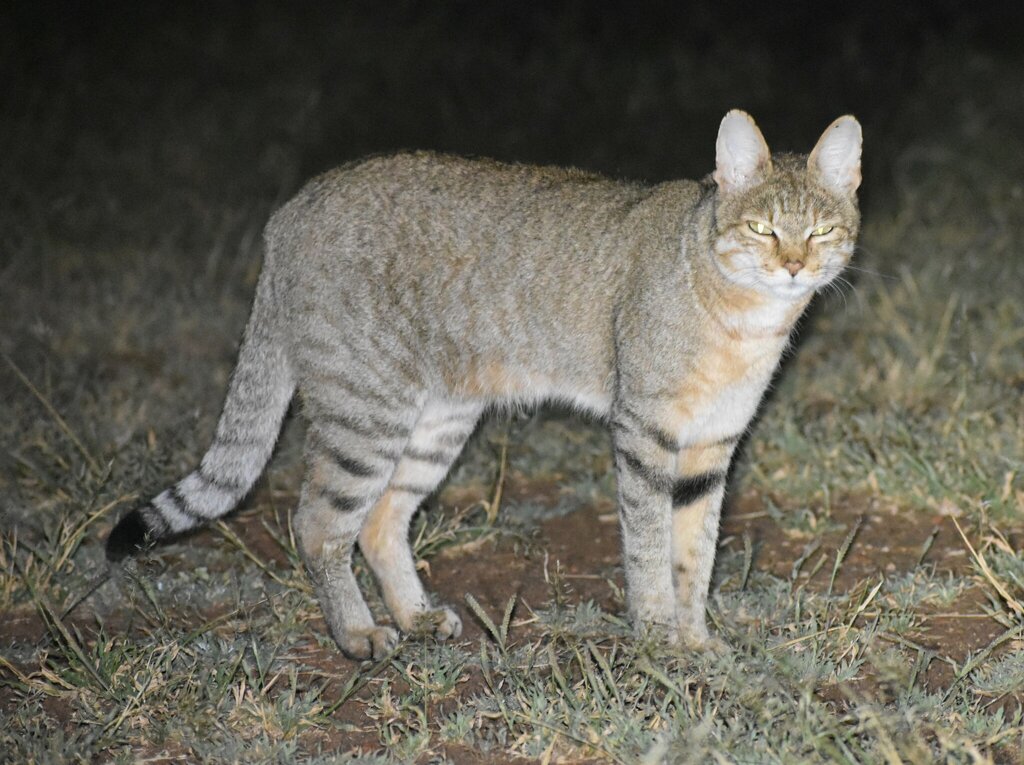
African wildcats are typically sandy-brown or grayish, with light black stripes on their body and legs and a black-tipped tail. This coloration provides excellent camouflage in the arid and semi-arid regions they call home. They are solitary hunters, primarily active at dawn and dusk, using their keen senses of hearing and sight to locate prey.
| Characteristic | African Wildcat (Felis lybica) |
|---|---|
| Size | Slender, 3-8 kg (6.6-17.6 lbs) |
| Coat | Sandy-brown to grey with faint stripes |
| Legs | Proportionally longer than domestic cats |
| Habitat | Savannas, scrublands, and deserts |
| Diet | Small rodents, birds, reptiles, insects |
Their native range is vast, covering most of Africa, the Middle East, and stretching into Central Asia. This wide distribution put them in the right place at the right time. As early human societies began to develop agriculture and form settlements in these areas, the paths of humans and African wildcats started to cross, setting the stage for one of the most unique partnerships in the animal kingdom.
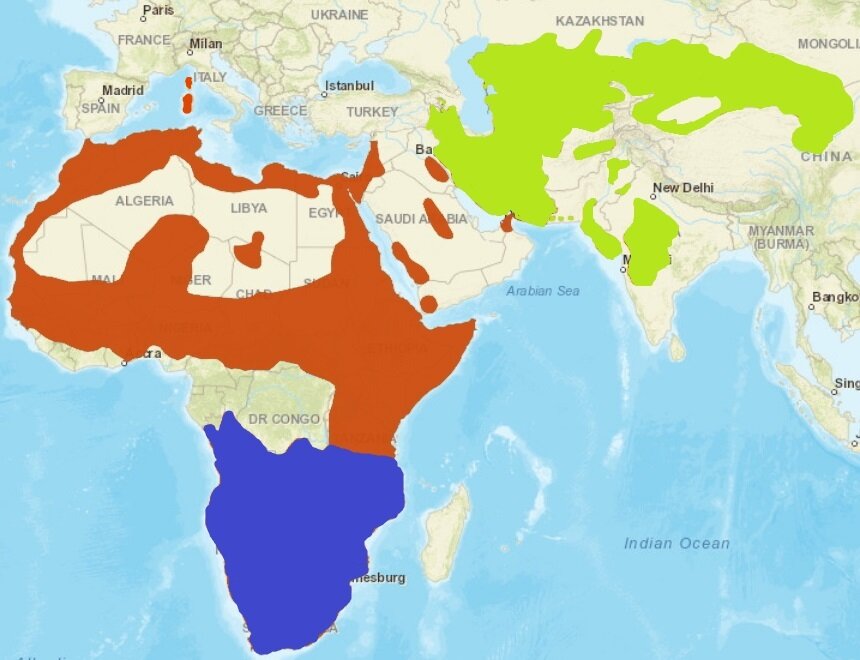
We've journeyed through millions of years of evolution. Let's review the key players before moving on.
Ready to test your knowledge?
The Felidae family, which includes all modern cats, first appeared approximately how many years ago?
Which genus, a more recent branch of the cat family tree, includes the direct ancestors of house cats?
Understanding the wild origins of the cat helps us appreciate the animal that shares our homes today. The African wildcat's adaptability and skill as a hunter are traits that have been passed down through thousands of generations.