The Deep Dive into Hip Hop
Origins of Hip Hop
The Bronx in the 1970s
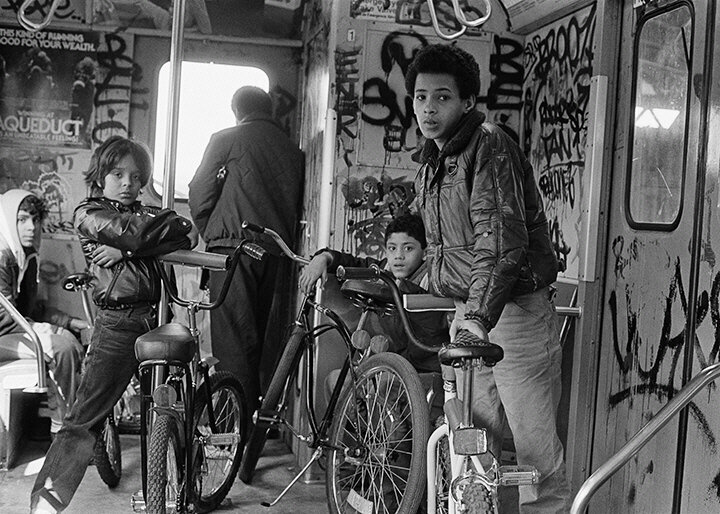
To understand hip hop, you first need to understand the Bronx in the 1970s. The New York City borough was facing tough times. A fiscal crisis led to cuts in public services like fire departments and schools. Many landlords, unable to afford building upkeep or find tenants who could pay, abandoned their properties. The infamous saying, "The Bronx is burning," wasn't just a metaphor; it was a reality for many neighborhoods.
Out of this environment of neglect and hardship, a new culture was born. Young people, mostly African American and Latino, lacked resources but had plenty of creativity. They started organizing block parties, using electricity from street lamps to power their sound systems. These parties became a creative outlet and a way to build community in the face of adversity.
These gatherings weren't just about listening to music. They were a space for invention, where the foundational elements of hip hop would take shape. It was a culture built from the ground up, using whatever was available.
Such "bricolage", as Lyotard would put it (ie assembling artefacts from bits and pieces of other things from unexpected eras and sources), was key to the hip-hop culture Myers pastiched.
The Four Elements
Hip hop culture is traditionally defined by four key artistic elements. Each one was a form of expression that grew out of the block parties and the urban landscape of the Bronx.
DJing: This is where it all started. DJs were the musical directors of the block parties. Instead of just playing songs from start to finish, they used two turntables to isolate and extend the instrumental breaks—the percussive, high-energy parts of a song that people loved to dance to. This technique was the foundation of hip hop music.
MCing: The Master of Ceremonies, or MC, was originally the DJ's hype man. They would make announcements and shout out friends over the beat. Over time, this evolved into rhyming and storytelling, becoming the vocal performance we now know as rapping.
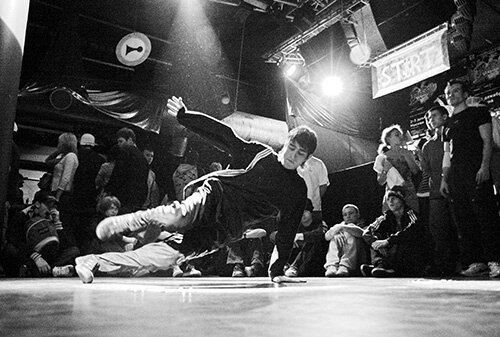
Breakdancing: The extended musical breaks created by the DJs gave dancers a chance to show off. B-boys and B-girls (short for break-boys and break-girls) would perform acrobatic and improvisational moves during these sections. Their dance style became an essential part of the culture.
Graffiti: While not a performance art like the others, graffiti was the visual element of hip hop. Young artists used spray paint to tag subway cars and buildings, creating elaborate and colorful pieces. It was a way to claim space and make a name for oneself in a city that often felt anonymous.
The Pioneers
Two figures stand out as central to hip hop's early development: DJ Kool Herc and Afrika Bambaataa.
DJ Kool Herc is widely considered the father of hip hop. A Jamaican immigrant, he brought the sound system culture of his home country to the Bronx. At a party in 1973, he pioneered the technique of using two turntables to loop the instrumental breaks of funk and soul records, creating a continuous, danceable beat. He called this the "merry-go-round."
Afrika Bambaataa was another key figure. He was a DJ and community leader who saw hip hop as a positive alternative to gang violence. He founded the Universal Zulu Nation, a group that promoted peace, unity, and creativity through hip hop culture. Bambaataa also broadened the musical palette of hip hop, incorporating a wide range of genres into his DJ sets, from rock to electronic music.
Ready to test your knowledge?
What was a major contributing factor to the environment in the Bronx that gave rise to hip hop culture in the 1970s?
What was the original role of the Master of Ceremonies (MC) at early block parties?
From the streets of the Bronx, these elements combined to form a vibrant and influential global culture.